 NL·0072
Herbarium of the Nature Library
- Name
- Fagus sylvatica
- Family
- Fagaceae
- Native to
- Western, central and southern Europe, from southern Scandinavia to Sicily and the Balkans
- Habitat
- Temperate broadleaf forest
European beech
Fagus sylvatica
Also calledRotbuche (German) · Hêtre (French) · Haya (Spanish) · Faggio (Italian) · Buk (Polish/Czech) · Fagus (Latin)
The tree that shades out nearly everything else. Beech casts such deep shade that it came to dominate huge areas of Europe after the last Ice Age, forming cathedral-like forests with almost no undergrowth. The word 'book' comes from it.
Fagus sylvatica, the European beech or common beech, is a species of tree in the flowering plant family Fagaceae. It can grow to a height of more than 40 m and has smooth silvery-grey bark, large leaf area, and a short trunk with low branches. It is native to much of Europe, growing in humid climates. Wikipedia
What it can do
- iCasts some of the deepest shade of any European tree, suppressing competitors
- iiIts seedlings tolerate deep shade for decades, waiting for a gap to open
- iiiMasts heavily every few years, flooding the forest with beechnuts
- ivForms extensive root networks with ectomycorrhizal fungi such as chanterelles and ceps
At the table
Eatenbeechnuts (roasted) · young spring leaves
Beechnuts are edible in small amounts and better roasted; eating many raw causes stomach upset, from mildly toxic compounds (historically called "fagin"). Beechnuts are toxic to horses.
Fruit & seed


Fruit
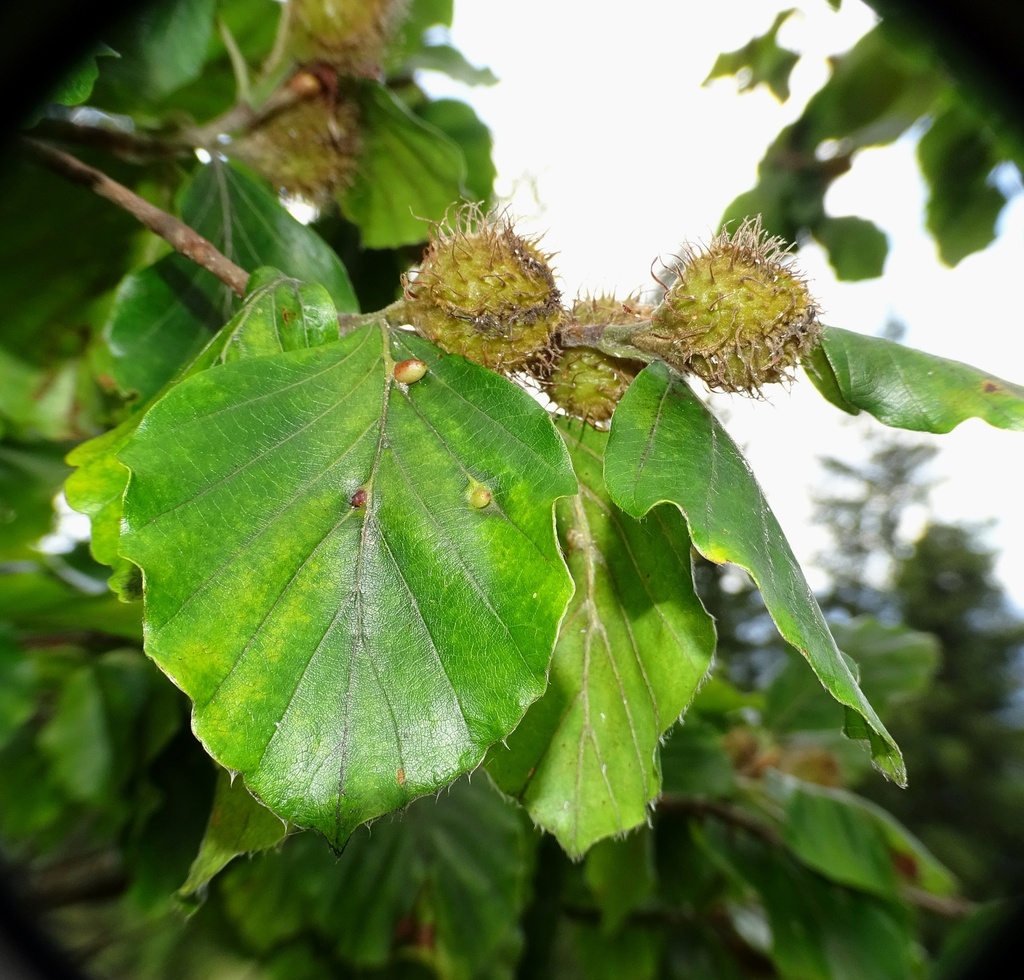
Nut in a spiny cupule
Ripens: Autumn
Bristly husks that split into four to release two triangular nuts.

Seed
~1.5 cm
Three-sided brown nut (beech mast)
- Dispersal
- Gravity, plus jays, rodents and formerly pigs
- Germination
- Cold-stratify 8–12 weeks; sow in spring
Photographs from Wikimedia Commons under open licences; hover for the photographer, click for the file.
How to grow it
Hardiness (USDA zones)
USDA 4–7. Survives winters down to about -34 °C.
- Light
- Full sun to deep shade
- Water
- Moderate; dislikes waterlogging and drought
- Soil
- Well-drained, chalk to acid
- Propagation
- Seed
- To harvest
- Nuts after 40–60 years
- Climates
- Temperate, Oceanic
- 1Collect nuts as they fall and stratify over winter
- 2Sow in spring in pots or a seedbed
- 3Keep young plants lightly shaded and moist
- 4Plant as a tree or keep clipped as a hedge, which holds brown leaves all winter
Can it grow where you are?
Where it lives
Recorded sightings
—
geo-referenced records in GBIF, from museums, herbaria and field observers.
Native range
Western, central and southern Europe, from southern Scandinavia to Sicily and the Balkans
Drag the globe to turn it. Dots are where records exist, not a range map; darker means more records.
In the old herbals & bestiaries
Woodcuts and engravings matched from the Source Library’s scanned books by name. Plates marked “relative” show a close kin rather than this exact species. Click a plate to read the page it came from, with translation.

Garden of Health
1507 · p.146

Commentaries on the Six Books of Dioscorides
Pietro Andrea Mattioli · 1560 · p.239

Commentaries on the Six Books of Pedanius Dioscorides on Medical Matter
Pietro Andrea Mattioli · 1565 · p.381

A New Herbal, or History of Plants
Rembert Dodoens (trans. Henry Lyte) · 1578 · p.782

Six Groups of the History of Plants
Rembert Dodoens · 1583 · p.841

Elements of Botany
Joseph Pitton de Tournefort · 1719 · p.102

Ortus sanitatis
1491 · p.180

Herbarium Portatile, Oder Behendes Kräuter- und Gewächs-Buch: Darinn nicht allein 1363. so wol Einheimische als Außländndische Kräuter mit Lateinisch und Deutscher Benennung abgebildet, sondern auch die meisten, so in der Medicin gebräuchlich, kürtzlich erkläret werden
Panckow, Thomas · 1656 · p.357
In the stacks
Searching the stacks…
Every page naming Fagus sylvatica in the Biodiversity Heritage Library →
Marginalia
Germanic peoples carved runes on beech tablets, and the Old English 'bōc' and German 'Buche/Buch' link beech and book. The 'Ancient and Primeval Beech Forests of the Carpathians and Other Regions of Europe' became a UNESCO World Heritage Site in 2007 and later grew to cover 18 countries.
Curiosity
Beech holds dead leaves through winter when kept as a young tree or hedge (marcescence), which is why beech hedges stay brown and dense in winter.
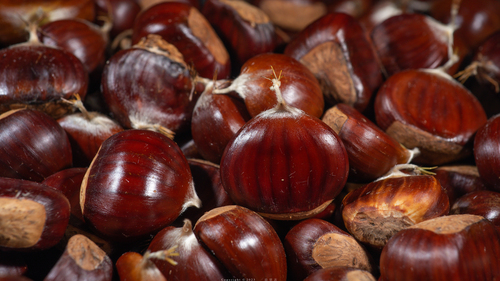
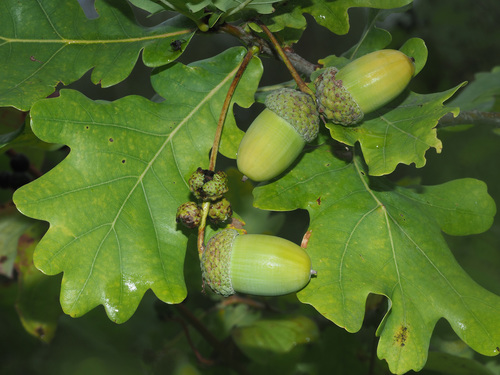
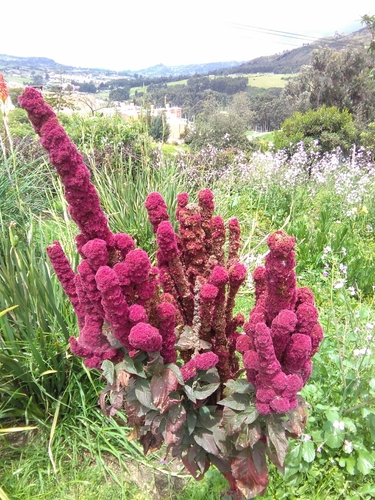
Kinship


Fact-checked: 1 correction made to this sheet. Photographs: iNaturalist contributors under the licences shown. Records: GBIF.org. Historical plates: Source Library (CC BY-SA 4.0; originals public domain). Summary text: Nature Library editors and Wikipedia (CC BY-SA). Medicinal and edibility notes are historical and educational, not advice. iNaturalist taxon 54227.