 NL·0003
Herbarium of the Nature Library
- Name
- Chenopodium quinoa
- Family
- Amaranthaceae
- Native to
- Andes of Bolivia and Peru (Lake Titicaca basin), also lowland Chile; now grown in many countries
- Habitat
- High Andean altiplano, Salt flats margins, Temperate farmland
Quinoa
Chenopodium quinoa
Also calledKinwa (Quechua) · Jupha / Jiwra (Aymara) · Quinua (Spanish) · Chisiya mama ('mother grain', Quechua) · Límài (Chinese) · Kinoa (Turkish)
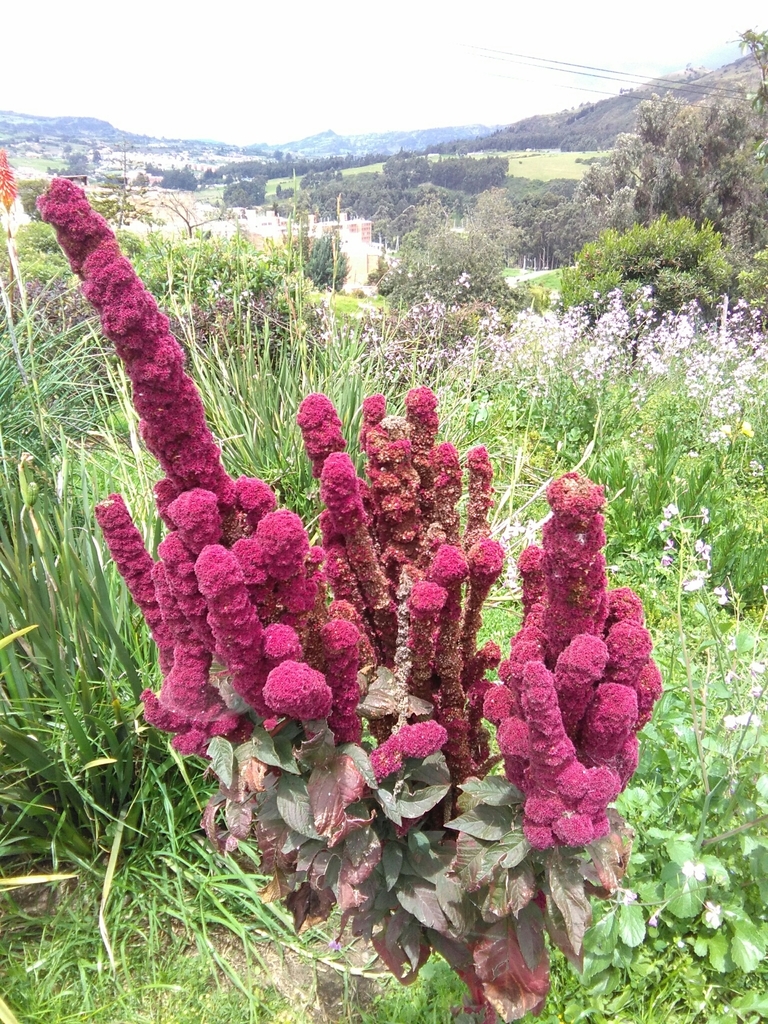
A goosefoot domesticated around Lake Titicaca about 5,000–7,000 years ago, quinoa is not a grass but a 'pseudocereal' related to spinach and beet. It grows at nearly 4,000 m on salty, frosty altiplano soils and its seeds are a complete protein.
Quinoa is a flowering plant in the amaranth family. It is a herbaceous annual plant grown as a crop primarily for its edible seeds; the seeds are high in protein, dietary fiber, B vitamins and dietary minerals especially potassium and magnesium in amounts greater than in many grains. Quinoa is not a grass but rather a pseudocereal botanically related to spinach and amaranth, and originated in the Andean region of northwestern South America. It was first used to feed livestock 5,200–7,000 years ago, and for human consumption 3,000–4,000 years ago in the Lake Titicaca basin of Bolivia and Peru. Wikipedia
What it can do
- iTolerates soil salinity close to that of seawater in some varieties
- iiSurvives frost, drought and intense UV at high altitude
- iiiLeaves have bladder-like hairs that store salt away from tissues
- ivSeed coats are covered in bitter saponins that deter birds and insects
At the table
Eatenseeds (cooked, flour, puffed) · young leaves (cooked like spinach)
Seeds must be rinsed or scrubbed to remove bitter saponins, which irritate the gut. Leaves contain oxalates; eat cooked and in moderation.
In the medicine cabinet
| Tradition | Use |
|---|---|
| Andean (Quechua/Aymara) medicine | Seed and leaf poultices for bruises, fractures and inflammation; saponin-rich wash water as soap |
Weight of evidence
Traditional. Long historical use; little or no modern clinical evidence.
Active compounds
saponins, complete protein (all essential amino acids, rich in lysine), quercetin, kaempferol
Fruit & seed


Fruit
Achene (utricle)
Ripens: Late summer to autumn (5–6 months after sowing)
Large dense seedheads 15–70 cm on stems 1–2 m tall, ripening red, purple, orange, yellow or cream.


Seed
1.5–2.5 mm
Small, flattened disc-shaped seeds 1.5–2.5 mm, white, cream, red or black, with a visible pale ring (the embryo) around the edge, coated in a powdery bitter saponin layer
- Dispersal
- Humans; birds
- Germination
- Very fast: sow shallow (1 cm) in cool soil at 5–20 °C; sprouts in 1–4 days, even in a dish of water
Photographs from Wikimedia Commons under open licences; hover for the photographer, click for the file.
How to grow it
Hardiness (USDA zones)
Annual; best in regions where summer days stay below about 32 °C. Survives winters down to about undefined °C.
- Light
- Full sun
- Water
- Low–moderate
- Soil
- Well-drained, tolerates poor, sandy and saline soils, pH 6–8.5
- Propagation
- Seed
- To harvest
- 90–150 days
- Climates
- Cool temperate, Tropical highland, Mediterranean (spring crop)
- 1Sow in spring when soil reaches about 7–10 °C, 1 cm deep, in rows 40–50 cm apart; thin to 15–20 cm.
- 2Weed carefully in early weeks — seedlings look like the weed lamb's quarters, its close relative.
- 3Water lightly; heavy watering and humid heat (over 32 °C) at flowering cause pollen sterility.
- 4Harvest when leaves drop and seeds can be rubbed out of the head with a fingernail, before autumn rain.
- 5Dry heads fully, rub over a screen, winnow, and wash seeds repeatedly in water until no foam forms.
Can it grow where you are?
Where it lives
Recorded sightings
—
geo-referenced records in GBIF, from museums, herbaria and field observers.
Native range
Andes of Bolivia and Peru (Lake Titicaca basin), also lowland Chile; now grown in many countries
Drag the globe to turn it. Dots are where records exist, not a range map; darker means more records.
In the old herbals & bestiaries
Woodcuts and engravings matched from the Source Library’s scanned books by name. Plates marked “relative” show a close kin rather than this exact species. Click a plate to read the page it came from, with translation.


In the stacks
Searching the stacks…
Every page naming Chenopodium quinoa in the Biodiversity Heritage Library →
Marginalia
The Inca called quinoa 'chisiya mama', mother of all grains, and the emperor is said to have sown the first seeds of each season with a golden tool. Spanish colonists discouraged its cultivation because of its role in Andean rituals.
Curiosity
The United Nations declared 2013 the International Year of Quinoa.
Kinship



Photographs: iNaturalist contributors under the licences shown. Records: GBIF.org. Historical plates: Source Library (CC BY-SA 4.0; originals public domain). Summary text: Nature Library editors and Wikipedia (CC BY-SA). Medicinal and edibility notes are historical and educational, not advice. iNaturalist taxon 122848.