 NL·0469
Herbarium of the Nature Library
- Name
- Antigone canadensis
- Family
- Gruidae
- Native to
- Breeds across Alaska, Canada, the northern US and north-eastern Siberia; resident populations in Florida, Mississippi and Cuba; winters in the southern US and northern Mexico
- Habitat
- Wetlands, Tundra, Prairie, Farmland
On eBird ↗
Sandhill Crane
Live sightings near you, the range map, bar charts of when it is seen, and Macaulay Library photos and recordings.
Sandhill crane
Antigone canadensis
Also calledGrulla canadiense (Spanish) · Grulla gris (Spanish, Mexico) · Grue du Canada (French) · Ajijaak (Ojibwe)
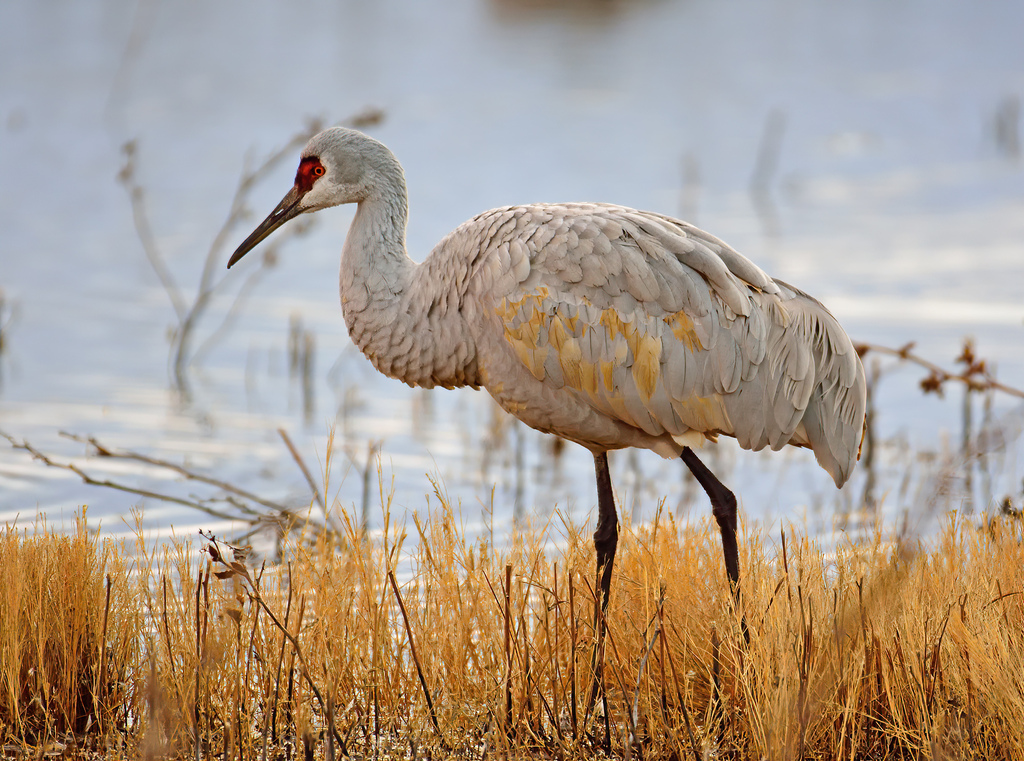
A tall grey crane with a red crown whose rolling, bugling calls carry for kilometres. Each spring hundreds of thousands gather on Nebraska's Platte River, one of North America's great wildlife spectacles.
The sandhill crane is a species of large crane of North America and extreme northeastern Siberia. The common name of this bird refers to its habitat, such as the Platte River, on the edge of Nebraska's Sandhills on the American Great Plains. Sandhill cranes are known to frequent the edges of bodies of water. The central Platte River Valley in Nebraska is the most important stopover area for the nominotypical subspecies, the lesser sandhill crane (A. c. canadensis), with up to 450,000 of these birds migrating through annually. Wikipedia
What it can do
- iIts windpipe coils into the breastbone, producing calls audible several kilometres away
- iiPairs perform leaping, bowing courtship dances and 'unison calls'
- iiiPaints its grey feathers rusty-brown by preening with iron-rich mud
- ivMigrates in high, circling flocks riding thermals
In the field
Field marks
- aTall grey crane with long neck and legs
- bRed bare forecrown and white cheeks
- cBushy 'bustle' of tertial feathers over the tail
- dFlies with neck fully outstretched; often stained rusty brown
- Voice
- A loud, rolling, trumpeting rattle 'garoo-oo-oo'; juveniles give high, whistling 'peeps'.
- Not to be confused with
- Great Blue Heron flies with its neck folded and lacks the red crown. Whooping Crane is white with black wingtips. Common Crane (rare vagrant) has a black-and-white neck.
- Where to see it
- Platte River near Kearney, Nebraska (Feb–Apr, Rowe Sanctuary); Bosque del Apache NWR (New Mexico) and Whitewater Draw (Arizona) in winter; Jasper-Pulaski (Indiana) in autumn.
- When
- Migratory populations: on the Platte mid-Feb–early Apr; on wintering grounds Nov–Feb
Listen
Looking for field recordings…
Life & habits
- Diet
- Waste grain, tubers, seeds, insects, snails, small vertebrates
- Habitat
- Marshes, wet meadows, tundra and farm fields near shallow roosting water
- Size
- 80–120 cm tall; wingspan 1.5–2.3 m; 2.7–6.7 kg
- Lifespan
- Banding record over 36 years
Families stay together through the first winter, with colts learning migration routes from their parents.
Where it lives
Recorded sightings
—
geo-referenced records in GBIF, from museums, herbaria and field observers.
Native range
Breeds across Alaska, Canada, the northern US and north-eastern Siberia; resident populations in Florida, Mississippi and Cuba; winters in the southern US and northern Mexico
Drag the globe to turn it. Dots are where records exist, not a range map; darker means more records.
In the old herbals & bestiaries
No plate in the Source Library names this exact species, so these show its closest relatives as the old naturalists drew them: same genus, or the same kind of animal. Click a plate to read the page it came from, with translation.

The Tudor Pattern Book (Herbal-Bestiary)
Relative · Anonymous · 1525 · p.88

Ulyssis Aldrovandi ... Ornithologiae
Relative · Aldrovandi, Ulisse · 1610 · p.992

The Tudor Pattern Book (Herbal-Bestiary)
Relative · Anonymous · 1525 · p.70

The Hieroglyphics
Relative · Horapollo · 1551 · p.239

Collected Illustrations of the Three Powers (Sancai Tuhui), Vol. 63
Relative · 王圻, 王思義 · 1609 · p.52

Hokusai Manga (北斎漫画), Vol. 1
Relative · Katsushika Hokusai · 1814 · p.18

Hokusai Manga (北斎漫画), Vol. 3
Relative · Katsushika Hokusai · 1815 · p.32

Bestiary
Relative · Anonymous · 1240 · p.143

Garden of Health (Hortus Sanitatis)
Relative · Jacob Meydenbach · 1491 · p.556

History of Animals, Book I: On Viviparous Quadrupeds
Relative · Conrad Gessner · 1554 · p.696
In the stacks
Searching the stacks…
Every page naming Antigone canadensis in the Biodiversity Heritage Library →
Marginalia
Aldo Leopold's essay 'Marshland Elegy' in A Sand County Almanac (1949) made the sandhill crane a symbol of wildness and deep time; in Ojibwe tradition the crane (ajijaak) is a leading clan.
Curiosity
Its rusty colour is not pigment at all but mud painted on during preening.
Kinship
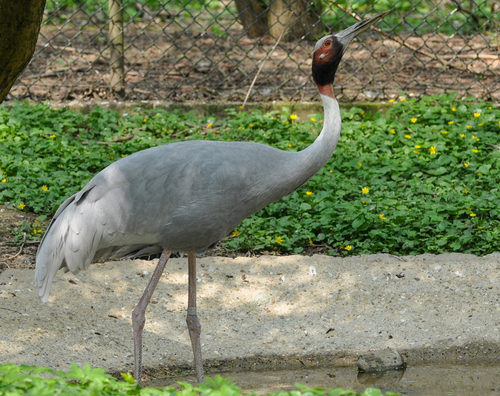
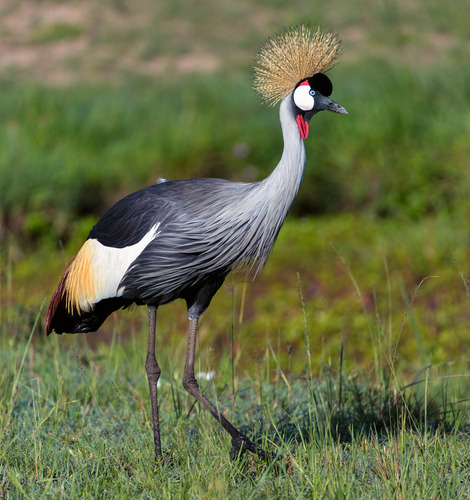
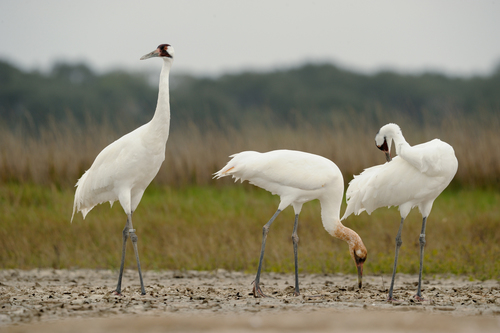
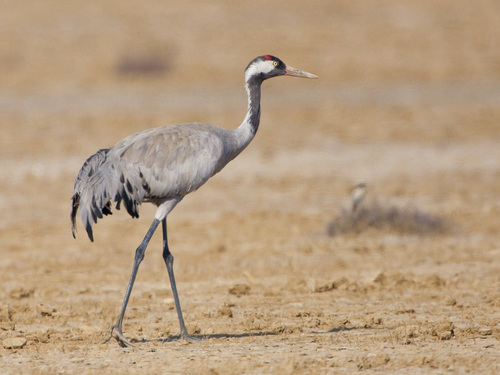
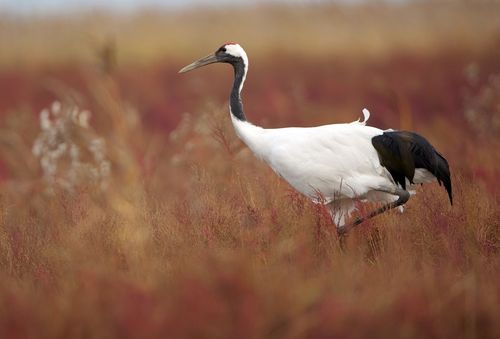
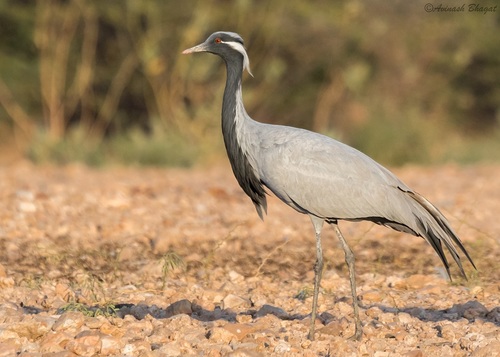
Photographs: iNaturalist contributors under the licences shown. Records: GBIF.org. Historical plates: Source Library (CC BY-SA 4.0; originals public domain). Summary text: Nature Library editors and Wikipedia (CC BY-SA). Medicinal and edibility notes are historical and educational, not advice. iNaturalist taxon 508048.