 NL·0356
Herbarium of the Nature Library
- Name
- Leptoptilos crumenifer
- Family
- Ciconiidae
- Native to
- Sub-Saharan Africa
- Habitat
- Savanna, Wetland, Urban
On eBird ↗
Marabou Stork
Live sightings near you, the range map, bar charts of when it is seen, and Macaulay Library photos and recordings.
Marabou stork
Leptoptilos crumenifer
Also calledMaraboe (Afrikaans) · Marabout d'Afrique (French)
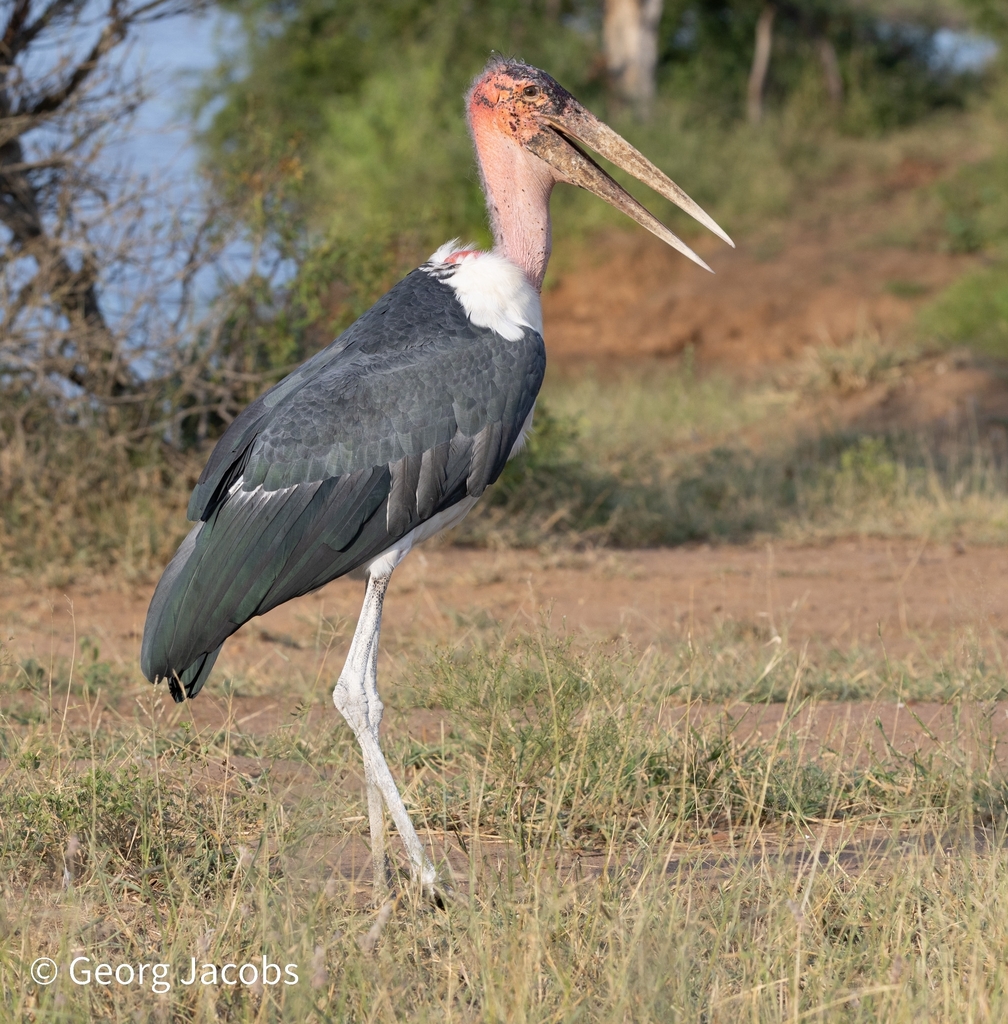
A massive, bald-headed stork that scavenges carcasses and rubbish dumps alongside vultures. Its wingspan rivals the largest of any land bird.
The marabou stork is a large wading bird in the stork family Ciconiidae native to sub-Saharan Africa. It breeds in both wet and arid habitats, often near human habitation, especially landfill sites. It is sometimes called the "undertaker bird" due to its shape from behind: cloak-like wings and back, skinny white legs, and sometimes a large white mass of "hair". It has often been credited with the largest wingspan of any land bird, with an average of 2.6 metres (8.5 ft) and some recorded examples of up to 3.2 metres (10 ft). Wikipedia
What it can do
- iWingspan regularly exceeds 2.5 m and is reported up to 3 m or more
- iiInflates an air-filled neck sac in display
- iiiHas adapted to towns, scavenging dumps and fish markets
- ivTakes live prey including flamingos, frogs and rodents
In the field
Field marks
- aBald, pinkish head and neck, often with scabby spots
- bHuge, wedge-shaped pale bill
- cPendulous pink throat pouch
- dDark grey back and wings, white underparts
- eLong grey legs often whitened with excreta
- Voice
- Mostly silent; clatters its bill and gives croaks and grunts.
- Not to be confused with
- Saddle-billed stork is colourful with a red-and-black bill. Vultures share the bald head but have hooked bills and short legs.
- Where to see it
- Kampala (Uganda), Lake Naivasha, Serengeti, Maasai Mara, Kruger, Chobe
- When
- Resident or nomadic
Listen
Looking for field recordings…
Life & habits
- Diet
- Carrion, refuse, fish, frogs, rodents and birds
- Habitat
- Savanna, wetlands, fishing villages and cities
- Size
- About 1.2–1.5 m tall; 4–9 kg
In cities like Kampala, marabous nest in trees along streets and patrol rubbish dumps.
Where it lives
Recorded sightings
—
geo-referenced records in GBIF, from museums, herbaria and field observers.
Native range
Sub-Saharan Africa
Drag the globe to turn it. Dots are where records exist, not a range map; darker means more records.
In the old herbals & bestiaries
No plate in the Source Library names this exact species, so these show its closest relatives as the old naturalists drew them: same genus, or the same kind of animal. Click a plate to read the page it came from, with translation.

Ulyssis Aldrovandi ... Ornithologiae
Relative · Aldrovandi, Ulisse · 1610 · p.992

Worksop Bestiary
Relative · Anonymous · 1185 · p.57

Valeriano: Hieroglyphica (1575)
Relative · Pierio Valeriano · 1556 · p.262

Bestiary
Relative · Anonymous · 1240 · p.143

Garden of Health
Relative · Jacob Meydenbach · 1491 · p.650

On the Names of Plants
Relative · Hieronymus Bock (Tragus) · 1552 · p.1159

History of Animals, Book I: On Viviparous Quadrupeds
Relative · Conrad Gessner · 1554 · p.448

History of Animals, Book I: On Viviparous Quadrupeds
Relative · Conrad Gessner · 1554 · p.437

Florentine Codex, Vol. 3 (Books 10-12)
Relative · Bernardino de Sahagún · 1577 · p.384

Theater of Earthly Creatures
Relative · Anonymous · 1672 · p.216
In the stacks
Searching the stacks…
Every page naming Leptoptilos crumenifer in the Biodiversity Heritage Library →
Marginalia
Fluffy marabou undertail feathers were widely traded in the 19th and 20th centuries for hats and trimmings; 'marabou' became a name for any fluffy trim.
Curiosity
Marabous cool their legs by excreting on them, a habit known as urohidrosis.
Kinship

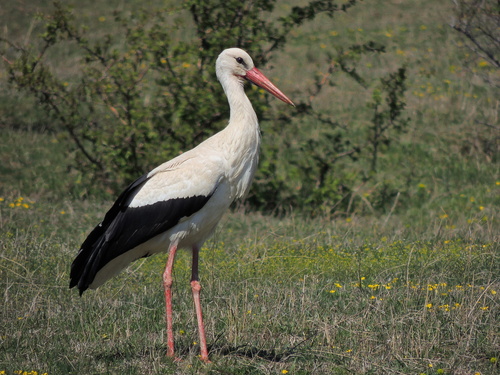
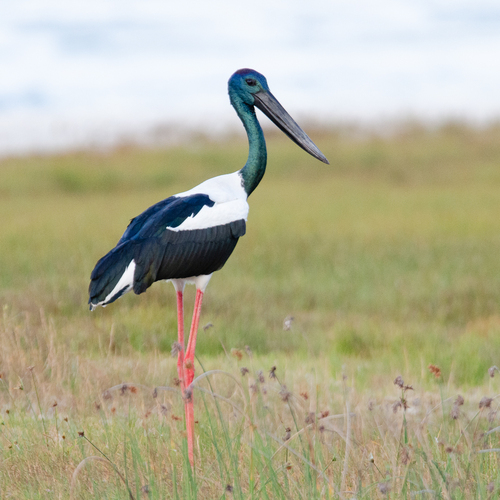
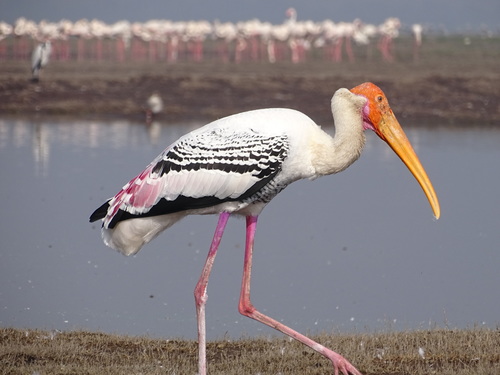


Photographs: iNaturalist contributors under the licences shown. Records: GBIF.org. Historical plates: Source Library (CC BY-SA 4.0; originals public domain). Summary text: Nature Library editors and Wikipedia (CC BY-SA). Medicinal and edibility notes are historical and educational, not advice. iNaturalist taxon 201031.