 NL·0355
Herbarium of the Nature Library
- Name
- Ephippiorhynchus asiaticus
- Family
- Ciconiidae
- Native to
- India, Nepal and Sri Lanka through Southeast Asia to New Guinea and northern and eastern Australia
- Habitat
- Wetland, Farmland
On eBird ↗
Black-necked Stork
Live sightings near you, the range map, bar charts of when it is seen, and Macaulay Library photos and recordings.
Black-necked stork
Ephippiorhynchus asiaticus
Also calledHēi jǐng guàn 黑颈鹳 (Chinese) · Jabiru (Australian name)
A tall, striking stork with a glossy black neck that flashes green and purple, a massive black bill and coral-red legs. It is one of the few storks in which males and females can be told apart by eye colour.
The black-necked stork is a tall, long-necked wading bird in the stork family. It is a resident species across the Indian subcontinent and Southeast Asia with a disjunct population in Australia. It lives in wetland habitats and near fields of certain crops such as rice and wheat where it forages for a wide range of animal prey. Adult birds of both sexes have a heavy bill and are patterned in white and irridescent blacks, but the sexes differ in the colour of the iris with females sporting yellow irises and males having dark-coloured irises. In Australia, it is known as a jabiru, although that name also refers to a stork species found in the Americas. It is one of the few storks that are strongly territorial when feeding and breeding. Wikipedia
What it can do
- iHunts large prey including fish, turtles and snakes
- iiPairs defend large territories in wetlands
- iiiPerforms a wing-spreading and bill-clattering greeting display at the nest
In the field
Field marks
- aVery tall black-and-white stork
- bGlossy black head and neck with green and purple sheen
- cMassive, straight black bill
- dBright coral-red legs; female has a yellow iris, male dark brown
- Voice
- Generally silent; bill-clattering at the nest
- Not to be confused with
- Lesser adjutant is grey with a bare head; Woolly-necked stork has a white neck; Saddle-billed stork is African.
- Where to see it
- Keoladeo National Park and the wetlands of Uttar Pradesh in India; Chitwan and Koshi Tappu in Nepal; Kakadu in Australia
- When
- Resident
Listen
Looking for field recordings…
Life & habits
- Diet
- Fish, frogs, turtles, snakes, crustaceans and occasionally birds
- Habitat
- Freshwater marshes, river banks, lakes and flooded fields
- Size
- About 130–150 cm tall; wingspan about 2.3 m
Stalks slowly through shallow water and stabs prey with its huge bill; pairs nest alone in tall trees rather than in colonies.
Where it lives
Recorded sightings
—
geo-referenced records in GBIF, from museums, herbaria and field observers.
Native range
India, Nepal and Sri Lanka through Southeast Asia to New Guinea and northern and eastern Australia
Drag the globe to turn it. Dots are where records exist, not a range map; darker means more records.
In the old herbals & bestiaries
No plate in the Source Library names this exact species, so these show its closest relatives as the old naturalists drew them: same genus, or the same kind of animal. Click a plate to read the page it came from, with translation.


In the stacks
Searching the stacks…
Every page naming Ephippiorhynchus asiaticus in the Biodiversity Heritage Library →
Marginalia
Australians long called it the jabiru, a name borrowed from a quite different South American stork.
Curiosity
The female's yellow iris is one of the easiest ways to sex any large bird in the field.
Kinship

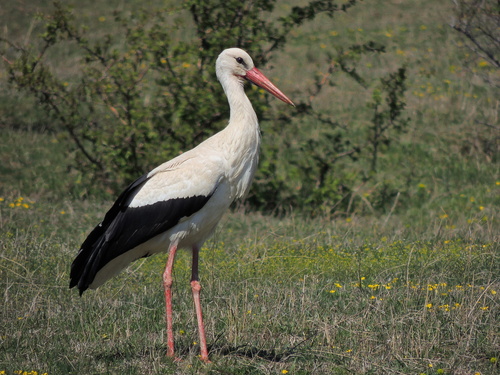
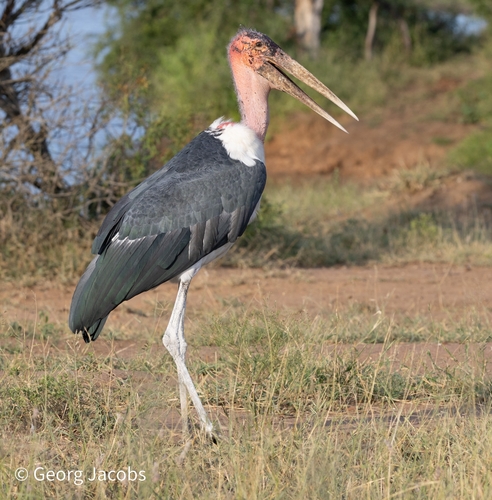
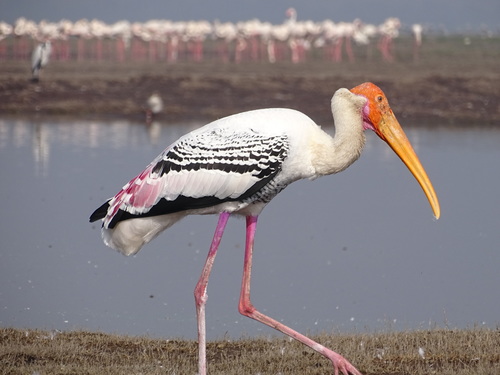
Photographs: iNaturalist contributors under the licences shown. Records: GBIF.org. Historical plates: Source Library (CC BY-SA 4.0; originals public domain). Summary text: Nature Library editors and Wikipedia (CC BY-SA). Medicinal and edibility notes are historical and educational, not advice. iNaturalist taxon 4753.