 NL·0685
Herbarium of the Nature Library
- Name
- Calidris pugnax
- Family
- Scolopacidae
- Native to
- Breeds across northern Europe and Siberia; winters in Africa, the Mediterranean, the Middle East and South Asia
- Habitat
- Wetland, Tundra, Wet grassland
On eBird ↗
Ruff
Live sightings near you, the range map, bar charts of when it is seen, and Macaulay Library photos and recordings.
Ruff
Calidris pugnax
Also calledDöğüşkenkuş (Turkish) · Kampfläufer (German) · Combattant varié (French) · Combatiente (Spanish) · Kemphaan (Dutch)
A wader whose breeding males grow huge, colourful ruffs and ear tufts and battle at leks. Males come in three genetically fixed types, including a rare female-mimic that sneaks matings.
The ruff is a medium-sized wading bird that breeds in marshes and wet meadows across northern Eurasia. This highly gregarious sandpiper is migratory and sometimes forms huge flocks in its winter grounds, which include southern and western Europe, Africa, southern Asia and Australia. Wikipedia
What it can do
- iThree male types: territorial 'independents', satellite males with white ruffs, and 'faeders' that look like females
- iiThe male types are controlled by a supergene formed by a chromosome inversion about 3.8 million years ago
- iiiMales are much larger than females
- ivHuge winter flocks gather in the inland delta of the Niger and other African wetlands
In the field
Field marks
- aBreeding males have a variable ruff and ear tufts in black, chestnut, white or mixed
- bScaly upperparts with pale feather fringes outside breeding
- cSmall head, medium bill and long orange or greenish legs
- dWhite oval patches at the sides of the tail in flight
- Voice
- Largely silent; occasional low grunts.
- Not to be confused with
- Redshank has red legs and a white trailing edge to the wing. Common greenshank is grey with a long upturned bill. Juveniles can suggest buff-breasted sandpiper (a rare vagrant from America).
- Where to see it
- Breeding in Dutch, Swedish and Norwegian meadows; passage at the Wadden Sea; winter flocks in the Senegal and Niger deltas and Indian wetlands.
- When
- Summer visitor to the north Apr–Jul; passage migrant; winter visitor to Africa and Asia
Listen
Looking for field recordings…
Life & habits
- Diet
- Insects and larvae, worms; seeds and rice in winter
- Habitat
- Wet meadows, marshes and tundra; flooded fields and lake shores in winter
- Size
- Males 29–32 cm, ~180 g; females 22–26 cm, ~110 g
On the lek, males posture with ruffs spread, jumping and sparring while females (reeves) choose.
Where it lives
Recorded sightings
—
geo-referenced records in GBIF, from museums, herbaria and field observers.
Native range
Breeds across northern Europe and Siberia; winters in Africa, the Mediterranean, the Middle East and South Asia
Drag the globe to turn it. Dots are where records exist, not a range map; darker means more records.
In the old herbals & bestiaries
Woodcuts and engravings matched from the Source Library’s scanned books by name. Plates marked “relative” show a close kin rather than this exact species. Click a plate to read the page it came from, with translation.

Jan Jonston — Naeukeurige beschryving van de natuur der viervoetige dieren (1660)
Jan Jonston · 1660 · p.231

Theater of Earthly Creatures
Anonymous · 1672 · p.258

Introductory Book
Michael Scot · 1350 · p.141

François Bouchard — Recueil de cent-trente-trois oiseaux des plus belles especes (1775)
François Bouchard · 1775 · p.28

François Bouchard — Recueil de cent-trente-trois oiseaux des plus belles especes (1775)
François Bouchard · 1775 · p.32

Jean Baptiste Audebert — Histoire naturelle des singes et des makis (1800)
Jean Baptiste Audebert · 1800 · p.49
In the stacks
Searching the stacks…
Every page naming Calidris pugnax in the Biodiversity Heritage Library →
Marginalia
Ruffs were netted and fattened for the table in 17th–18th-century England, and the bird's name echoes the starched lace ruffs of Elizabethan dress.
Curiosity
The faeder males, about 1% of males, were only identified in 2006.
Kinship
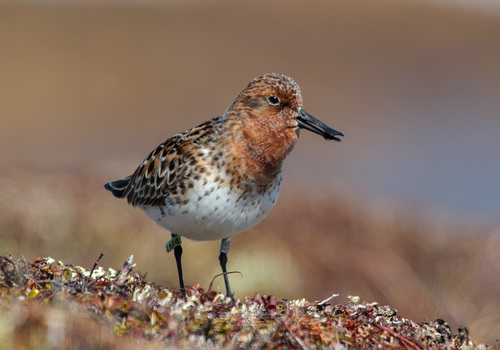
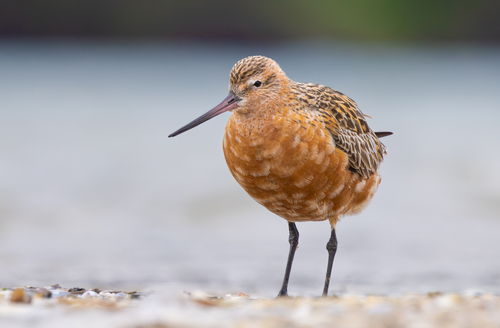




Photographs: iNaturalist contributors under the licences shown. Records: GBIF.org. Historical plates: Source Library (CC BY-SA 4.0; originals public domain). Summary text: Nature Library editors and Wikipedia (CC BY-SA). Medicinal and edibility notes are historical and educational, not advice. iNaturalist taxon 339593.