- Animals
- ›Arthropods
- ›Hexapods
- ›Insects
- ›Winged and Once-winged Insects
- ›Flies
- ›Brachyceran Flies
- ›Cyclorrhaphan Flies
- ›Schizophoran Flies
- ›Calyptrate Flies
- ›Muscoid Flies
- ›Root-maggot Flies
- ›Delia
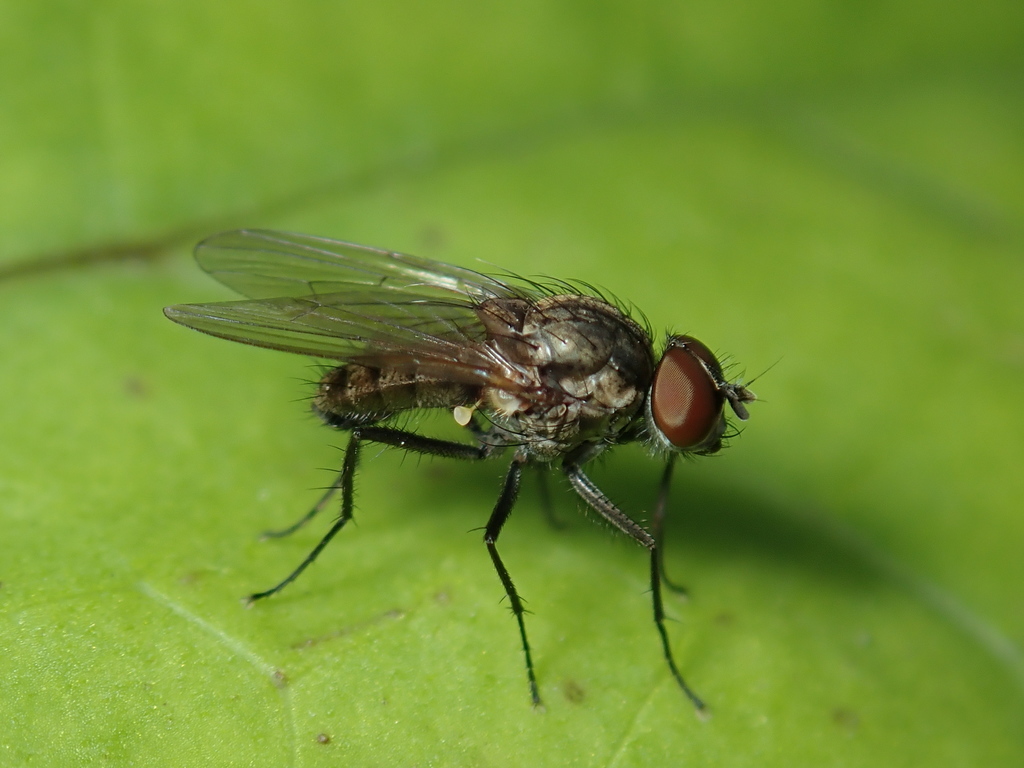
Seedcorn Maggot
Delia platura
Delia platura, also referred to as the seedcorn maggot and bean seed fly, is a member of the Anthomyiidae family within the order Diptera and the genus Delia. During its adult stage, it is hard to distinguish from similar fly species because it has a thin body, long legs, and transparent wings. It inhabits numerous regions globally, and is known to be an agricultural pest, especially during its larval stage, causing substantial crop damage worldwide. During the larval phase, Delia platura damages crops at its beginning stages as a seed or seedling. This damage leads to an unsuccessful sprouting and, therefore, a decrease in crop production. Furthermore, the presence of Delia platura leads to decreased biodiversity, damage to ecosystems as organisms lose food sources and habitats, and negative economic impacts because farmers must regrow destroyed crops.
Delia platura prefers regions with mild climates, as it thrives best in those temperatures. Delia platura was first discovered in Germany and is currently found in many agricultural regions worldwide, such as North America, the United States, and Canada. Due to its widespread distribution and ability to infest and damage crops, Delia platura causes negative ecological and agricultural impacts worldwide.
From the article Delia platura on Wikipedia (CC BY-SA), quoted section by section
What it does
Delia platura can typically complete an entire life cycle, progressing through the egg, larval, pupal, and adult stage, in around 15–77 days. However, this timeline is heavily affected by temperature. Warm temperatures of around 25–30°C lead to faster developmental times, while colder temperature ranges of 10–15°C slow development down. During warm temperatures, the insect could complete its life cycle within 17 days, while it took 240 days in colder temperatures. Each year, there are 2 to 4 generations of Delia platura produced, but this number is influenced by temperature. During intense weather conditions, such as high heat in the summer or extremely cold temperatures in the winter, Delia platura enters a dormant state in order to save energy and survive unfavorable conditions. Entering these states leads to lower reproduction rates and thus fewer generations. Due to different regions having different temperatures and climates, different numbers of generations may arise per location. In the United States, specifically New York and Wisconsin, as well as in England and Ontario, there are around 4 new generations annually. The generations are easily distinguishable due to their flight times. New generations are identified in May, June, July, and August, However, other regions, like South Carolina, make it harder for generations to be differentiated from one another. …
Wikipedia: “Life cycle and development”
In human culture
Common cultural practices taking place in agricultural farms today to improve plant growth also improve Delia platura larval survival. This imposes a big problem for farmers, as what is improving their crops is also leading to their destruction. Continuous watering of plants is essential for crop survival but also helps the larvae thrive. Furthermore, factors like using tilled soil and manure promote plant growth, but the bacteria found in the manure can also increase the likelihood of oviposition occurring in that area. In turn, this causes larval populations to increase near those plants and destroy them. However, there are methods that farmers have been implementing to combat this issue. There has been an observed decrease in Delia platura populations during the summertime, which farmers have used to their advantage and started to increase plant growing during this time. Additionally, during the summer, plants tend to grow faster and give larvae less time to destroy the seeds. Moreover, farmers have begun to hold off seed planting until Delia platura populations have grown out of the larval stage, as this is when they do the most damage.
Wikipedia: “Cultural practices”
Listen
Looking for field recordings…
Where it lives
Recorded sightings
—
geo-referenced records in GBIF, from museums, herbaria and field observers.
Drag the globe to turn it. Dots are where records exist, not a range map; darker means more records.
In the stacks
Searching the stacks…
Every page naming Delia platura in the Biodiversity Heritage Library →
This page is assembled live from iNaturalist, GBIF, Wikipedia, the Source Library and the Internet Archive. It is not yet part of the hand-edited codex. iNaturalist taxon 243756.