 NL·0086
Herbarium of the Nature Library
- Name
- Cinnamomum verum
- Family
- Lauraceae
- Native to
- Sri Lanka and the southern Western Ghats of India; cultivated in Sri Lanka, Madagascar, the Seychelles and elsewhere
- Habitat
- Tropical lowland and montane rainforest, Plantations
Ceylon cinnamon
Cinnamomum verum
Also calledKurundu (Sinhala) · Dalchini (Hindi/Urdu/Persian) · Karuvapattai (Tamil) · Qirfa (Arabic) · Ròuguì (Chinese, used for cassia) · Kayu manis (Malay) · Canela (Spanish/Portuguese)
A small evergreen laurel of Sri Lanka whose inner bark, peeled and rolled into fragile quills, is 'true cinnamon'. Its trade was so lucrative that Arab middlemen spun tales of cinnamon guarded by giant birds to hide its origin. The wild species is assessed as Vulnerable.
Cinnamomum verum, also known as true cinnamon or Ceylon cinnamon, is a small evergreen tree belonging to the family Lauraceae, native to Sri Lanka. The inner bark of the tree is historically regarded as the spice cinnamon, though this name has also been used for C. cassia (cassia) as well. Wikipedia
What it can do
- iInner bark curls naturally into quills as it dries
- iiCoppiced stools regrow new shoots for harvest every 2 years for decades
- iiiContains far less coumarin than cassia cinnamon (C. cassia)
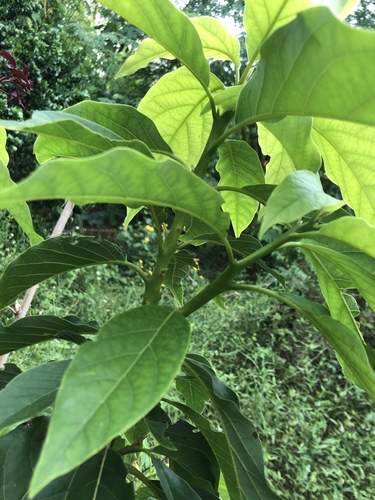
- ivYoung leaves flush bright red before turning green
At the table
Eateninner bark (quills, ground) · leaves (as flavouring) · bark and leaf oil (food flavouring)
Safe as a spice. Concentrated essential oil irritates skin and mucous membranes; cassia (often sold as cinnamon) is high in coumarin, which can harm the liver in large regular doses.
In the medicine cabinet
| Tradition | Use |
|---|---|
| Ayurveda | Tvak (bark) for colds, indigestion and to balance kapha |
| Traditional Chinese Medicine | Cinnamon bark (ròu guì, mainly cassia) to warm the body and kidneys |
| Ancient Egyptian | Used in embalming and kyphi incense |
Weight of evidence
Traditional. Long historical use; little or no modern clinical evidence.
Active compounds
cinnamaldehyde, eugenol, linalool, procyanidins, coumarin (traces)
Fruit & seed
Fruit
Drupe (berry-like)
Ripens: Ripens about 6 months after flowering (often June–August)
Small, oval, dark-purple to black drupe 1–1.5 cm, sitting in a cup-like persistent calyx.
Seed
8–10 mm
A single oval, smooth seed 8–10 mm, pale brown to dark brown, inside the thin black flesh
- Dispersal
- Birds
- Germination
- Recalcitrant: clean and sow fresh, 1 cm deep, in warm shade at 25–30 °C; sprouts in 2–4 weeks
How to grow it
Hardiness (USDA zones)
Tropical only (USDA 10–12). Survives winters down to about -1 °C.
- Light
- Full sun to light shade
- Water
- High (1,500–2,500 mm rain)
- Soil
- Sandy, well-drained, slightly acidic soil; the famous Negombo cinnamon grows on white sand
- Propagation
- Seed or semi-hardwood cuttings; air layering
- To harvest
- First cut 2–3 years after planting; then every 1–2 years
- Climates
- Humid tropical, Monsoon tropical
- 1Sow fresh seed or root cuttings and plant out in sandy, well-drained soil 1–1.5 m apart.
- 2After 2–3 years, coppice the plant to 10–15 cm above the ground to make it sprout many straight shoots.
- 3Cut shoots 1.5–2.5 cm thick in the rainy season, when the bark peels easily.
- 4Scrape off the outer bark, rub the stem with a brass rod to loosen the inner bark, slit and peel it in long strips.
- 5Nest smaller strips inside larger ones to form quills; dry in shade for 4–5 days, then in sun.
Can it grow where you are?
Where it lives
Recorded sightings
—
geo-referenced records in GBIF, from museums, herbaria and field observers.
Native range
Sri Lanka and the southern Western Ghats of India; cultivated in Sri Lanka, Madagascar, the Seychelles and elsewhere
Drag the globe to turn it. Dots are where records exist, not a range map; darker means more records.
In the old herbals & bestiaries
Woodcuts and engravings matched from the Source Library’s scanned books by name. Plates marked “relative” show a close kin rather than this exact species. Click a plate to read the page it came from, with translation.

Mark Catesby — Piscium, serpentum, insectorum (pt. 1) (1750)
Mark Catesby · 1750 · p.157

A key to physic, and the occult sciences
Sibly, Ebenezer · 1810 · p.553

Garden of Health
1507 · p.96

On the Simple Medicines from the West Indies
Nicolas Monardes · 1574 · p.65

Tractado de las Drogas y Medicinas de las Indias Orientales
Cristóvão da Costa · 1578 · p.34

Garden of Malabar, Vol. 2 (Hortus Indicus Malabaricus)
Hendrik van Rheede · 1683 · p.150
In the stacks
Searching the stacks…
Every page naming Cinnamomum verum in the Biodiversity Heritage Library →
Marginalia
Herodotus reported that Arabians gathered cinnamon from the nests of giant birds, and Nero is said to have burned a year's supply of Rome's cinnamon at the funeral of his wife Poppaea. Portuguese and then Dutch control of Ceylon's cinnamon was fought over for two centuries.
Curiosity
The Dutch burned stocks of cinnamon in Amsterdam to keep prices high, and cultivated it on plantations only from the 1760s.
Kinship



Photographs: iNaturalist contributors under the licences shown. Records: GBIF.org. Historical plates: Source Library (CC BY-SA 4.0; originals public domain). Summary text: Nature Library editors and Wikipedia (CC BY-SA). Medicinal and edibility notes are historical and educational, not advice. iNaturalist taxon 122777.