 NL·0319
Herbarium of the Nature Library
- Name
- Cardinalis cardinalis
- Family
- Cardinalidae
- Native to
- Eastern and central North America from southern Canada through the eastern US to Mexico, Belize and northern Guatemala; introduced to Hawaii
- Habitat
- Woodland edge, Shrubland, Gardens, Desert scrub
On eBird ↗
Northern Cardinal
Live sightings near you, the range map, bar charts of when it is seen, and Macaulay Library photos and recordings.
Northern cardinal
Cardinalis cardinalis
Also calledCardenal norteño (Spanish) · Cardinal rouge (French) · Redbird (American English) · Virginia nightingale (archaic English)
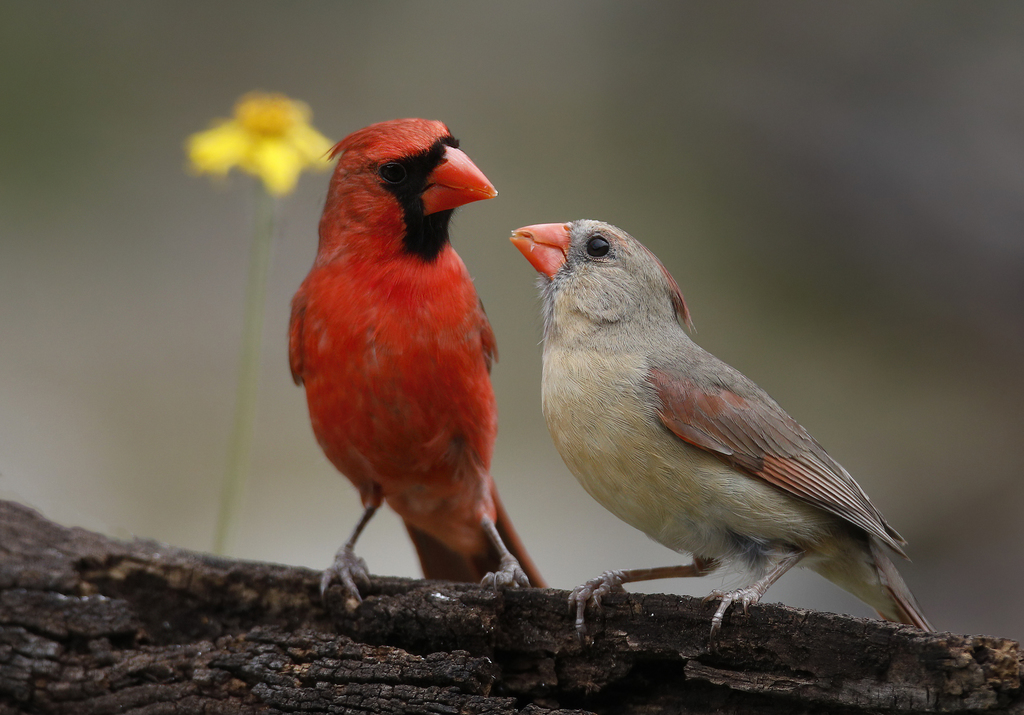
A crested, thick-billed songbird whose scarlet males are the most familiar red bird of eastern North America. Unusually among North American songbirds, females sing too, sometimes from the nest itself, and pairs stay together year-round.
The northern cardinal, also commonly known as the common cardinal, red cardinal, or simply cardinal, is a bird in the genus Cardinalis. It can be found in southeastern Canada, through the eastern United States from Maine to Minnesota to Texas, New Mexico, southern Arizona, southern California and south through Mexico, Belize, and Guatemala. It is also an introduced species in a few locations such as Bermuda and all major islands of Hawaii since its introduction in 1929. Its habitat includes woodlands, gardens, shrublands, and wetlands. It is the state bird of Illinois, Indiana, Kentucky, North Carolina, Ohio, Virginia, and West Virginia. Wikipedia
What it can do
- iBoth sexes sing; female song often signals the male to bring food to the nest
- iiHeavy conical bill cracks hard seeds such as sunflower and safflower
- iiiHas expanded its range far northward over the past century, helped by bird feeders and suburban shrubbery
- ivRed plumage comes from carotenoid pigments in its diet
In the field
Field marks
- aMale entirely red with a black face mask around a thick red-orange bill
- bProminent pointed crest in both sexes
- cFemale warm buff-brown with reddish tinges on crest, wings and tail
- dLong tail; juveniles have a dark bill
- Voice
- Loud, clear, slurred whistles repeated in series, often rendered 'cheer-cheer-cheer' or 'birdie-birdie-birdie'; call a sharp metallic 'chip'.
- Not to be confused with
- Pyrrhuloxia (south-western US and Mexico) is grey with a red crest and a stubby yellow bill. Summer Tanager males are all red but lack the crest and black face. Scarlet Tanager has black wings.
- Where to see it
- Almost any eastern US backyard feeder, park or thicket; common through the south-east and Mississippi Valley.
- When
- Resident year-round
Listen
Looking for field recordings…
Life & habits
- Diet
- Seeds, fruit and insects; nestlings fed mostly insects
- Habitat
- Thickets, woodland edges, hedgerows, suburban gardens and desert washes
- Size
- 21–23 cm; 42–48 g
- Lifespan
- Usually under 3 years in the wild; banding record about 15 years
Territorial males (and sometimes females) attack their own reflections in windows and car mirrors in spring, sometimes for hours.
Where it lives
Recorded sightings
—
geo-referenced records in GBIF, from museums, herbaria and field observers.
Native range
Eastern and central North America from southern Canada through the eastern US to Mexico, Belize and northern Guatemala; introduced to Hawaii
Drag the globe to turn it. Dots are where records exist, not a range map; darker means more records.
In the old herbals & bestiaries
Woodcuts and engravings matched from the Source Library’s scanned books by name. Plates marked “relative” show a close kin rather than this exact species. Click a plate to read the page it came from, with translation.

In the stacks
Searching the stacks…
Every page naming Cardinalis cardinalis in the Biodiversity Heritage Library →
Marginalia
Named after the red robes of Roman Catholic cardinals, it is the official state bird of seven US states — Illinois, Indiana, Kentucky, North Carolina, Ohio, Virginia and West Virginia — more than any other species.
Curiosity
Linnaeus first named it Loxia cardinalis in 1758, putting it in the same genus as crossbills.
Kinship

Photographs: iNaturalist contributors under the licences shown. Records: GBIF.org. Historical plates: Source Library (CC BY-SA 4.0; originals public domain). Summary text: Nature Library editors and Wikipedia (CC BY-SA). Medicinal and edibility notes are historical and educational, not advice. iNaturalist taxon 9083.