 NL·0732
Herbarium of the Nature Library
- Name
- Sula sula
- Family
- Sulidae
- Native to
- Tropical islands of the Pacific, Indian and Atlantic Oceans and the Caribbean
- Habitat
- Tropical island, Marine
On eBird ↗
Red-footed Booby
Live sightings near you, the range map, bar charts of when it is seen, and Macaulay Library photos and recordings.
Red-footed booby
Sula sula
Also calledʻĀ (Hawaiian) · Piquero patas rojas (Spanish) · Fou à pieds rouges (French)
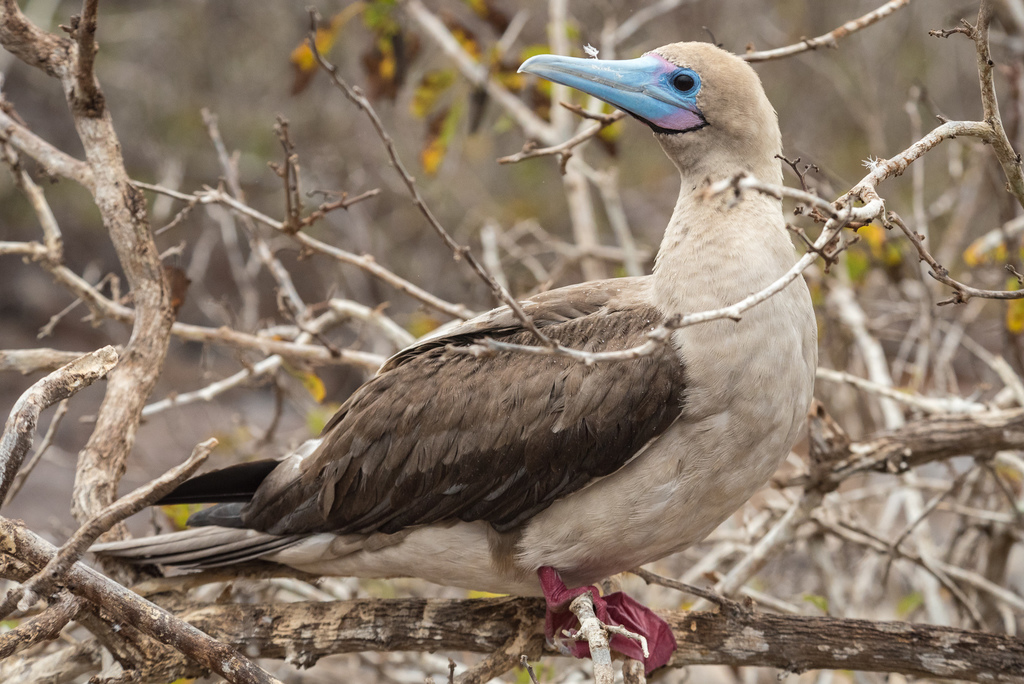
The smallest booby and the only one that habitually nests in trees and shrubs, gripping branches with its bright red webbed feet. It plunge-dives for fish and squid far out in tropical oceans.
The red-footed booby is a large seabird of the booby family, Sulidae. Adults always have red feet, but the colour of the plumage varies. They are powerful and agile fliers, harnessing the wind to fly efficiently, but they are clumsy in takeoffs and landings. They forage by catching flying fish from above the ocean's surface and by performing shallow dives. They are found widely in the tropics, and breed colonially in coastal regions, especially isolated islands such as St. Brandon, Mauritius, and the Chagos Archipelago. Although its population is declining, it is considered to be a least-concern species by the International Union for Conservation of Nature (IUCN). It faces threats from climate change, competition with fisheries, human disturbance, and invasive species. Wikipedia
What it can do
- iPlunge-dives from height into the sea after fish and squid
- iiCatches flying fish in the air as they leap from the water
- iiiForages hundreds of kilometres from the colony and often feeds at night or dusk
- ivOccurs in several colour morphs, from white to all-brown
In the field
Field marks
- aBright red feet and legs (adults)
- bPale blue-grey bill with pink facial skin at the base
- cVariable plumage: all-white with black flight feathers, brown, or white-tailed brown morph
- dSlender, long-tailed booby shape
- Voice
- Mostly silent at sea; harsh, rattling squawks at the colony.
- Not to be confused with
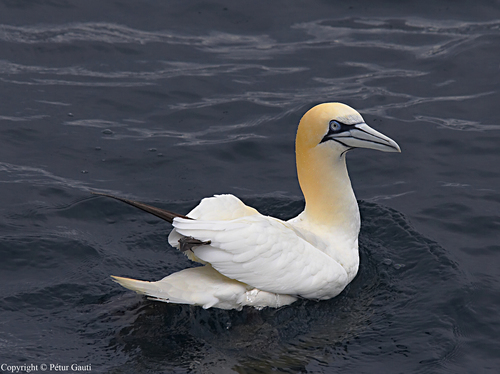
- Masked (and Nazca) booby is larger, with a black facial mask, yellow-orange or dull feet and black tail. Brown booby has a sharply demarcated dark brown head and breast and yellow feet. Only the red-footed booby has red feet.
- Where to see it
- Genovesa Island (Galápagos), Kīlauea Point (Kauaʻi, Hawaiʻi), Little Cayman, Christmas Island, Aldabra
- When
- Resident at colonies; breeding season varies by island
Listen
Looking for field recordings…
Life & habits
- Diet
- Flying fish and squid
- Habitat
- Pelagic tropical waters; nests in trees and bushes on remote islands
- Size
- 66–77 cm; wingspan about 1–1.5 m; 0.85–1.1 kg
- Lifespan
- Over 20 years
It often follows ships, catching flying fish flushed by the bow.
Where it lives
Recorded sightings
—
geo-referenced records in GBIF, from museums, herbaria and field observers.
Native range
Tropical islands of the Pacific, Indian and Atlantic Oceans and the Caribbean
Drag the globe to turn it. Dots are where records exist, not a range map; darker means more records.
In the old herbals & bestiaries
No plate in the Source Library names this exact species, so these show its closest relatives as the old naturalists drew them: same genus, or the same kind of animal. Click a plate to read the page it came from, with translation.

A voyage to the islands Madera Barbados Jamaica Vol. 1
Relative · Hans Sloane · 1707 · p.635

The Natural History of Carolina Florida and Bahama Islands Vol. 2
Relative · Mark Catesby · 1743 · p.349

The Natural History of Carolina, Florida and the Bahama Islands, Vol. 1
Relative · Mark Catesby · 1777 · p.278
In the stacks
Searching the stacks…
Every page naming Sula sula in the Biodiversity Heritage Library →
Marginalia
The name 'booby' is usually traced to the Spanish 'bobo' (fool), from the birds' tameness when sailors landed on their islands.
Curiosity
The colony on Little Cayman, of several thousand pairs, is one of the largest in the Caribbean.
Kinship

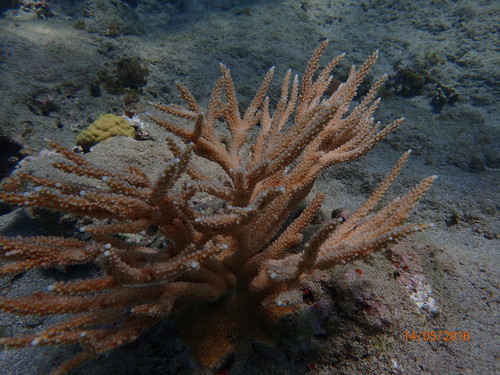
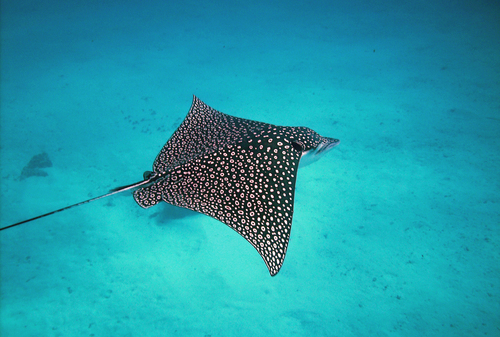
Photographs: iNaturalist contributors under the licences shown. Records: GBIF.org. Historical plates: Source Library (CC BY-SA 4.0; originals public domain). Summary text: Nature Library editors and Wikipedia (CC BY-SA). Medicinal and edibility notes are historical and educational, not advice. iNaturalist taxon 3793.