 NL·0585
Herbarium of the Nature Library
- Name
- Pandion haliaetus
- Family
- Pandionidae
- Native to
- Nearly worldwide: breeds across the Northern Hemisphere and Australasia; winters in the tropics and southern continents
- Habitat
- Coastal, Lakes and rivers, Estuary, Wetland
On eBird ↗
Osprey
Live sightings near you, the range map, bar charts of when it is seen, and Macaulay Library photos and recordings.
Osprey
Pandion haliaetus
Also calledÁguila pescadora (Spanish) · È (鹗, Chinese) · Misago (Japanese) · Balbuzard pêcheur (French) · Visvalk (Afrikaans)
A fish-eating hawk found on every continent except Antarctica, diving feet-first to snatch fish from the water. Its recovery after the banning of DDT is one of conservation's great comeback stories.
The osprey, historically known as sea hawk, river hawk, and fish hawk, is a diurnal, fish-eating bird of prey with a cosmopolitan range. It is a large raptor, reaching more than 60 cm (24 in) in length and a wingspan of 180 cm (71 in). It is brown on the upperparts and predominantly greyish on the head and underparts. Wikipedia
What it can do
- iPlunges feet-first into water, sometimes submerging fully
- iiReversible outer toe and spiny foot pads grip slippery fish
- iiiCarries fish head-forward to reduce drag
- ivLong-distance migrant: some Scandinavian and Scottish birds winter in West Africa
In the field
Field marks
- aDark brown upperparts, clean white underparts
- bWhite head with a bold dark stripe through the yellow eye
- cLong, narrow wings held in a gull-like crook with dark carpal patches
- dBrownish breast band, stronger in females
- Voice
- A series of high, clear, whistled 'cheep-cheep-cheep' or 'kyew' calls, often in flight near the nest.
- Not to be confused with
- Large gulls share the crooked-wing shape but lack the hooked bill and dark eye-stripe. Juvenile bald eagles and white-tailed eagles are much larger and mottled below.
- Where to see it
- Loch Garten and Rutland Water (UK), Chesapeake Bay and Florida (USA), Baltic coasts, Red Sea and Gulf of California; wintering in West Africa and South America
- When
- Summer visitor to the Northern Hemisphere (Mar–Sep); winter visitor to the tropics; resident in Australia and some subtropical regions
Listen
Looking for field recordings…
Life & habits
- Diet
- Almost entirely live fish
- Habitat
- Coasts, lakes, rivers, reservoirs and estuaries
- Size
- 50–66 cm; wingspan 1.3–1.8 m
- Lifespan
- Usually 7–10 years; can exceed 25
It hovers briefly over water, then folds its wings and dives, throwing its feet forward at the last moment.
Where it lives
Recorded sightings
—
geo-referenced records in GBIF, from museums, herbaria and field observers.
Native range
Nearly worldwide: breeds across the Northern Hemisphere and Australasia; winters in the tropics and southern continents
Drag the globe to turn it. Dots are where records exist, not a range map; darker means more records.
In the old herbals & bestiaries
Woodcuts and engravings matched from the Source Library’s scanned books by name. Plates marked “relative” show a close kin rather than this exact species. Click a plate to read the page it came from, with translation.

François Bouchard — Recueil de cent-trente-trois oiseaux des plus belles especes (1775)
François Bouchard · 1775 · p.22

Ornithology
Ulisse Aldrovandi · 1599 · p.223

Garden of Health
Jacob Meydenbach · 1491 · p.607

Ornithology
Ulisse Aldrovandi · 1599 · p.225

The Natural History of Carolina, Florida and the Bahama Islands, Vol. 1
Mark Catesby · 1777 · p.23

Ortus sanitatis
1491 · p.606

Ornithologiae: de avibus historiae libri XII
Ulisse Aldrovandi · 1599 · p.209

Compendium of Materia Medica: Illustrated Volume, Middle of the Lower Part
李時珍 · 1596 · p.99

Ornithologiae: de avibus historiae libri XII
Ulisse Aldrovandi · 1599 · p.208
In the stacks
Searching the stacks…
Every page naming Pandion haliaetus in the Biodiversity Heritage Library →
Marginalia
Ospreys were extinct as breeders in England by 1840 and in Scotland by 1916; their return to Loch Garten in 1954 and translocation to Rutland Water in the 1990s became milestones of British conservation.
Curiosity
Its family, Pandionidae, contains only the ospreys (one species, or two where the eastern osprey is split), and it is one of the most widely distributed birds in the world.
Kinship



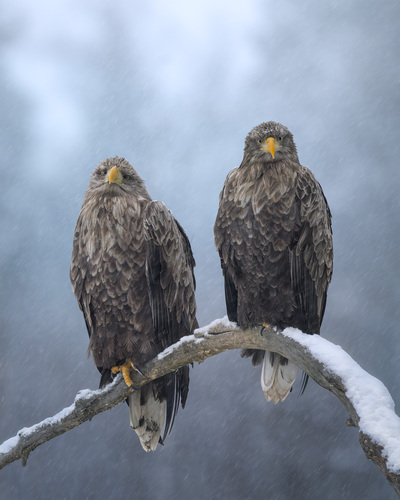
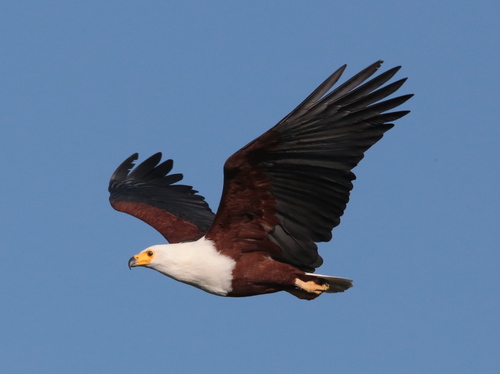
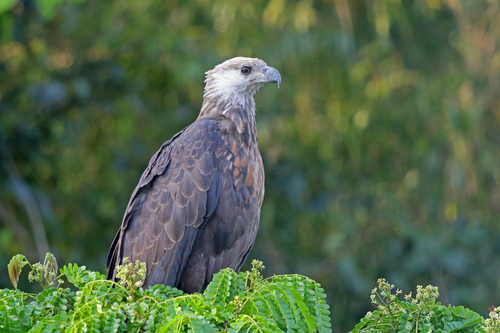
Fact-checked: 1 correction made to this sheet. Photographs: iNaturalist contributors under the licences shown. Records: GBIF.org. Historical plates: Source Library (CC BY-SA 4.0; originals public domain). Summary text: Nature Library editors and Wikipedia (CC BY-SA). Medicinal and edibility notes are historical and educational, not advice. iNaturalist taxon 116999.