 NL·0604
Herbarium of the Nature Library
- Name
- Alectoris chukar
- Family
- Phasianidae
- Native to
- SE Europe and Turkey through the Middle East, Central Asia, Afghanistan, Pakistan and the western Himalaya to China and Mongolia; introduced in western North America, Hawaii and New Zealand
- Habitat
- Rocky hillside, Dry scrub, Montane grassland
On eBird ↗
Chukar
Live sightings near you, the range map, bar charts of when it is seen, and Macaulay Library photos and recordings.
Chukar partridge
Alectoris chukar
Also calledChakor (Urdu/Punjabi/Hindi) · Kabk (Persian) · Shí jī 石鸡 (Chinese)
A plump, grey and buff partridge of rocky hillsides, with a black necklace framing a creamy throat and bold black bars on its flanks. It is the national bird of Pakistan and a celebrated figure of Urdu and Punjabi poetry.
The chukar partridge, or simply chukar, is a Palearctic upland gamebird in the pheasant family Phasianidae. It has been considered to form a superspecies complex along with the rock partridge, Philby's partridge and Przevalski's partridge and treated in the past as conspecific particularly with the first. This partridge has well-marked black and white bars on the flanks and a black band running from the forehead across the eye down the head to form a necklace that encloses a white throat. Native to Asia, the species has been introduced into many other places and feral populations have established themselves in parts of North America, Malta and New Zealand. This bird can be found in parts of Middle East and temperate Asia. Wikipedia
What it can do
- iRuns uphill to escape, using wing-flapping to boost traction on steep slopes
- iiSurvives arid mountains by obtaining much of its water from green plants and insects
- iiiIntroduced populations thrive in the dry ranges of the American West
In the field
Field marks
- aGrey-brown back and blue-grey breast
- bCreamy white throat and face bordered by a black band through the eye and around the throat
- cBold black-and-chestnut bars on pale flanks
- dRed bill, red legs and red eye-ring
- Voice
- A loud, accelerating 'chuck-chuck-chukar-chukar', from which its name derives
- Not to be confused with
- Rock partridge (SE Europe) has a white throat without buff tones; See-see partridge (Pakistan's low hills) is much smaller and sandy with no black necklace; Red-legged partridge (W Europe) has a streaked black necklace.
- Where to see it
- Salt Range, Margalla Hills, Balochistan uplands and Gilgit-Baltistan in Pakistan; Ladakh and Spiti in India
- When
- Resident year-round
Listen
Looking for field recordings…
Life & habits
- Diet
- Seeds, grasses, leaves, berries and insects
- Habitat
- Rocky, sparsely vegetated hills and mountain slopes, from near sea level to above 4,000 m
- Size
- About 32–35 cm long
Coveys run up slopes rather than fly, then burst into the air and glide downhill on bowed wings; males call loudly from rocks.
Where it lives
Recorded sightings
—
geo-referenced records in GBIF, from museums, herbaria and field observers.
Native range
SE Europe and Turkey through the Middle East, Central Asia, Afghanistan, Pakistan and the western Himalaya to China and Mongolia; introduced in western North America, Hawaii and New Zealand
Drag the globe to turn it. Dots are where records exist, not a range map; darker means more records.
In the old herbals & bestiaries
No plate in the Source Library names this exact species, so these show its closest relatives as the old naturalists drew them: same genus, or the same kind of animal. Click a plate to read the page it came from, with translation.

The natural history of Carolina, Florida, and the Bahama Islands : containing two hundred a...
Relative · Catesby, Mark, bioloog, kunstenaar · 1743 · p.392

The Natural History of Carolina Florida and Bahama Islands Vol. 2
Relative · Mark Catesby · 1743 · p.343

Theater of Earthly Creatures
Relative · Anonymous · 1672 · p.258

A voyage to the islands Madera Barbados Jamaica Vol. 1
Relative · Hans Sloane · 1707 · p.625

Historiae Animalium Liber III: De Avium Natura
Relative · Conrad Gesner · 1555 · p.685

History of Animals, Book I: On Viviparous Quadrupeds
Relative · Conrad Gessner · 1554 · p.830

History of Animals, Book I: On Viviparous Quadrupeds
Relative · Conrad Gessner · 1554 · p.841

Valeriano: Hieroglyphica (1575)
Relative · Pierio Valeriano · 1556 · p.359

Historiae Animalium Liber III: De Avium Natura
Relative · Conrad Gesner · 1555 · p.696

Sancai Tuhui (Vol. 90)
Relative · 王圻, 王思義 · 1609 · p.50
In the stacks
Searching the stacks…
Every page naming Alectoris chukar in the Biodiversity Heritage Library →
Marginalia
In Urdu, Punjabi and Hindi poetry the chakor is said to gaze at the moon all night and drink its light, a symbol of the lover's devoted longing. It is Pakistan's national bird, and chukars are traditionally kept and fought in the northwest.
Curiosity
Introduced to Nevada and other western US states for hunting, the chukar now thrives in rugged country where few native gamebirds live.
Kinship
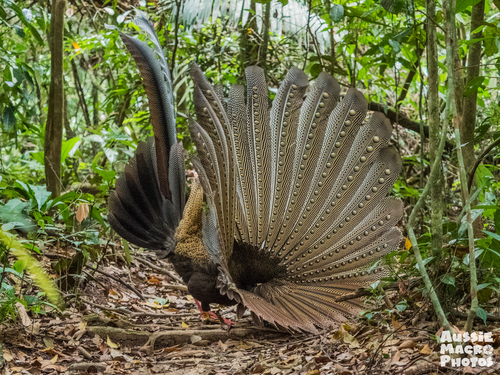


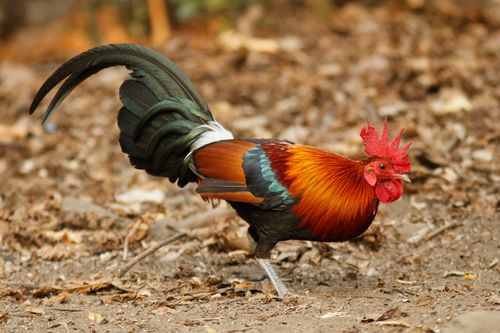
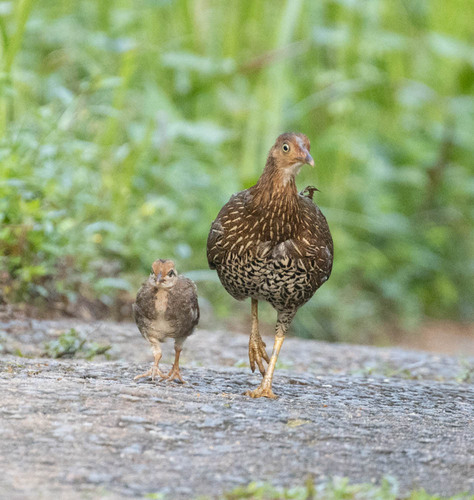
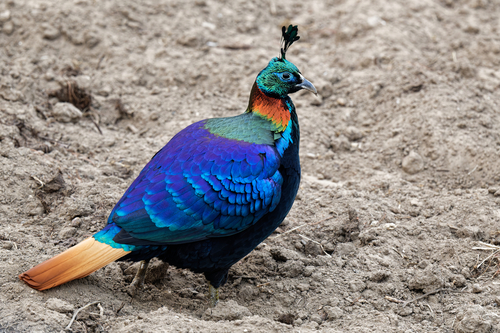
Photographs: iNaturalist contributors under the licences shown. Records: GBIF.org. Historical plates: Source Library (CC BY-SA 4.0; originals public domain). Summary text: Nature Library editors and Wikipedia (CC BY-SA). Medicinal and edibility notes are historical and educational, not advice. iNaturalist taxon 846.