- Animals
- ›Chordates
- ›Vertebrates
- ›Ray-finned Fishes
- ›Spiny-rayed fishes
- ›Wrasses and allies
- ›False scorpionfishes, wrasses, and parrotfishes
- ›Wrasses and Parrotfishes
- ›Rainbow Wrasses and Allies
- ›Coris
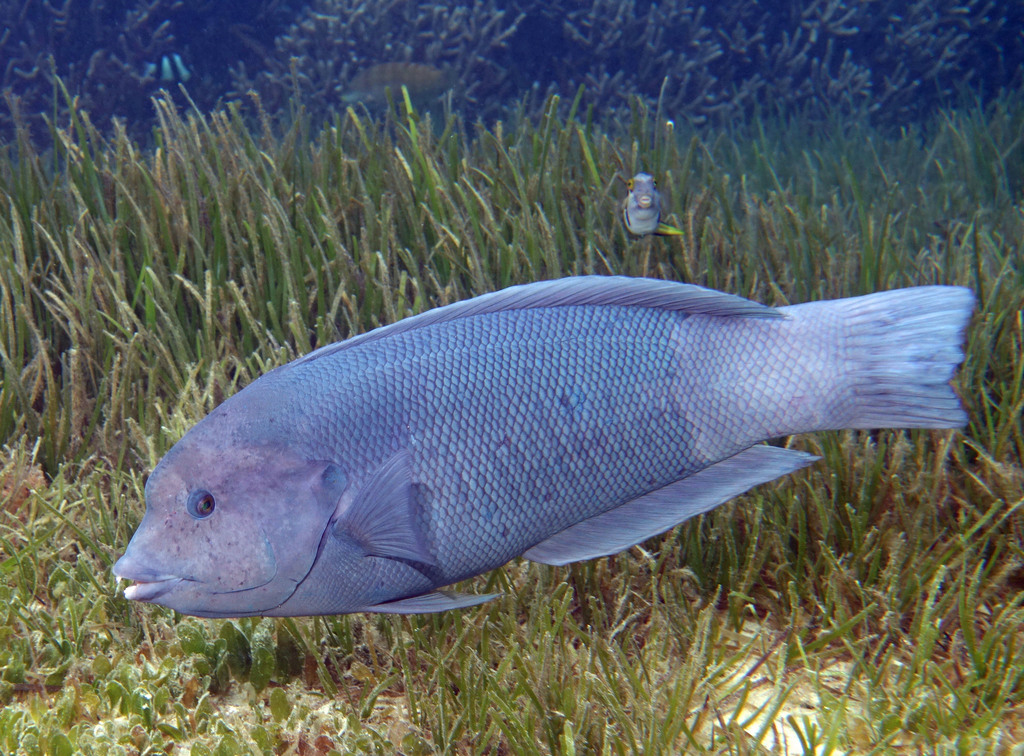
Doubleheader
Coris bulbifrons
Coris bulbifrons, the doubleheader, is a large species of wrasse in the Southern Pacific Ocean.
From the article Coris bulbifrons on Wikipedia (CC BY-SA), quoted section by section
Description
The doubleheader is the largest species in the genus Coris alongside the clown coris, growing up to 1 m (3 ft 3 in) in length and weighing up to 14 lb (6.4 kg). Both sexes develop a prominent hump on the forehead.
Range & habitat
Lord Howe Island, Norfolk Island, Middleton Reef, and more rarely, New South Wales.
Wikipedia: “Distribution”
What it does
Remains of gastropods, bivalves, and crabs have been observed in the gut contents of this species.
== References ==
Wikipedia: “Diet”
In human culture
The specific epithet bulbifrons comes from the Latin words "bulbus" (meaning swelling or bump), and "frons" (meaning forehead). Both the scientific name and the common name "doubleheader" allude to the large hump that develops on the foreheads of both males and females.
Wikipedia: “Etymology”
Where it lives
Recorded sightings
—
geo-referenced records in GBIF, from museums, herbaria and field observers.
Drag the globe to turn it. Dots are where records exist, not a range map; darker means more records.
In the stacks
Searching the stacks…
Every page naming Coris bulbifrons in the Biodiversity Heritage Library →
This page is assembled live from iNaturalist, GBIF, Wikipedia, the Source Library and the Internet Archive. It is not yet part of the hand-edited codex. iNaturalist taxon 98504.