- Animals
- ›Chordates
- ›Vertebrates
- ›Birds
- ›Rollers, Kingfishers, and Allies
- ›Kingfishers
- ›River, Dwarf, and Pygmy Kingfishers
- ›Ceyx
On eBird ↗
Northern Silvery-Kingfisher
Live sightings near you, the range map, bar charts of when it is seen, and Macaulay Library photos and recordings.
Northern Silvery Kingfisher
Ceyx flumenicola
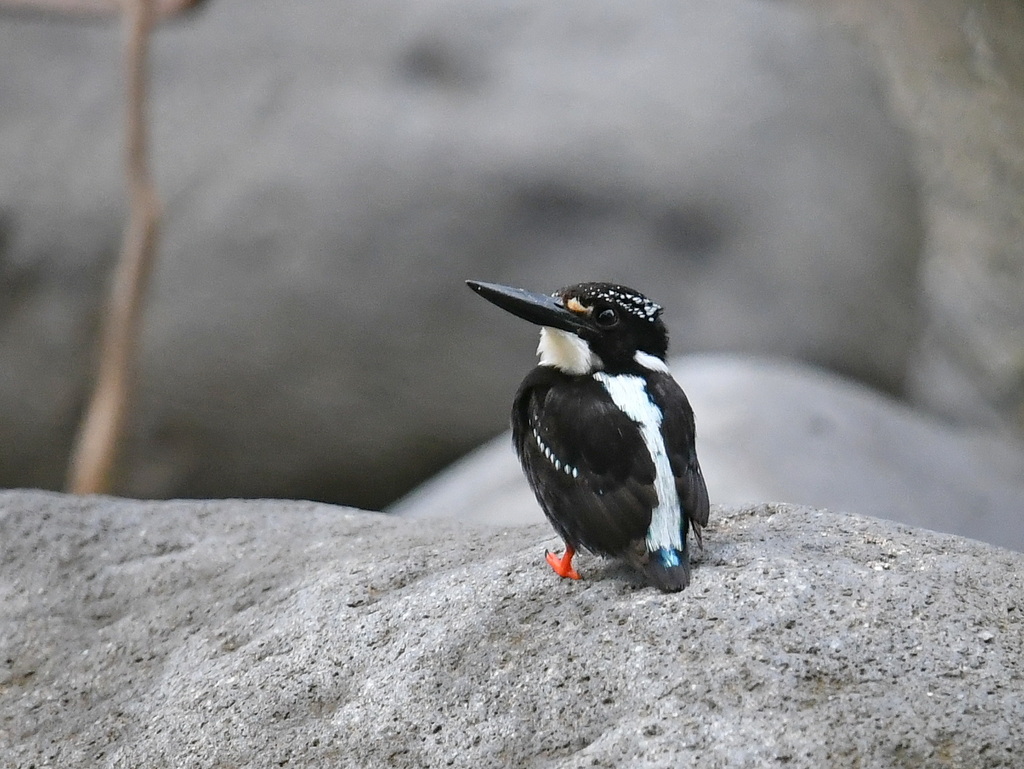
The northern silvery kingfisher (Ceyx flumenicola) is a species of bird in the family Alcedinidae that is endemic to the Philippines being found in the Visayas on the islands of Bohol, Leyte and Samar. This species and the southern silvery kingfisher, which is found on Mindanao, were formerly considered conspecific and called the silvery kingfisher. Its natural habitats are tropical moist lowland forests, streams and rivers. It is threatened by habitat loss.
From the article Northern silvery kingfisher on Wikipedia (CC BY-SA), quoted section by section
Description
It is differentiated from its southern counterpart by its cream colored throat, cheek and belly versus the bluish-white parts of the Southern silvery kingfisher. It also is rich royal blue on breast and flanks and is slightly smaller. This species is monotypic and has no subspecies.
Wikipedia: “Description and taxonomy”
Range & habitat
It appears to be reliant upon forested streams below 1,000 m and will tolerate secondary and selectively logged forest and even streamside vegetation within coconut plantations, close to forest edge. IUCN has assessed this bird as near threatened with the population being estimatesd at 1,500 to 7,000 mature individuals. This species' main threat is habitat loss with wholesale clearance of forest habitats as a result of logging, agricultural conversion and mining activities occurring within the range. Extensive lowland deforestation throughout its range is the chief threat. Only 4% forest cover is estimated to remain on Bohol. Most remaining lowland forest is leased to logging concessions or mining applications. Watercourses with high siltation loads, resulting from deforestation, appear not to hold the species, and riverine pollution is likely to have a similar impact. Tree-cutting, agricultural expansion, including pesticide (specifically Carbofuran) contamination from commercial growing of banana, and soil erosion are all threats to Rajah Sikatuna National Park (Bohol), a key sites for the species. Conversion of terminalia forest into rice fields and oil palm plantation is driving habitat loss elsewhere. …
Wikipedia: “Habitat and conservation status”
What it does
Diet consists of small fish and crabs. Has also been recorded feeding on insects. Perches on a low branch beside a stream and dives in to catch its prey then returns to its perch. Not much is known about its breeding behaviour but juveniles and nests have been seen from February to May. Nests in streamside banks.
Wikipedia: “Ecology and behavior”
Listen
Looking for field recordings…
Where it lives
Recorded sightings
—
geo-referenced records in GBIF, from museums, herbaria and field observers.
Drag the globe to turn it. Dots are where records exist, not a range map; darker means more records.
In the stacks
Searching the stacks…
Every page naming Ceyx flumenicola in the Biodiversity Heritage Library →
This page is assembled live from iNaturalist, GBIF, Wikipedia, the Source Library and the Internet Archive. It is not yet part of the hand-edited codex. iNaturalist taxon 979645.