- Plants
- ›Vascular Plants
- ›flowering plants
- ›Dicots
- ›Legumes, Milkworts, and Allies
- ›Legumes
- ›Faboideae
- ›Mirbelieae
- ›Gompholobium
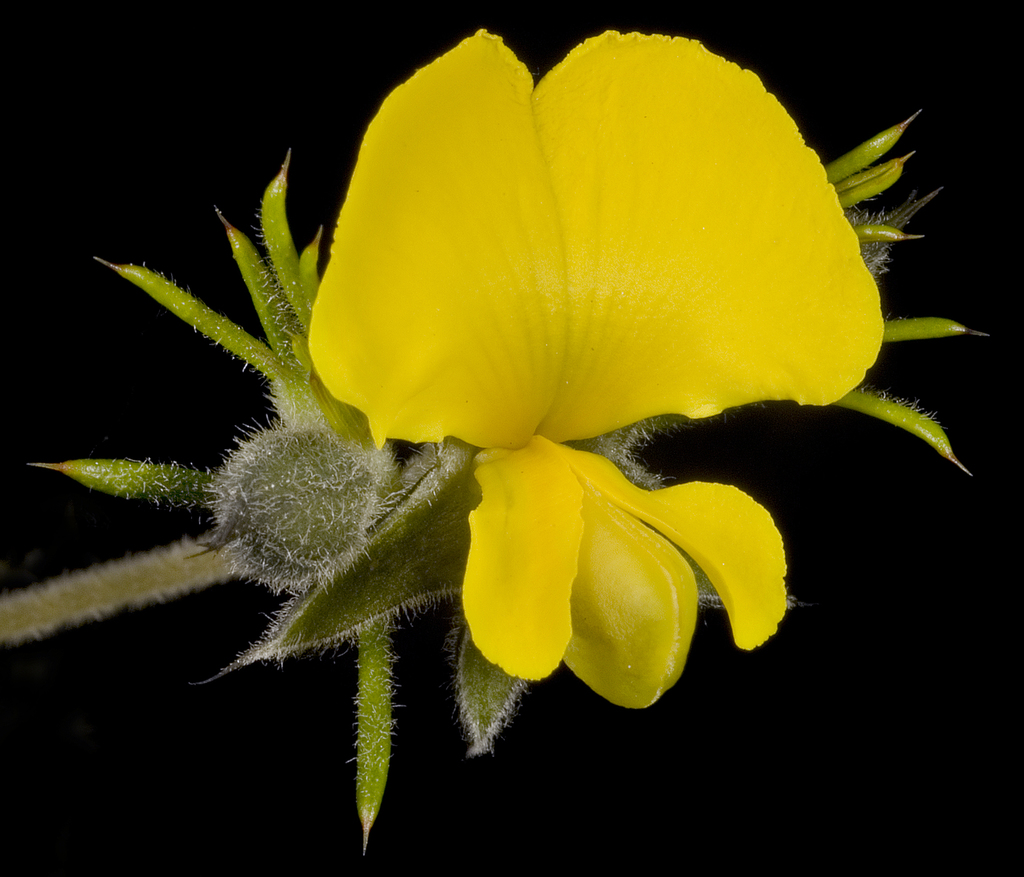
Gompholobium aristatum
Gompholobium aristatum is a species of flowering plant in the family Fabaceae and is endemic to the south-west of Western Australia. It an erect shrub that typically grows to a height of 10–80 cm (3.9–31.5 in). It flowers between July and December producing yellow, pea-like flowers. This species was first formally described in 1837 by George Bentham in Stephan Endlicher's Enumeratio plantarum quas in Novae Hollandiae ora austro-occidentali ad fluvium Cygnorum et in sinu Regis Georgii collegit Carolus Liber Baro de Hügel from specimens collected in the Swan River Colony. The specific epithet (aristatum) means "awned", referring to the leaves.
Gompholobium aristatum grows on sandplains and in winter-wet depressions in the Avon Wheatbelt, Geraldton Sandplains, Jarrah Forest and Swan Coastal Plain biogeographic regions of south-western Western Australia.
Where it lives
Recorded sightings
—
geo-referenced records in GBIF, from museums, herbaria and field observers.
Drag the globe to turn it. Dots are where records exist, not a range map; darker means more records.
In the stacks
Searching the stacks…
Every page naming Gompholobium aristatum in the Biodiversity Heritage Library →
This page is assembled live from iNaturalist, GBIF, Wikipedia, the Source Library and the Internet Archive. It is not yet part of the hand-edited codex. iNaturalist taxon 976625.