- Animals
- ›Chordates
- ›Vertebrates
- ›Mammals
- ›Therians
- ›Placental Mammals
- ›Ungulates, Carnivorans, and Allies
- ›Carnivorans
- ›Civets, Genets, and Oyans
- ›Palm Civets and Binturongs
- ›Paradoxurus
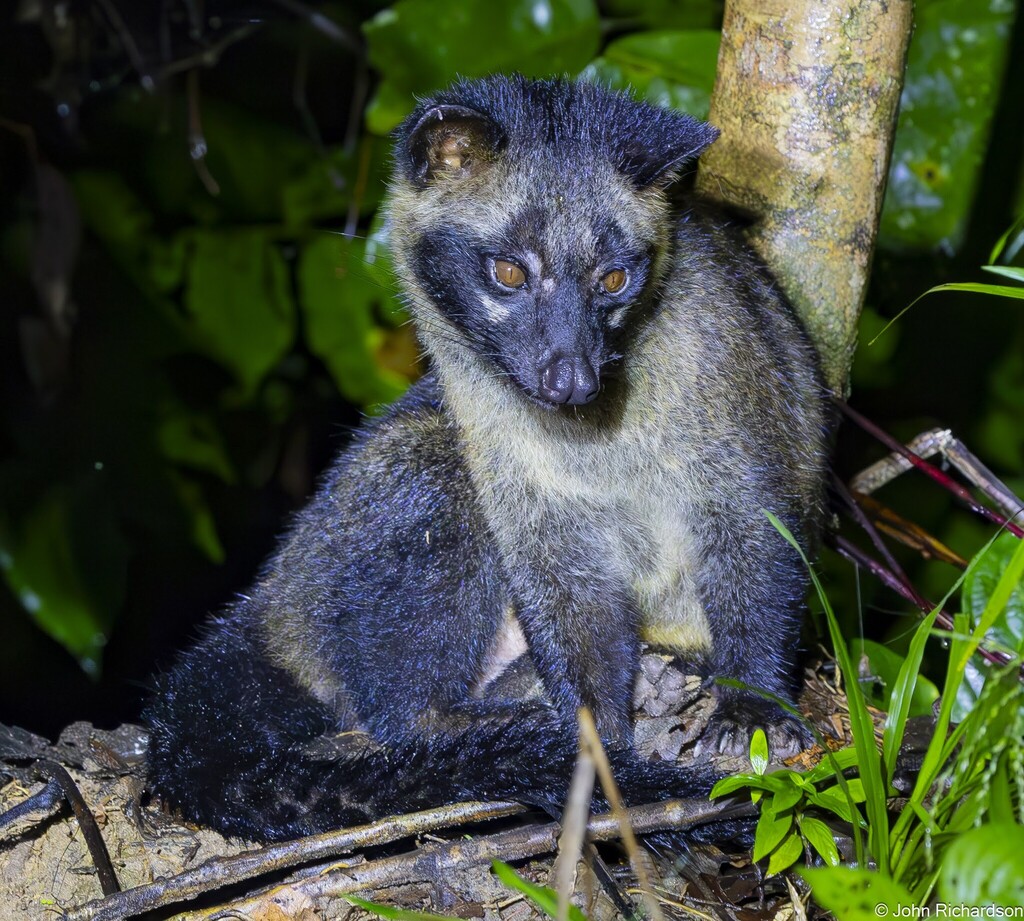
Philippine Palm Civet
Paradoxurus philippinensis
Paradoxurus is a genus of three palm civets within the viverrid family that was denominated and first described by Frédéric Cuvier in 1822. The Paradoxurus species have a broad head, a narrow muzzle with a large rhinarium that is deeply sulcate in the middle. Their large ears are rounded at the tip. The tail is nearly as long as the head and body.
From the article Paradoxurus on Wikipedia (CC BY-SA), quoted section by section
Description
Paradoxurus species have a broad head, a narrow muzzle with a large rhinarium that is deeply sulcate in the middle. Their large ears are rounded at the tip, the interior ridges and bursae are well developed. The skull exhibits marked muscular moulding, and the postorbital area is deeply constricted shortly behind the well-developed postorbital processes. It is considerably narrower than the interorbital area and than the muzzle above the canines. The dental formula is 3.1.4.23.1.4.2. The palate is not produced behind to cover the anterior half of the mesopterygoid fossa, and is flat and expanded between the posterior cheek teeth. The tail is nearly as long as the head and body, and about six times as long as the hind foot. Males do not have bacula.
Wikipedia: “Characteristics”
Listen
Looking for field recordings…
Where it lives
Recorded sightings
—
geo-referenced records in GBIF, from museums, herbaria and field observers.
Drag the globe to turn it. Dots are where records exist, not a range map; darker means more records.
In the stacks
Searching the stacks…
Every page naming Paradoxurus philippinensis in the Biodiversity Heritage Library →
This page is assembled live from iNaturalist, GBIF, Wikipedia, the Source Library and the Internet Archive. It is not yet part of the hand-edited codex. iNaturalist taxon 976115.