- Animals
- ›Chordates
- ›Vertebrates
- ›Ray-finned Fishes
- ›Carps, Characins, Catfishes and Allies
- ›Minnows, Suckers, Carps, and Loaches
- ›Suckers
- ›Suckers
- ›Typical Suckers
- ›Catostomus
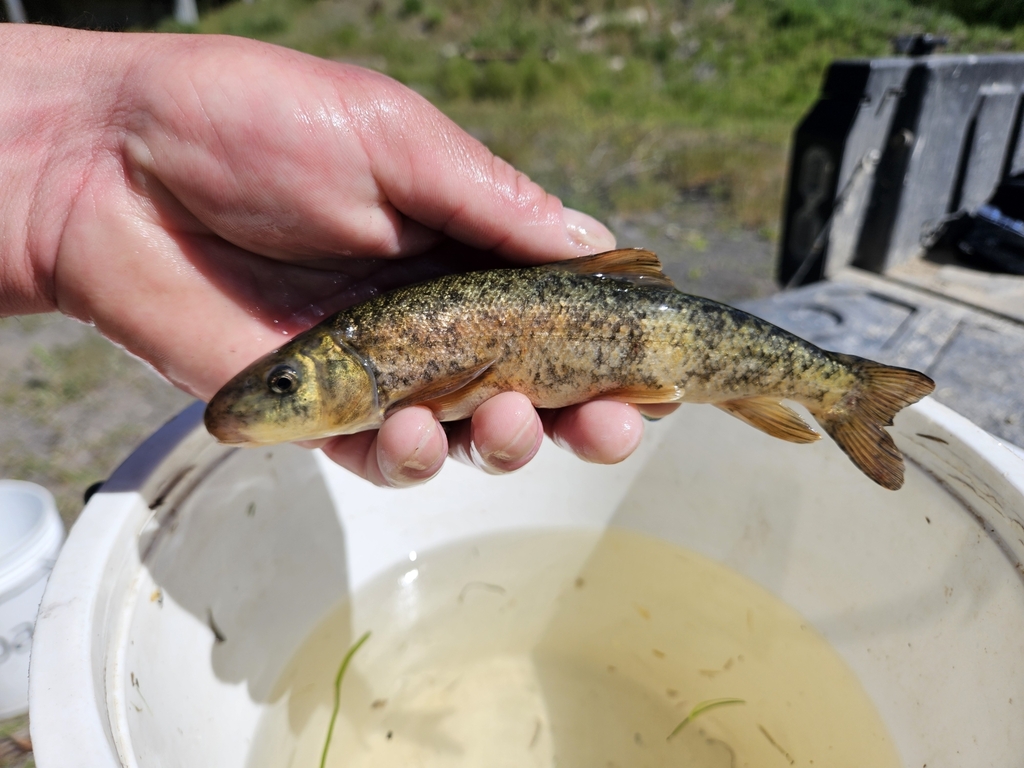
Klamath Largescale Sucker
Catostomus snyderi
The Klamath largescale sucker (Catostomus snyderi) is a species of ray-finned fish in the family Catostomidae. It is endemic to the Klamath River basin in northern California and southern Oregon, within the Western United States.
From the article Klamath largescale sucker on Wikipedia (CC BY-SA), quoted section by section
Range & habitat
This species is endemic to the Klamath River basin in northern California and southern Oregon, within the Western United States. In addition, although outside of its main range, species have also been observed as far north as British Columbia and far east as Montana. Habitat includes rocky pools and runs of creeks and small rivers, lakes, and reservoirs. Adult Klamath Largescale suckers likely lived in deep lake habitats, while juveniles stayed in streams or along lake margins. Today, several larger streams still support breeding populations. Adults have been found both near-shore and offshore in Upper Klamath Lake. They are most often found in large streams where water quality is fairly high, but can also be found in lakes. However, they cannot survive long in water temperatures that exceed 32°C and where dissolved oxygen levels are around 1 mg/L. Historically, they were likely more abundant in deep water lakes.
Wikipedia: “Range and habitat”
What it does
The species is a benthic omnivore. It is found among a variety of freshwater systems, such as lakes, rivers, and sloughs, respectively. Juveniles' diet consists of zooplankton; adults consume snails, worms, macro-invertebrates, and plant/algae material among the substrate.
Wikipedia: “Diet”
Where it lives
Recorded sightings
—
geo-referenced records in GBIF, from museums, herbaria and field observers.
Drag the globe to turn it. Dots are where records exist, not a range map; darker means more records.
In the stacks
Searching the stacks…
Every page naming Catostomus snyderi in the Biodiversity Heritage Library →
This page is assembled live from iNaturalist, GBIF, Wikipedia, the Source Library and the Internet Archive. It is not yet part of the hand-edited codex. iNaturalist taxon 96873.