- Animals
- ›Chordates
- ›Vertebrates
- ›Ray-finned Fishes
- ›Carps, Characins, Catfishes and Allies
- ›Minnows, Suckers, Carps, and Loaches
- ›Suckers
- ›Suckers
- ›Typical Suckers
- ›Catostomus
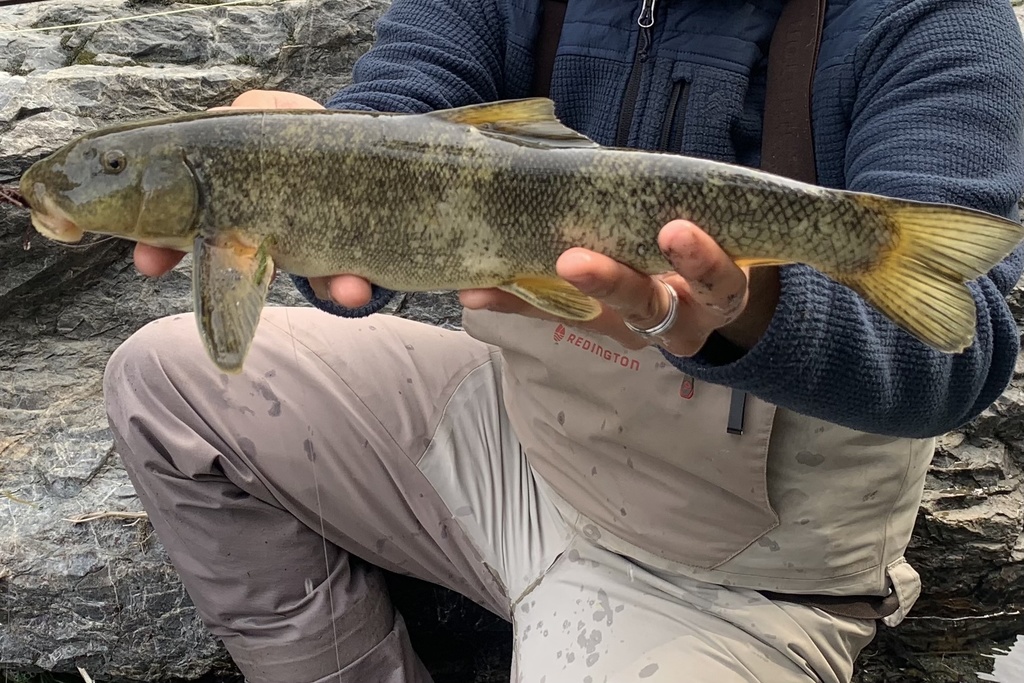
Klamath Smallscale Sucker
Catostomus rimiculus
The Klamath smallscale sucker (Catostomus rimiculus), also known as the Jenny Creek sucker, is a species of ray-finned fish in the family Catostomidae. It is a freshwater fish that primarily inhabits the Trinity and Klamath River watersheds, as well as the overall region of the Klamath Basin in general. Within the Klamath Basin, they inhabit the area along with three other sucker fish: the Lost River sucker, shortnose sucker, and the Klamath largescale sucker. These fish can vary in length from 35 cm to 50 cm, and usually have a lifespan of around 9-15 years. They often form mixed schools with speckled dace, sculpins, and juvenile steelhead.
A population of the species separated from the Klamath River by a waterfall are called Jenny Creek suckers.
From the article Klamath smallscale sucker on Wikipedia (CC BY-SA), quoted section by section
Range & habitat
Klamath smallscale suckers primarily inhabit the Trinity and Klamath River watersheds. Within the Klamath River basin it is considered rare. Genetic analyses suggest that six or fewer Klamath smallscale suckers from the Klamath River founded the population in the Smith River.
Wikipedia: “Distribution”
What it does
Klamath smallscale suckers migrate to tributary streams to reproduce in the spring. Female suckers are able to produce 15,000-20,000 eggs, which male suckers then externally fertilize. They migrate to the larger streams where they spend their adulthood.
Wikipedia: “Reproduction”
Where it lives
Recorded sightings
—
geo-referenced records in GBIF, from museums, herbaria and field observers.
Drag the globe to turn it. Dots are where records exist, not a range map; darker means more records.
In the stacks
Searching the stacks…
Every page naming Catostomus rimiculus in the Biodiversity Heritage Library →
This page is assembled live from iNaturalist, GBIF, Wikipedia, the Source Library and the Internet Archive. It is not yet part of the hand-edited codex. iNaturalist taxon 96871.