- Animals
- ›Chordates
- ›Vertebrates
- ›Ray-finned Fishes
- ›Carps, Characins, Catfishes and Allies
- ›Minnows, Suckers, Carps, and Loaches
- ›Suckers
- ›Suckers
- ›Typical Suckers
- ›Catostomus
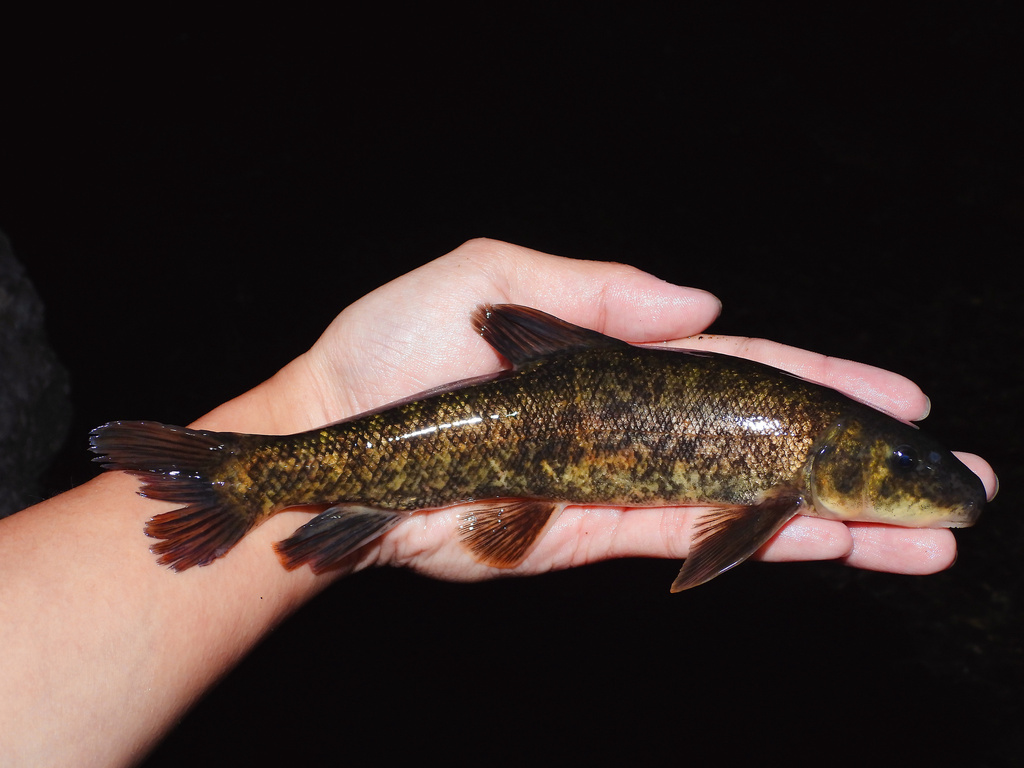
Owens Sucker
Catostomus fumeiventris
The Owens sucker is a fish in the family Catostomidae that is endemic to eastern California. The species name fumeiventris comes from the Latin fumeus meaning "smoky" and ventris meaning "belly." Originally described as a population of sandbar suckers (Catostomus arenarius), it became recognized as its own species in 1938. Owens suckers are closely related to Tahoe suckers and possess the ability to hybridize with Santa Ana suckers.
From the article Owens sucker on Wikipedia (CC BY-SA), quoted section by section
Description
The Owens sucker has an inferior mouth facing the bottom of water sources and has pectoral fins flattening out, suggesting it prefers staying near the bottom of the river or lake bed. Tending to feed at night, this fish often feeds on algae and other organic matter that sinks to the bottom of these waterways. It has 10 dorsal fin rays with a dusky abdomen more pronounced in nuptial males and lacks the red lateral stripe of a similar species, the Tahoe Sucker. The Owens sucker is similar to the Tahoe sucker (Catostomus tahoensis), but it has coarser scales and is duller in colour. The Owens Sucker larva has a more complete line of melanophores around its gut when compared to the Tahoe sucker. Owens suckers also have differently shaped mouths when compared. The Owens sucker has fewer than 80 lateral line scales as opposed to the Tahoe suckers possessing more than 80 lateral line scales, making for easier distinctions. The adults are slaty-colored. Some individuals, especially spawning males, have very dark bodies with dusky bellies. It grows to a maximum size of 50 cm (20 in) but is usually found around 30 cm (12 in) in total length.
Range & habitat
Owens suckers are endemic to the Owens River in the Owens Valley of eastern California and have been introduced into June Lake in the Mono Lake basin and to the Santa Clara River system as a result of a release of water from the Owens River through the Los Angeles Aqueduct. It is abundant in Crowley Lake, with populations in Convict Lake and Lake Sabrina, and populations have been established in the Owens River sanctuary. This species is also present in Sespe Creek near the outlet of the Fillmore Hatchery and Piru Creek above Lake Piru, California. The endemic location of the Owens sucker, Owens Valley, originally lacked aquatic diversity, with only two minnow species, the Owens sucker and a killifish, notably missing any species of trout that were common in areas North and West of the Owens Valley. The exact population in the Santa Clara system is uncertain, but introduced Owens suckers often end up hybridizing with the native Santa Ana suckers in this region.
Wikipedia: “Distribution”
Where it lives
Recorded sightings
—
geo-referenced records in GBIF, from museums, herbaria and field observers.
Drag the globe to turn it. Dots are where records exist, not a range map; darker means more records.
In the stacks
Searching the stacks…
Every page naming Catostomus fumeiventris in the Biodiversity Heritage Library →
This page is assembled live from iNaturalist, GBIF, Wikipedia, the Source Library and the Internet Archive. It is not yet part of the hand-edited codex. iNaturalist taxon 96863.