- Plants
- ›Vascular Plants
- ›flowering plants
- ›Dicots
- ›Sunflowers, Bellflowers, Fanflowers, and Allies
- ›Sunflowers, Daisies, Asters, and Allies
- ›chicories, dandelions, and allies
- ›Lettuce, Chicory, Dandelion and Salsify Tribe
- ›dandelions, hawksbeards, and rattlesnake roots
- ›Taraxacum

Arctic Dandelions
Arctica
Arctica or Arctida is a hypothetical ancient continent which formed approximately 2.565 billion years ago in the Neoarchean era. It was made of Archaean cratons, including the Siberian Craton, with its Anabar/Aldan shields in Siberia, and the Slave, Wyoming, Superior, and North Atlantic cratons in North America. Arctica was named by Rogers 1996 because the Arctic Ocean formed by the separation of the North American and Siberian cratons. Russian geologists writing in English call the continent "Arctida" since it was given that name in 1987, alternatively the Hyperborean craton, in reference to the hyperboreans in Greek mythology.
Nikolay Shatsky (Shatsky 1935) was the first to assume that the crust in the Arctic region was of continental origin. Shatsky, however, was a "fixist" and, erroneously, explained the presence of Precambrian and Paleozoic metamorphic rocks on the New Siberian, Wrangel, and De Long Islands with subduction. "Mobilists", on the other hand, also erroneously, proposed that North America had rifted from Eurasia and that the Arctic basins had opened behind a retreating Alaska.
12 branches of this group, most-observed first

Alaska Dandelion
speciesTaraxacum alaskanum
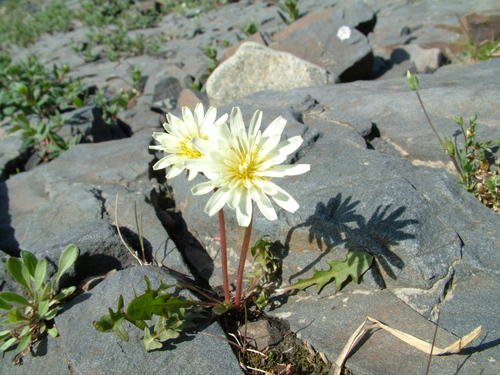
arctic dandelion
speciesTaraxacum arcticum

Northern Dandelion
speciesTaraxacum phymatocarpum

Harp Dandelion
speciesTaraxacum scopulorum

Taraxacum hyparcticum
speciesTaraxacum hyparcticum

Pink Dandelion
speciesTaraxacum carneocoloratum
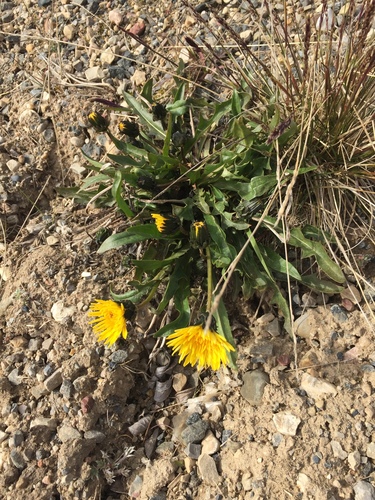
Holmen's dandelion
speciesTaraxacum holmenianum
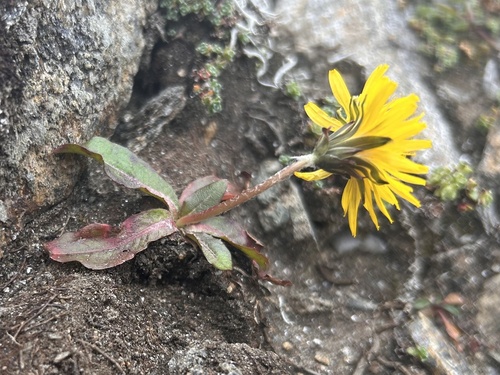
Taraxacum reichenbachii
speciesTaraxacum reichenbachii
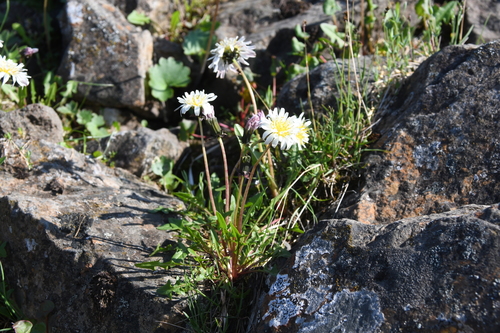
Taraxacum byrrangicum
speciesTaraxacum byrrangicum
Taraxacum dovrense
speciesTaraxacum dovrense
Taraxacum alatopetiolum
speciesTaraxacum alatopetiolum
Taraxacum atrans
speciesTaraxacum atrans
Where it lives
Recorded sightings
—
geo-referenced records in GBIF, from museums, herbaria and field observers.
Drag the globe to turn it. Dots are where records exist, not a range map; darker means more records.
In the stacks
Searching the stacks…
Every page naming Arctica in the Biodiversity Heritage Library →
This page is assembled live from iNaturalist, GBIF, Wikipedia, the Source Library and the Internet Archive. It is not yet part of the hand-edited codex. iNaturalist taxon 967533.