- Animals
- ›Arthropods
- ›Hexapods
- ›Insects
- ›Winged and Once-winged Insects
- ›Butterflies and Moths
- ›Butterflies
- ›Swallowtails and Parnassians
- ›Swallowtails
- ›Fluted Swallowtails
- ›Papilio
- ›Menelaides
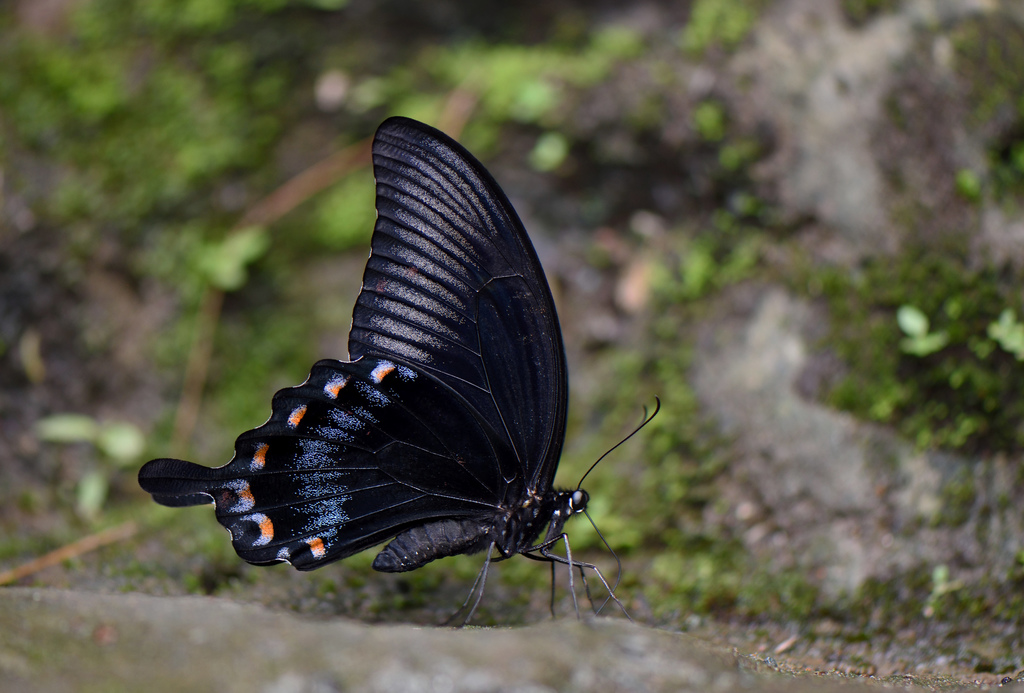
Ascalaphus swallowtail
Papilio ascalaphus
Papilio ascalaphus, the black phoenix or Ascalaphus swallowtail, is a butterfly of the family Papilionidae. It is found in Indonesia and the Philippines.
The wingspan is 140–160 mm. P. ascalaphus. Underside of the body almost without traces of grey-white longitudinal lines; palpi with white spot, both sexes tailed and above and beneath without patches at the base. : forewing with yellowish grey, hindwing with grey-blue or yellowish grey stripes before the distal margin; beneath the stripes of the forewing more discally placed, those of the hindwing replaced by much shorter grey-blue discal spots, distally to which are placed yellow submarginal spots, more or less shaded with blue. The female very different from the male the forewing from the base to about the 2. median black, then follows a large, posteriorly narrowed central white area, which is intersected by black stripes, the distal margin again broadly black; hind¬ wing with large white central area, interrupted by the veins, which in a second female-form is only indicated by indistinctly defined grey and bluish patches; the red-yellow submarginal spots, with white tips, are well developed above and beneath. The earlier stages not described. The yellow egg is laid on Citrus, on which the larva lives. The butterfly is very common, especially in lower elevations near the coast. It is frequently found at Papaja flowers. The females are also fond of hiding in the foliage of Citrus trees and fly about even in the gardens and streets of Macassar (Fruhstorfer). — ascalaphus Bdv.
Listen
Looking for field recordings…
Where it lives
Recorded sightings
—
geo-referenced records in GBIF, from museums, herbaria and field observers.
Drag the globe to turn it. Dots are where records exist, not a range map; darker means more records.
In the stacks
Searching the stacks…
Every page naming Papilio ascalaphus in the Biodiversity Heritage Library →
This page is assembled live from iNaturalist, GBIF, Wikipedia, the Source Library and the Internet Archive. It is not yet part of the hand-edited codex. iNaturalist taxon 946746.