- Animals
- ›Chordates
- ›Vertebrates
- ›Ray-finned Fishes
- ›Spiny-rayed fishes
- ›Rivulines, Killifishes, and Livebearers
- ›Rivulines
- ›African Rivulines
- ›Aphyosemion
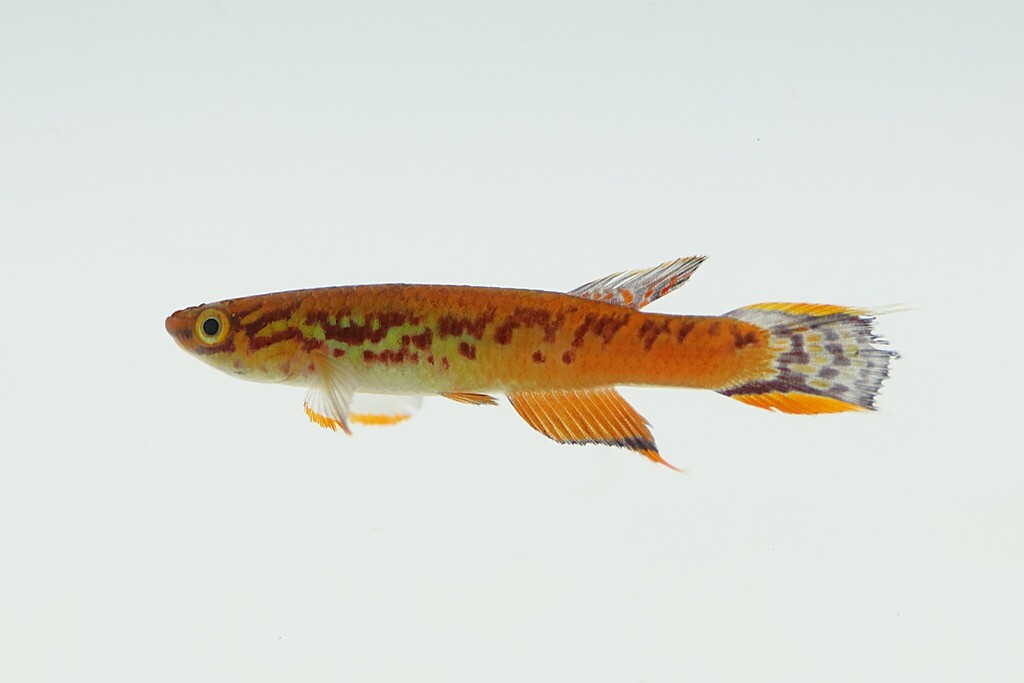
Lyretail Panchax
Aphyosemion australe
Aphyosemion australe, the lyretail panchax, golden panchax or Cape Lopez lyretail, is a species of freshwater fish belonging to the family Aplocheilidae. It is found around Cape Lopez and in surrounding areas in Gabon.
From the article Aphyosemion australe on Wikipedia (CC BY-SA), quoted section by section
Description
A. australe comes in a two colours. The wild type are brown and called 'chocolate' in the aquarium hobby and a man made 'gold' form exists which is orange; this form was spontaneous mutation bred by a Finnish aquarist name Hjerssen in 1952. JJ Scheel in "Rivulins of the World World (TFH PRess, 1970) pointed out these were not a separate species and deprecated the name Aphyosemion australe hjersseni. An Albino strain appeared from the "hjersseni" strain around early 2022 and there are also darker "chocolate" and "spotless" varieties in the aquarium hobby. Males can reach a length of around six cm, with females being slightly smaller. The caudal fin is lyre-shaped, which is characteristic of the genus. The females also are less colourful; their body colouration is brownish tan for the wild form and a light tan for the gold/orange form, and they have rounder fins.
Wikipedia: “Appearance”
Where it lives
Recorded sightings
—
geo-referenced records in GBIF, from museums, herbaria and field observers.
Drag the globe to turn it. Dots are where records exist, not a range map; darker means more records.
In the stacks
Searching the stacks…
Every page naming Aphyosemion australe in the Biodiversity Heritage Library →
This page is assembled live from iNaturalist, GBIF, Wikipedia, the Source Library and the Internet Archive. It is not yet part of the hand-edited codex. iNaturalist taxon 94290.