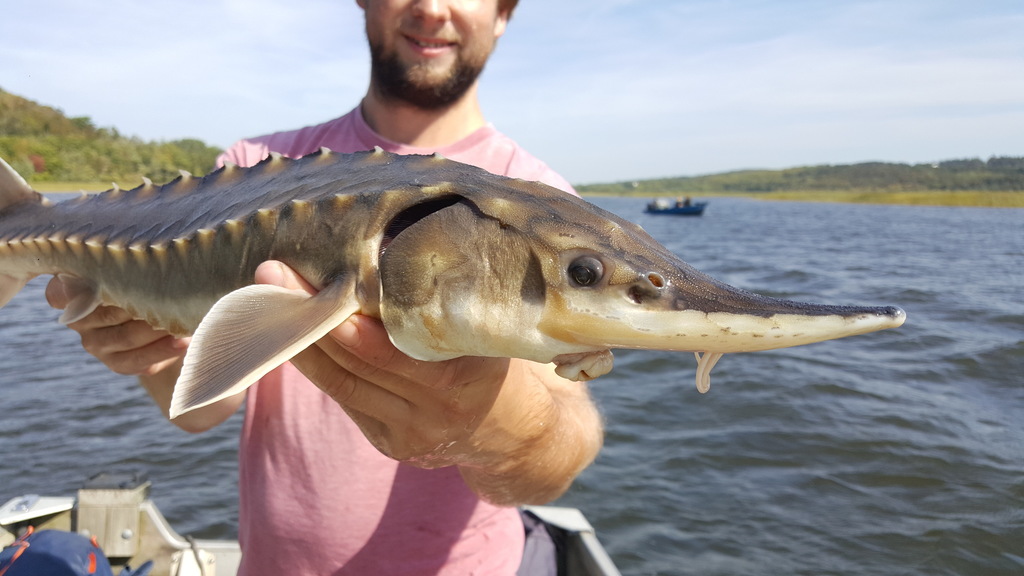
Atlantic Sturgeon
Acipenser oxyrinchus
The Atlantic sturgeon (Acipenser oxyrinchus) is a large species of sturgeon native to both sides of the Atlantic Ocean, and associated river basins. It is a member of the family Acipenseridae, and, along with other sturgeon, it is sometimes considered a living fossil. The main range of the Atlantic sturgeon is in eastern North America, extending from New Brunswick, Canada, to the eastern coast of Florida, United States. A highly endangered disjunct population occurs in the Baltic region of Europe (today only through a reintroduction project).
The Atlantic sturgeon was in great abundance when the first European settlers came to North America, but has since declined due to overfishing, water pollution, and habitat impediments such as dams. It is considered threatened, endangered, and even locally extirpated in many of its original habitats. The fish can reach 60 years of age, 15 ft (4.6 m) in length and over 800 lb (360 kg) in weight.
From the article Atlantic sturgeon on Wikipedia (CC BY-SA), quoted section by section
What it does
Sturgeon are an anadromous species that live solitarily or in small groups. They migrate upriver in the spring to spawn. Sturgeons tend to inhabit the shallow waters of coastal shelves, coastal and estuarine areas on soft bottom in the sea, and can live down to a depth of 160 ft (49 m). Adults are migratory while at sea and will make long migrations to coastal areas, while juveniles will stay in fresh or brackish water until they are between two and five years of age. However, many larvae and juveniles do start to migrate and disperse small distances from their spawning sites. Sturgeons are most generally known for feeding on crustaceans, worms, and molluscs. Sturgeons may have dominance hierarchies with large fish being dominant when competing for limited foraging space.
Wikipedia: “Behavior”
Where it lives
Recorded sightings
—
geo-referenced records in GBIF, from museums, herbaria and field observers.
Drag the globe to turn it. Dots are where records exist, not a range map; darker means more records.
In the stacks
Searching the stacks…
Every page naming Acipenser oxyrinchus in the Biodiversity Heritage Library →
This page is assembled live from iNaturalist, GBIF, Wikipedia, the Source Library and the Internet Archive. It is not yet part of the hand-edited codex. iNaturalist taxon 93187.