On eBird ↗
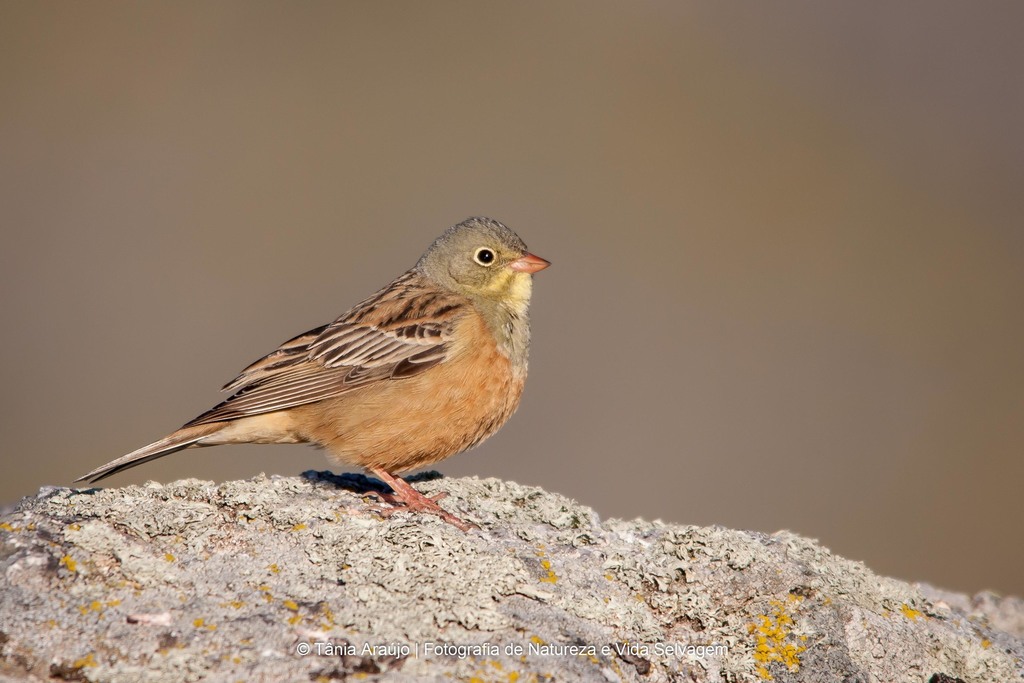
Ortolan Bunting
Live sightings near you, the range map, bar charts of when it is seen, and Macaulay Library photos and recordings.
Ortolan Bunting
Emberiza hortulana
The ortolan (Emberiza hortulana), also called ortolan bunting, is a Eurasian bird in the bunting family Emberizidae, a passerine family now separated by most modern scholars from the finches, Fringillidae. The genus name Emberiza is from Alemannic German Embritz, a bunting. The specific name hortulana is from the Italian name for this bird, ortolana. The English ortolan is derived from Middle French hortolan, "gardener".
The ortolan is served in French cuisine, typically cooked and eaten whole. Traditionally, diners cover their heads with their napkin or a towel while eating the delicacy. The ortolan was so widely eaten that its French populations had dropped dangerously low by the 1990s. French laws protecting the bird, and an EU-wide prohibition against killing or capturing it, have had little effect on the ortolan's numbers.
From the article Ortolan bunting on Wikipedia (CC BY-SA), quoted section by section
Description
The ortolan bunting is 16–17 centimetres (6+1⁄4–6+3⁄4 inches) in length and has a wing-span of 23–29 cm (9–11+1⁄2 in). In appearance and habits it much resembles its relative the yellowhammer, but lacks the bright colouring of that species; the ortolan's head, for instance, is greenish-grey, instead of a bright yellow. The song of the male ortolan resembles that of the yellowhammer.
Range & habitat
A native of most European countries and West Asia, it reaches as far north as Scandinavia and beyond the Arctic Circle, frequenting cornfields and their neighbourhoods. It is an uncommon vagrant in spring, and particularly autumn, to the British Isles. Sightings in the UK are less common than they were, owing to the species' population decline due to overexploitation in France. It was spotted at Kenjar Coastal Karnataka, India, in November 2018 and photographed by birdwatchers. Some birders commented that it is the first photographic record of an ortolan bunting in India.
Wikipedia: “Distribution and habitat”
What it does
Ortolan nests are placed on or near the ground. The maximum age recorded is six years and ten months for a bird found dead in Switzerland. Seeds are the natural diet, but beetles and other insects are taken when feeding their young.
Wikipedia: “Behaviour”
At the table
The birds are caught with nets set during their autumn migratory flight to Africa. They are then kept in covered cages or boxes, where they are force-fed grain, usually millet seed. Once they have doubled in bulk, they are suspended upside down over a container of Armagnac, and by dipping, are drowned before being marinated in the brandy. The birds are then plucked, salted and peppered and cooked in their own fat for seven minutes. Many consumers place the bird feet first into their mouth while holding onto the bird's head, eating the ortolan whole, with or without the head. Some spit out the larger bones, while others eat the whole bird head, bones and all. The traditional way French gourmands eat ortolans is to cover their heads and face with a large napkin or towel while consuming the bird. The purpose of the towel is debated. Some claim it is to retain the maximum aroma with the flavour as they consume the entire bird at once, while according to The Daily Telegraph, "Tradition dictates that [the towel] is to shield – from God's eyes – the shame of such a decadent and disgraceful act", and others have suggested the towel simply hides the consumers spitting out bones. …
Wikipedia: “Culinary use”
Listen
Looking for field recordings…
Where it lives
Recorded sightings
—
geo-referenced records in GBIF, from museums, herbaria and field observers.
Drag the globe to turn it. Dots are where records exist, not a range map; darker means more records.
In the old herbals & bestiaries


In the stacks
Searching the stacks…
Every page naming Emberiza hortulana in the Biodiversity Heritage Library →
This page is assembled live from iNaturalist, GBIF, Wikipedia, the Source Library and the Internet Archive. It is not yet part of the hand-edited codex. iNaturalist taxon 9196.