- Plants
- ›Vascular Plants
- ›flowering plants
- ›Dicots
- ›Legumes, Milkworts, and Allies
- ›Legumes
- ›Acacias, Mimosas, Mesquites, and Allies
- ›Senegalia
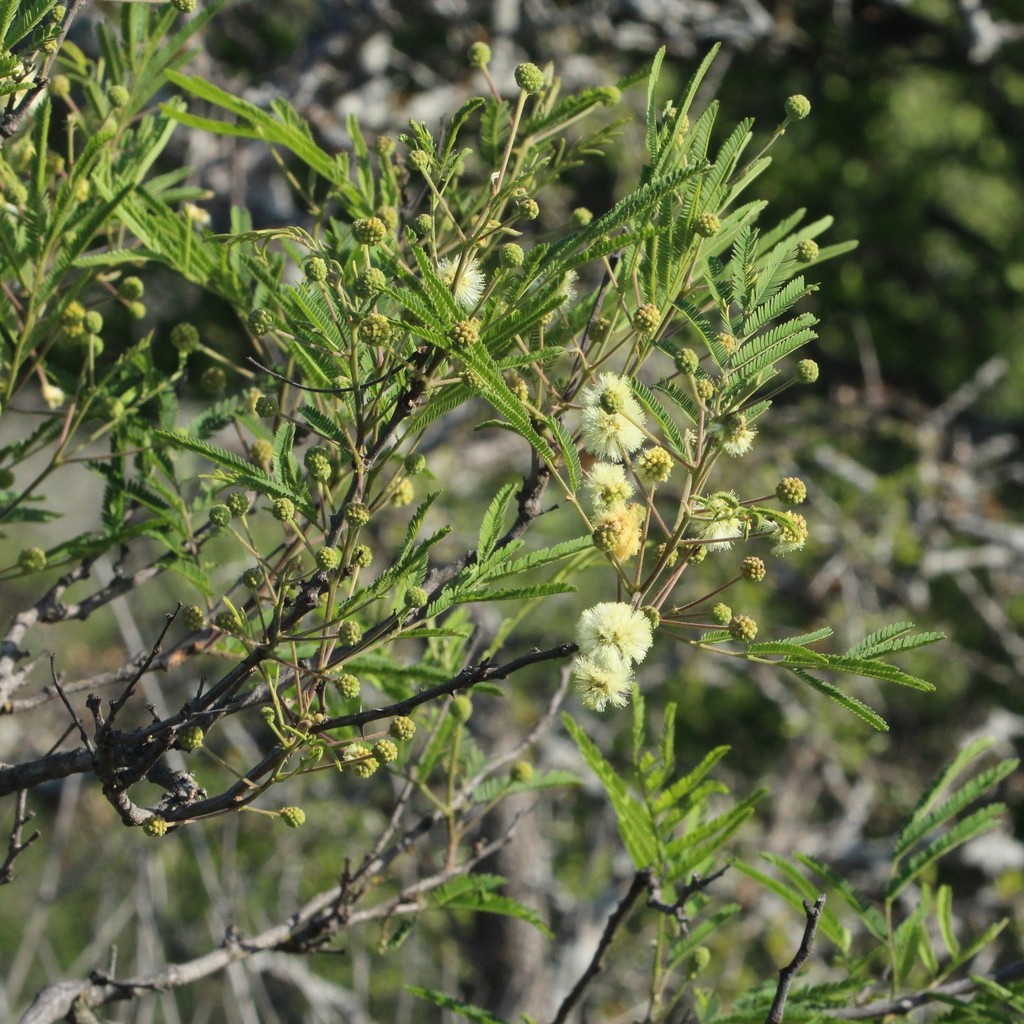
Guajillo
Senegalia berlandieri
Senegalia berlandieri (Berlandier acacia, guajillo acacia, guajillo, huajillo, huajilla) is a shrub native to the Southwestern United States and northeast Mexico that belongs to the Mimosoid clade of Fabaceae. It grows 1 to 5 metres (3.3 to 16.4 ft) tall, with blossoms that are spherical and white, occurring from February through April. The berlandieri epithet comes from the name of Jean-Louis Berlandier, a French naturalist who studied wildlife native to Texas and Mexico. S. berlandieri contains a wide variety of alkaloids and has been known to cause toxic reactions in domestic animals such as goats.
From the article Senegalia berlandieri on Wikipedia (CC BY-SA), quoted section by section
At the table
Senegalia berlandieri is toxic to livestock and thus should not be used as forage or fodder.
Wikipedia: “Uses”
Where it lives
Recorded sightings
—
geo-referenced records in GBIF, from museums, herbaria and field observers.
Drag the globe to turn it. Dots are where records exist, not a range map; darker means more records.
In the stacks
Searching the stacks…
Every page naming Senegalia berlandieri in the Biodiversity Heritage Library →
This page is assembled live from iNaturalist, GBIF, Wikipedia, the Source Library and the Internet Archive. It is not yet part of the hand-edited codex. iNaturalist taxon 898697.