- Animals
- ›Arthropods
- ›Hexapods
- ›Insects
- ›Winged and Once-winged Insects
- ›Ants, Bees, Wasps, and Sawflies
- ›Narrow-waisted Wasps, Ants, and Bees
- ›Ants, Bees, and Stinging Wasps
- ›Bees and Apoid Wasps
- ›Bees
- ›Plasterer Bees
- ›Neopasiphaeinae
- ›Neopasiphaeini
- ›Leioproctus
- ›Leioproctus
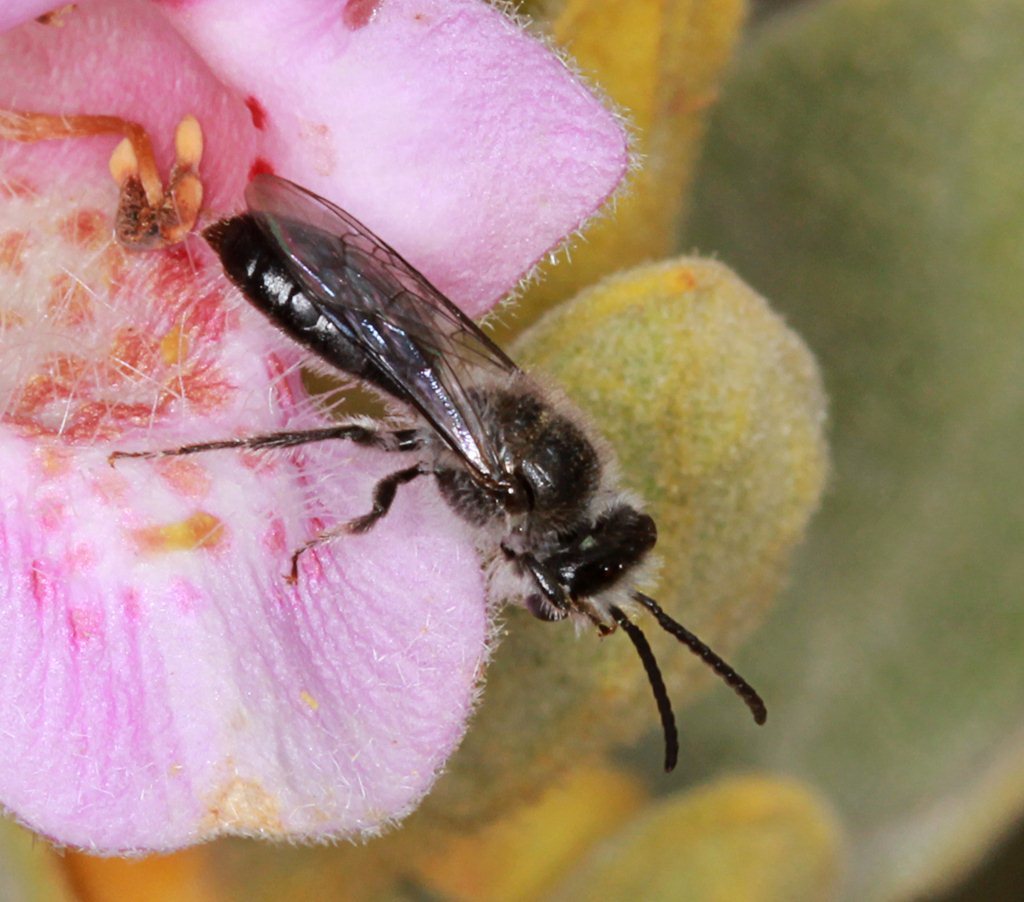
Leioproctus capito
Leioproctus capito, or Leioproctus (Leioproctus) capito, is a species of bee in the family Colletidae and subfamily Colletinae. It is endemic to Australia. It was described by Australian entomologist Terry Houston in 1990.
From the article Leioproctus capito on Wikipedia (CC BY-SA), quoted section by section
Description
The male holotype body length is about 11 mm, the female paratype about 10 mm. Integumental colouration is mainly black to dark brown; the hair is mainly white.
Range & habitat
The species occurs in the arid Goldfields–Esperance region of Western Australia, between Mount Magnet and Laverton, and extending into the far north of South Australia. The type locality is Banjawarn Homestead.
Wikipedia: “Distribution and habitat”
What it does
The adults are flying mellivores. Flowering plants visited by the bees include Eremophila spathulata and Dipteracanthus species.
== References ==
Wikipedia: “Behaviour”
Listen
Looking for field recordings…
Where it lives
Recorded sightings
—
geo-referenced records in GBIF, from museums, herbaria and field observers.
Drag the globe to turn it. Dots are where records exist, not a range map; darker means more records.
In the stacks
Searching the stacks…
Every page naming Leioproctus capito in the Biodiversity Heritage Library →
This page is assembled live from iNaturalist, GBIF, Wikipedia, the Source Library and the Internet Archive. It is not yet part of the hand-edited codex. iNaturalist taxon 893519.