- Plants
- ›Vascular Plants
- ›flowering plants
- ›Dicots
- ›Legumes, Milkworts, and Allies
- ›Legumes
- ›Faboideae
- ›Phaseoleae
- ›Glycininae
- ›Amphicarpaea
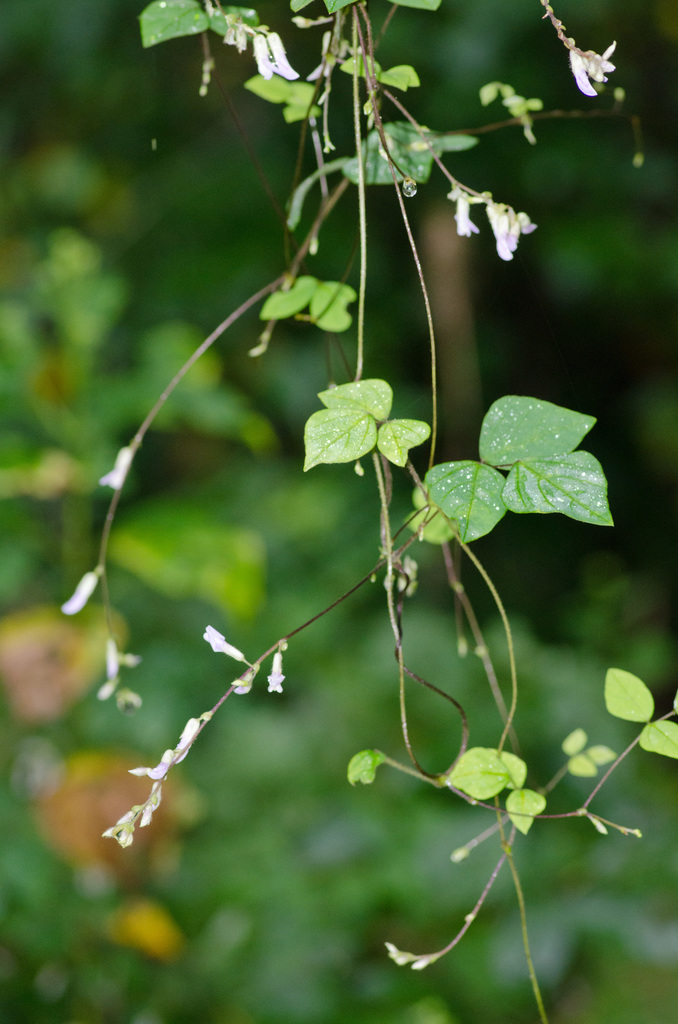
American hog-peanut
Amphicarpaea bracteata
Amphicarpaea bracteata (American hog peanut or hog-peanut or ground bean) is an annual to perennial vine in the legume family, native to woodland, thickets, and moist slopes in eastern North America. A. bracteata can be found in eastern North America, as well as further west into the Midwestern region, including Iowa, Indiana, Illinois, and Wisconsin.
From the article Amphicarpaea bracteata on Wikipedia (CC BY-SA), quoted section by section
At the table
The name 'hog-peanut" comes from the grazing of plants and consumption of the subterranean seeds by hogs and other livestock. Amphicarpaea was used by indigenous groups, like the Cherokee and Iroquois people, as an antidiarrheal, gastric medication, and cathartic, as well as a treatment for snake bites and tuberculosis.
Wikipedia: “Agricultural and medicinal uses”
Where it lives
Recorded sightings
—
geo-referenced records in GBIF, from museums, herbaria and field observers.
Drag the globe to turn it. Dots are where records exist, not a range map; darker means more records.
In the stacks
Searching the stacks…
Every page naming Amphicarpaea bracteata in the Biodiversity Heritage Library →
This page is assembled live from iNaturalist, GBIF, Wikipedia, the Source Library and the Internet Archive. It is not yet part of the hand-edited codex. iNaturalist taxon 85485.