- Plants
- ›Vascular Plants
- ›flowering plants
- ›Dicots
- ›Legumes, Milkworts, and Allies
- ›Legumes
- ›Faboideae
- ›Hedysareae
- ›Hedysarum
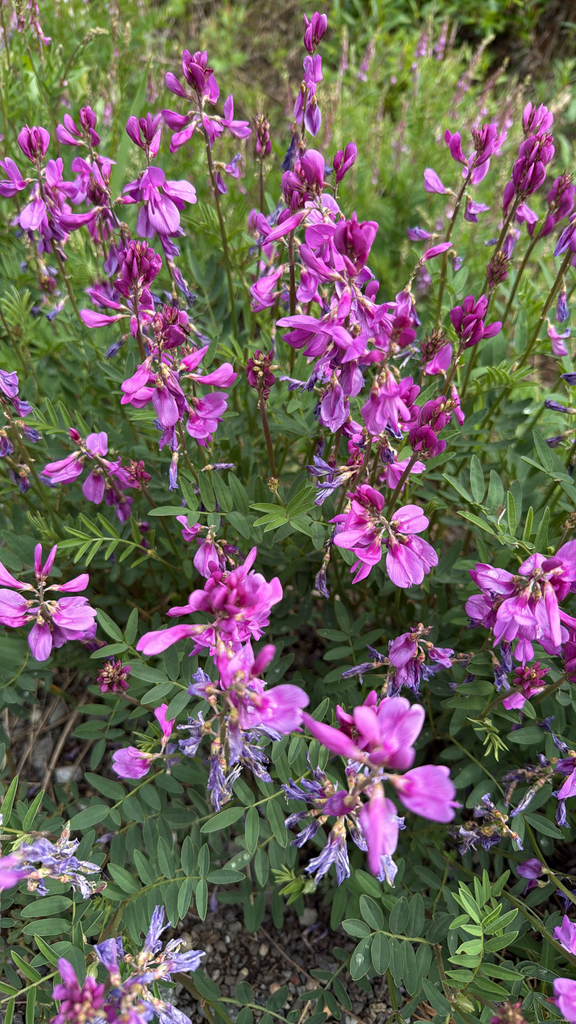
Boreal Sweet-vetch
Hedysarum boreale
Hedysarum boreale is a species of flowering plant in the family Fabaceae, or legume family, and is known by the common names Utah sweetvetch, boreal sweet-vetch, northern sweetvetch, and plains sweet-broom. It is native to North America, where it is widespread in northern and western regions of Canada and the United States. The ssp. mackenzii can even be found in the Canadian Arctic Archipelago.
This species is quite variable in morphology. There are several ecotypes. In general, it is a perennial herb growing from a deep taproot with a woody stem base. It has nitrogen-fixing root nodules. The plant grows 1 to 2 feet (0.3 to 0.6 m) tall. The hairless leaves are compound, divided into a number of leaflets. The inflorescence is a raceme of white, pink, or purple flowers. The fruit is a legume pod containing kidney-shaped seeds. Honeybees pollinate the flowers.
Where it lives
Recorded sightings
—
geo-referenced records in GBIF, from museums, herbaria and field observers.
Drag the globe to turn it. Dots are where records exist, not a range map; darker means more records.
In the stacks
Searching the stacks…
Every page naming Hedysarum boreale in the Biodiversity Heritage Library →
This page is assembled live from iNaturalist, GBIF, Wikipedia, the Source Library and the Internet Archive. It is not yet part of the hand-edited codex. iNaturalist taxon 84822.