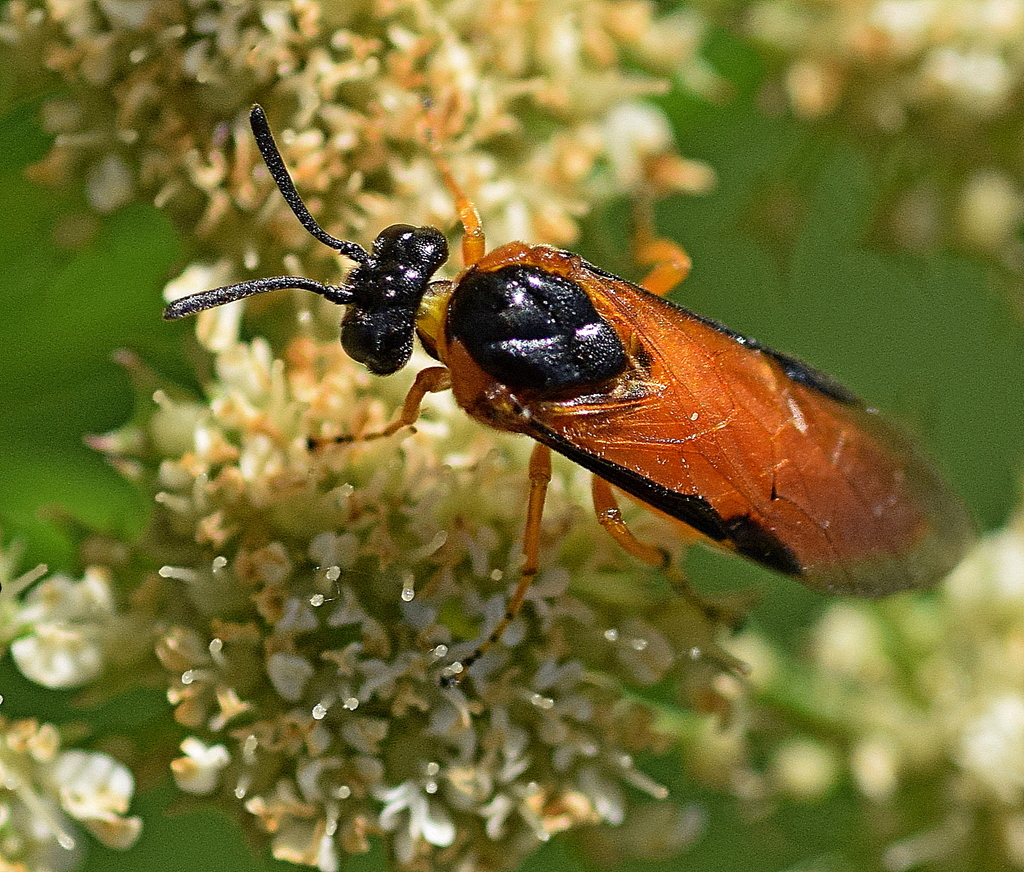
Sawflies, Horntails, and Wood Wasps
Symphyta
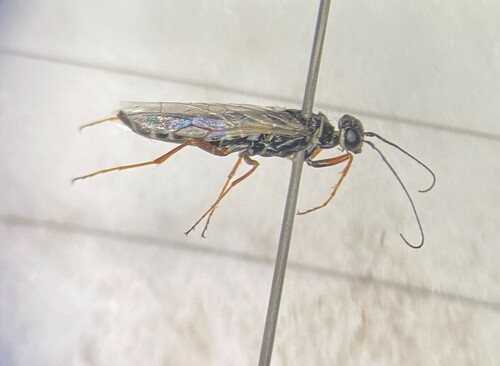
Sawflies are wasp-like insects that are in the suborder Symphyta within the order Hymenoptera. The common name comes from the saw-like appearance of the ovipositor, which females use to cut into the plants where they lay their eggs. The name is associated especially with the Tenthredinoidea, by far the largest superfamily in the suborder, with about 7,000 known species in the entire suborder. There are 8,000 described species in more than 800 genera.
Despite their given taxonomic rank of suborder, Symphyta is a paraphyletic group, consisting of several basal groups within the order Hymenoptera, with each one rooted inside the previous group; the various superfamilies of insects called "sawfly" do form a natural group or clade, but this clade also includes the Apocrita – the ants, bees, and wasps – which are not considered sawflies. The primary distinction between sawflies and the Apocrita is that the adult sawflies (the imago) lack a "wasp waist" or petiole; the segments connecting the abdomen and the thorax smoothly transition between the two (leading to their scientific name). Sawflies first appeared 250 million years ago in the Triassic. The oldest superfamily, the Xyeloidea, is still extant today. Over 200 million years ago, a lineage of sawflies evolved a parasitoid lifestyle, with carnivorous larvae that ate the eggs or larvae of other insects. Sawflies are distributed globally, though they are more diverse in the northernmost hemispheres.
8 branches of this suborder, most-observed first

Typical Sawflies
superfamilyTenthredinoidea

Horntails and Allies
superfamilySiricoidea

Stem Sawflies and Allies
superfamilyCephoidea
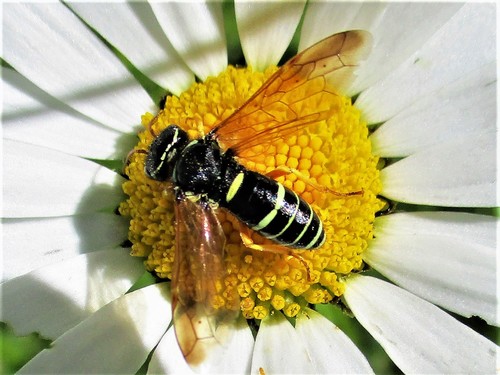
Pamphilioidea
superfamilyPamphilioidea
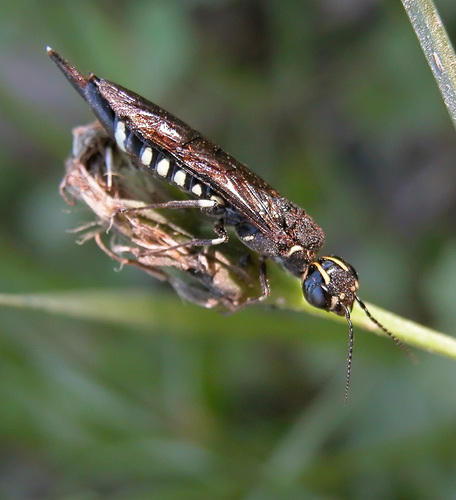
Xiphydrioidea
superfamilyXiphydrioidea

Xyeloidea
superfamilyXyeloidea
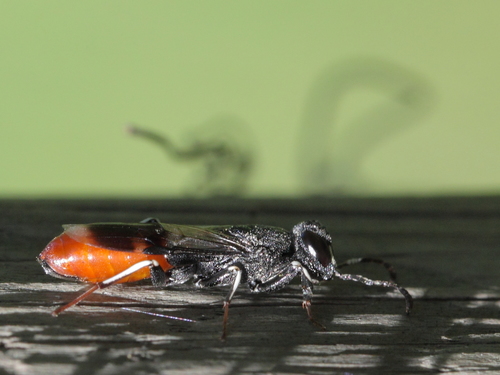
Orussoidea
superfamilyOrussoidea
Anaxyeloidea
superfamilyAnaxyeloidea
Where it lives
Recorded sightings
—
geo-referenced records in GBIF, from museums, herbaria and field observers.
Drag the globe to turn it. Dots are where records exist, not a range map; darker means more records.
In the stacks
Searching the stacks…
Every page naming Symphyta in the Biodiversity Heritage Library →
This page is assembled live from iNaturalist, GBIF, Wikipedia, the Source Library and the Internet Archive. It is not yet part of the hand-edited codex. iNaturalist taxon 84643.