 NL·0379
Herbarium of the Nature Library
- Name
- Cyanocitta cristata
- Family
- Corvidae
- Native to
- Southern Canada and the eastern and central United States, west to the Rockies' foothills
- Habitat
- Deciduous forest, Mixed forest, Gardens, Woodland edge
On eBird ↗
Blue Jay
Live sightings near you, the range map, bar charts of when it is seen, and Macaulay Library photos and recordings.
Blue jay
Cyanocitta cristata
Also calledChara azul (Spanish) · Geai bleu (French)
A loud, crested corvid of eastern North America, brilliant blue above and white below. It caches thousands of acorns each autumn, and the ones it forgets are credited with helping oak forests spread north after the Ice Age.
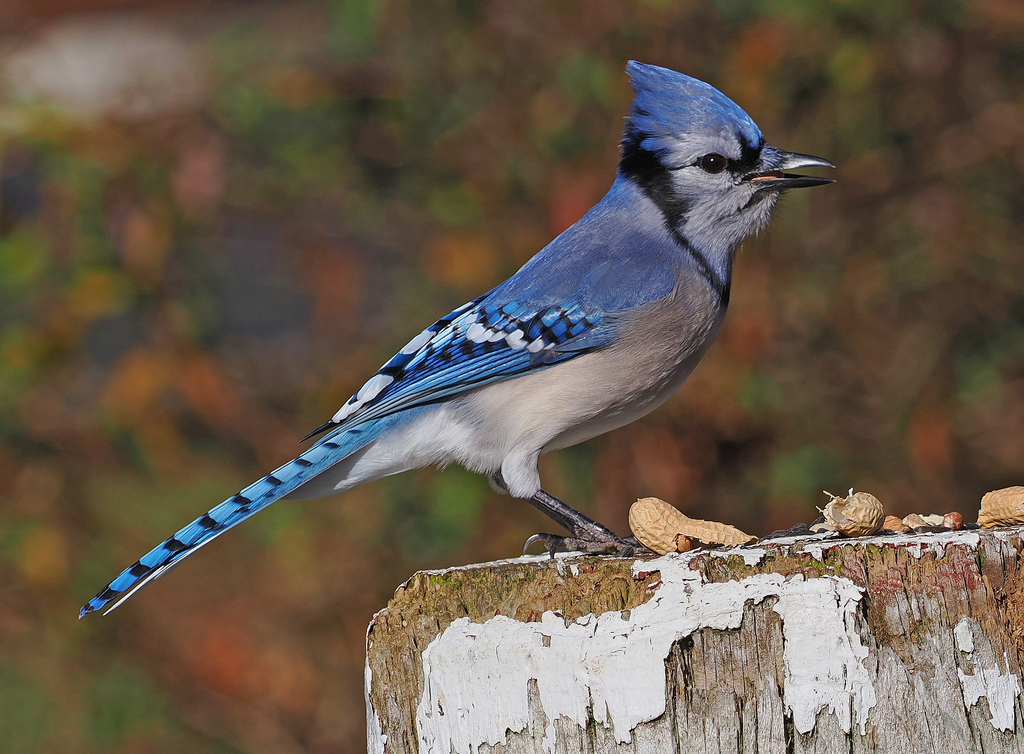
The blue jay is a passerine bird in the family Corvidae, native to eastern North America. It lives in most of the eastern and central United States; some eastern populations may be migratory. Resident populations are also in Newfoundland, Canada; breeding populations are found across southern Canada. It breeds in both deciduous and coniferous forests, and is common in residential areas. Its coloration is predominantly blue, with a white chest and underparts, and a blue crest; it has a black, U-shaped collar around its neck and a black border behind the crest. Males and females are similar in size and plumage, which does not vary throughout the year. Four subspecies have been recognized. Wikipedia
What it can do
- iCarries several acorns at once in an expandable throat pouch and buries them far from the parent tree
- iiMimics the screams of Red-shouldered and Red-tailed Hawks
- iiiBlue colour is structural — feathers scatter light; there is no blue pigment
- ivMobs owls and hawks in noisy groups
In the field
Field marks
- aBright blue crest, back, wings and tail
- bBlack necklace across whitish throat and face
- cBold white wing bars and white tail corners, black barring on wings and tail
- dCrest raised when excited, flattened when calm
- Voice
- A harsh, screaming 'jay! jay!'; also a musical, squeaky 'queedle-queedle' (the 'pump-handle' call), soft clicks, and convincing hawk imitations.
- Not to be confused with
- Steller's Jay (west) has a black front half and no white in the wings or tail. Florida Scrub-Jay lacks a crest and white spots. Belted Kingfisher is blue-grey with a huge bill and a ragged crest.
- Where to see it
- Oak woods, parks and feeders offering peanuts across the eastern US; migrating flocks along the Great Lakes shores (e.g. Whitefish Point, Michigan) in September.
- When
- Resident; some northern birds migrate Sep–Oct and Apr–May
Listen
Looking for field recordings…
Life & habits
- Diet
- Acorns, beechnuts, seeds, insects; occasionally eggs and nestlings
- Habitat
- Oak and beech forest, mixed woodland, suburbs and parks
- Size
- 25–30 cm; 70–100 g
- Lifespan
- Typically about 7 years; banding record over 26 years
Some populations migrate in loose daytime flocks along lakeshores and coasts in autumn, but which individuals migrate varies from year to year and is not well understood.
Where it lives
Recorded sightings
—
geo-referenced records in GBIF, from museums, herbaria and field observers.
Native range
Southern Canada and the eastern and central United States, west to the Rockies' foothills
Drag the globe to turn it. Dots are where records exist, not a range map; darker means more records.
In the old herbals & bestiaries
Woodcuts and engravings matched from the Source Library’s scanned books by name. Plates marked “relative” show a close kin rather than this exact species. Click a plate to read the page it came from, with translation.

In the stacks
Searching the stacks…
Every page naming Cyanocitta cristata in the Biodiversity Heritage Library →
Marginalia
Mark Catesby illustrated it as 'The Blew Jay' in his Natural History of Carolina, Florida and the Bahama Islands (1731–43); it is now the emblem of Toronto's Major League Baseball team.
Curiosity
A single blue jay may cache an estimated 3,000–5,000 acorns in one autumn.
Kinship
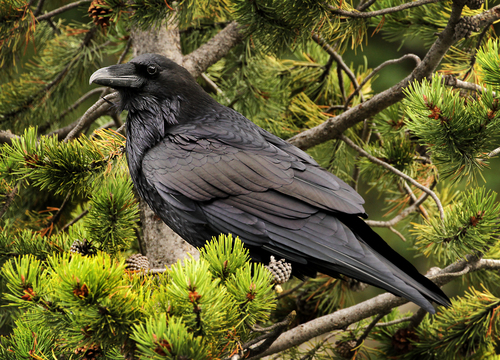

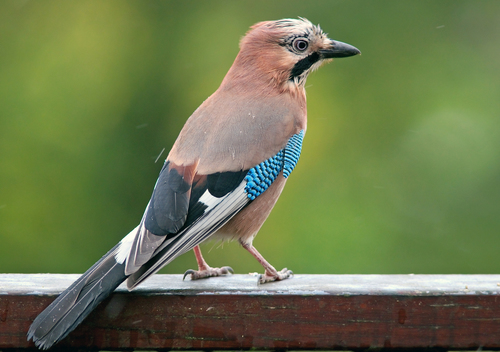
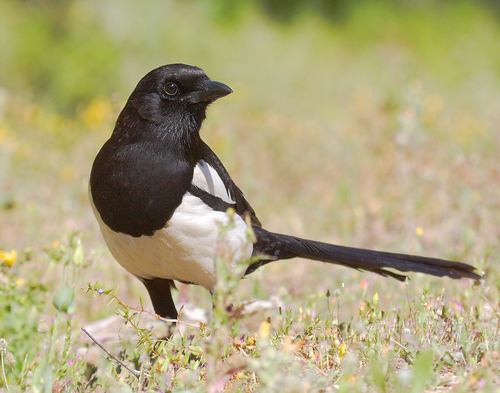
Photographs: iNaturalist contributors under the licences shown. Records: GBIF.org. Historical plates: Source Library (CC BY-SA 4.0; originals public domain). Summary text: Nature Library editors and Wikipedia (CC BY-SA). Medicinal and edibility notes are historical and educational, not advice. iNaturalist taxon 8229.