- Plants
- ›Vascular Plants
- ›flowering plants
- ›Dicots
- ›Legumes, Milkworts, and Allies
- ›Legumes
- ›Faboideae
- ›Sophoreae
- ›Baptisia
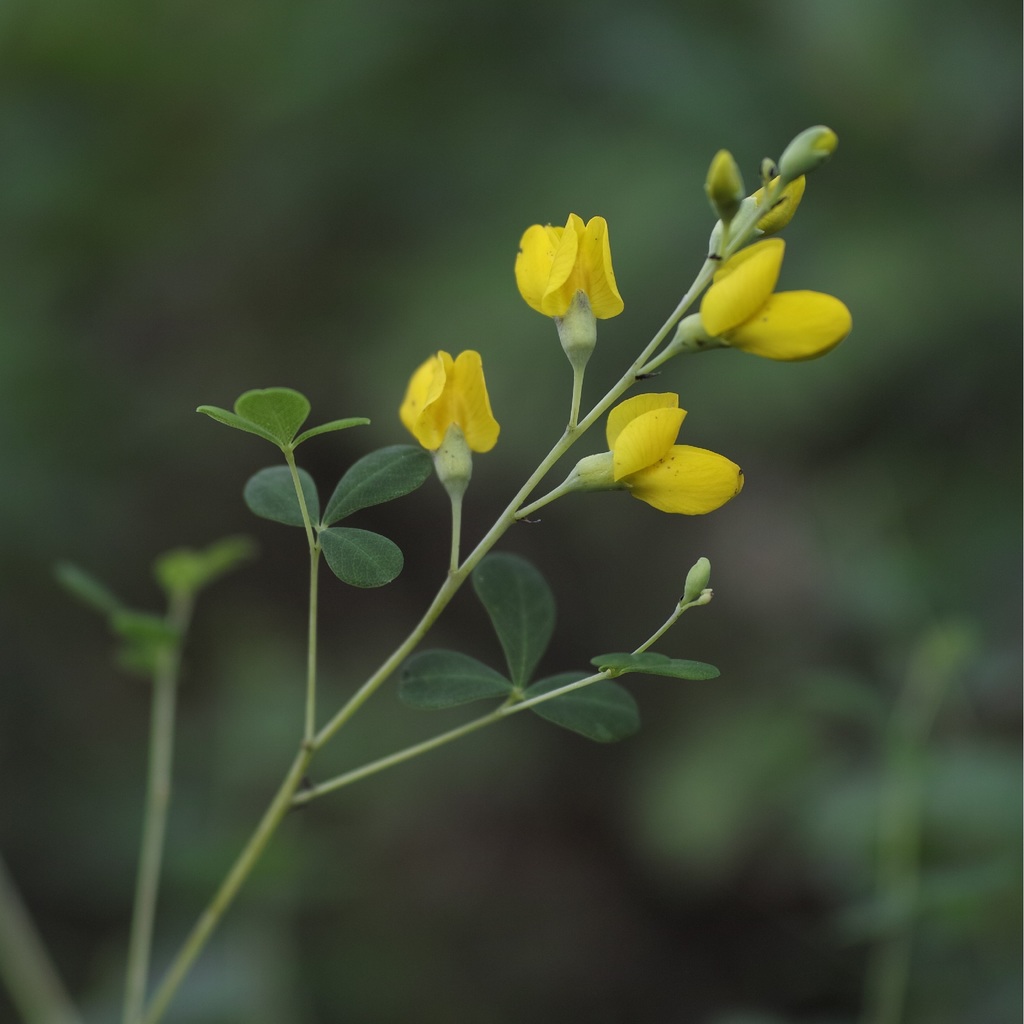
eastern wild indigo
Baptisia tinctoria
Baptisia tinctoria (common names include yellow false indigo, wild indigo, wild-indigo and horseflyweed) is a herbaceous perennial plant in the family Fabaceae. It is native to eastern North America.
From the article Baptisia tinctoria on Wikipedia (CC BY-SA), quoted section by section
Description
The multiple bushy stems of Baptisia tinctoria reach 2 to 3 feet tall. The leaves are silver-green; each is divided into three leaflets about ½ inch long. The flowers are yellow and grow in spikes 1½ to 3 inches long. The leaves are eaten by some lepidopteran caterpillars, for example the Io moth (Automeris io). On Martha's Vineyard, the species is a tumbleweed: it grows in a globular form, breaks off at the root in the autumn, and tumbles about.
Range & habitat
Baptisia tinctoria is found throughout the eastern United States, west to Minnesota, and south to Florida. As it is rare in some parts of its range, it is protected by some state authorities: in Kentucky it is threatened; in Maine it is considered endangered. It prefers dry meadow and open woodland environments.
Wikipedia: “Distribution and habitat”
Where it lives
Recorded sightings
—
geo-referenced records in GBIF, from museums, herbaria and field observers.
Drag the globe to turn it. Dots are where records exist, not a range map; darker means more records.
In the stacks
Searching the stacks…
Every page naming Baptisia tinctoria in the Biodiversity Heritage Library →
This page is assembled live from iNaturalist, GBIF, Wikipedia, the Source Library and the Internet Archive. It is not yet part of the hand-edited codex. iNaturalist taxon 81897.