On eBird ↗
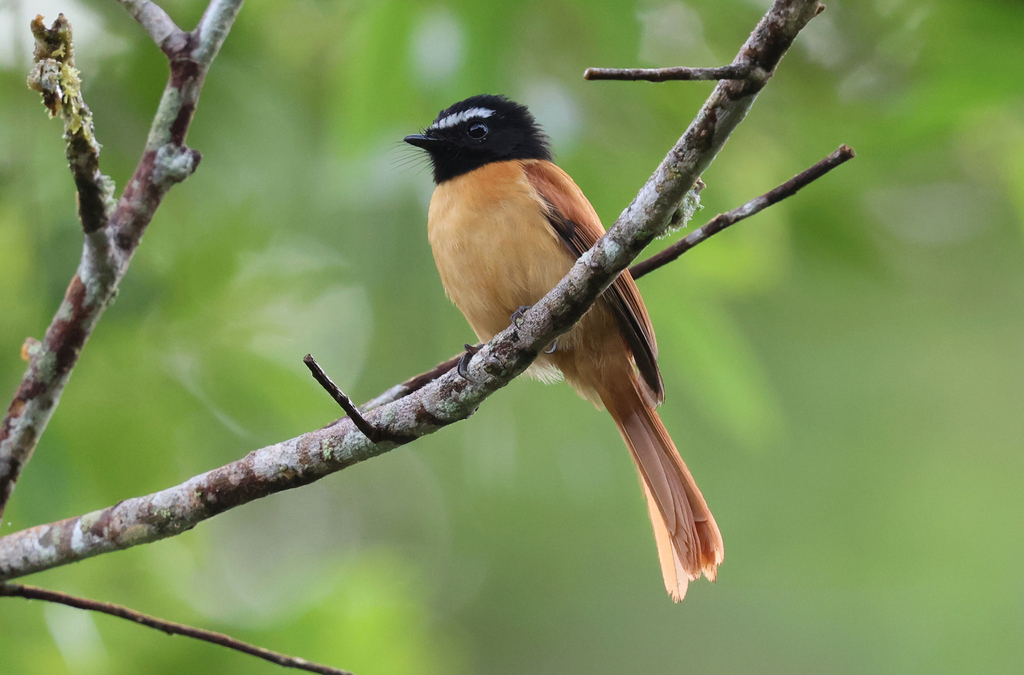
Black-and-cinnamon Fantail
Live sightings near you, the range map, bar charts of when it is seen, and Macaulay Library photos and recordings.
Black-and-cinnamon Fantail
Rhipidura nigrocinnamomea
The black-and-cinnamon fantail (Rhipidura nigrocinnamomea) is a species of bird in the fantail family Rhipiduridae. It is endemic to the island of Mindanao in the Philippines. There are two subspecies, the nominate R. n. nigrocinnamomea, from central and southern Mindanao; and R. n. hutchinsoni in north, western and eastern Mindanao. The specific name is derived from Latin niger for black, and cinnamomeus for cinnamon.
From the article Black-and-cinnamon fantail on Wikipedia (CC BY-SA), quoted section by section
Description
The black-and-cinnamon fantail is 16 cm (6.3 in) long and weighs 10.5–14.5 g (0.37–0.51 oz)
Subspecies. Two subspecies are recognized:
R. n. nigrocinnamomea – Found on Central and Southern Mindanao R. n. hutchinsoni – Found on North, West and Eastern Mindanao; similar to the nominate but lacks the white on the breast
Wikipedia: “Description and taxonomy”
Range & habitat
The species inhabits forest understorey and edge, second growth and grassy clearings at altitude over 1,000 m. The IUCN has classified the species as being of Least Concern but was formerly listed as near threatened. Despite its limited range, it is said to be locally common. As it occurs in rugged and inaccessible mountains, this has allowed a large portion of its habitat to remain intact. However, there it is still affected by habitat loss through deforestation, mining, land conversion and slash-and-burn - just not to the same extent as lowland forest. It is found in multiple protected areas such as Mount Apo and Kitanglad Mountain Range but like all areas in the Philippines protection is lax.
== References ==
Wikipedia: “Habitat and conservation status”
What it does
It forages in the understory for insects and often joins mixed-species flocks that include other montane Mindanao birds that include Cinnamon ibon, Little pied flycatcher, Turquoise flycatcher, Negros leaf warbler and other small birds. Birds in breeding condition with enlarged gonads have been collected from January to May, which is in line with the general breeding season for most birds in the area.
Wikipedia: “Ecology and behavior”
Listen
Looking for field recordings…
Where it lives
Recorded sightings
—
geo-referenced records in GBIF, from museums, herbaria and field observers.
Drag the globe to turn it. Dots are where records exist, not a range map; darker means more records.
In the stacks
Searching the stacks…
Every page naming Rhipidura nigrocinnamomea in the Biodiversity Heritage Library →
This page is assembled live from iNaturalist, GBIF, Wikipedia, the Source Library and the Internet Archive. It is not yet part of the hand-edited codex. iNaturalist taxon 8138.