- Plants
- ›Vascular Plants
- ›flowering plants
- ›Dicots
- ›Sunflowers, Bellflowers, Fanflowers, and Allies
- ›Sunflowers, Daisies, Asters, and Allies
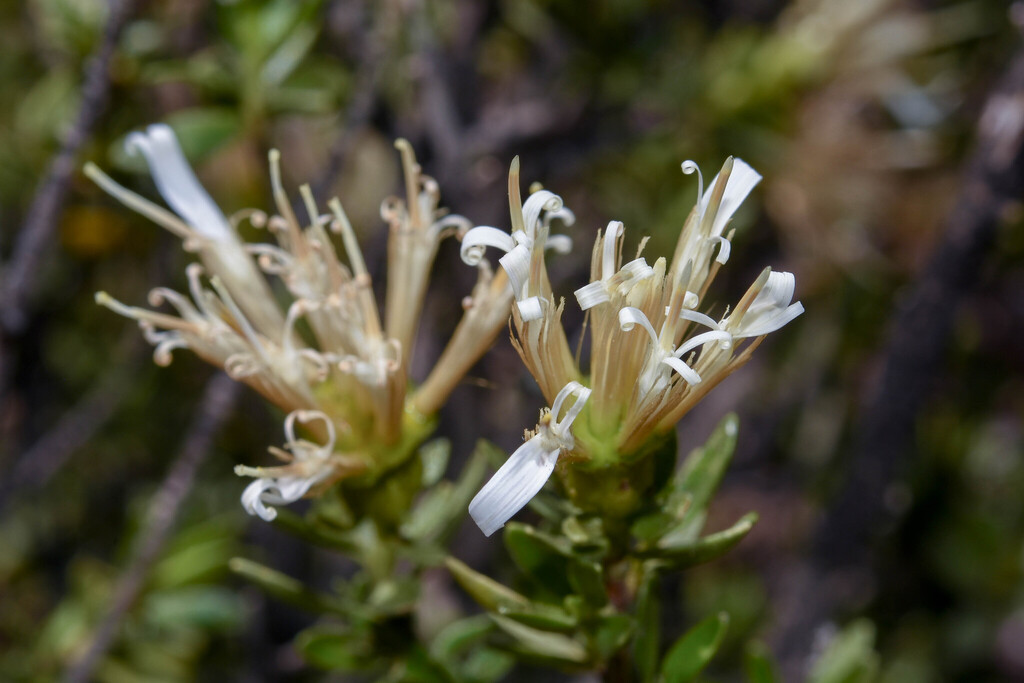
Famatinanthoideae
Famatinanthus is a genus in the family Asteraceae that was described in 2014 and has been assigned to its own tribe Famatinantheae and subfamily Famatinanthoideae. It contains only one known species, F. decussatus, a small shrub of 0.5–1.8 m (1 ft 8 in – 5 ft 11 in) high that is an endemic of the Andes of north-western Argentina, with small, entire, oppositely set leaves and flowerheads containing about ten cream-colored, ray and disk florets, with backward coiled lobes. It is locally known as sacansa. For more than 100 years, the species was known to science only from the type collection. It was described in 1885 and originally assigned to the genus Aphyllocladus.
1 branches of this subfamily, most-observed first
See this branch on the Wheel of Life →
Where it lives
Recorded sightings
—
geo-referenced records in GBIF, from museums, herbaria and field observers.
Drag the globe to turn it. Dots are where records exist, not a range map; darker means more records.
In the stacks
Searching the stacks…
Every page naming Famatinanthoideae in the Biodiversity Heritage Library →
This page is assembled live from iNaturalist, GBIF, Wikipedia, the Source Library and the Internet Archive. It is not yet part of the hand-edited codex. iNaturalist taxon 793893.