- Plants
- ›Vascular Plants
- ›flowering plants
- ›Dicots
- ›Nances, Willows, and Allies
- ›Spurge Family
- ›Euphorbioideae
- ›Euphorbieae
- ›Euphorbiinae
- ›Euphorbia

Chamaesyce
Chamaesyce is former genus of plants in the family Euphorbiaceae, now subsumed into the genus Euphorbia as Euphorbia sect. Anisophyllum in the subgenus Chamaesyce. The section contains around 350–365 species (around 210 New World and 140 Old World) that were formerly in the genus Chamaesyce. Plants in this section are known for their prostrate, branching habit and include probably best known for E. maculata, a temperate weed known as spotted spurge found worldwide, and E. hirta, a pantropical weed. Many of the species are known as sandmats. The section Anisophyllum is very closely related to plants like Euphorbia pulcherrima, the popular poinsettia.
Euphorbia sect. Anisophyllum differs from other Euphorbia species in a number of characteristics. Perhaps the most important is the presence of C4 photosynthesis in all but one subsection (subsection Acutae, which represents a basal clade that is made up of species with intermediate C2 photosynthetic pathways). Other characteristics include sympodial branching, dorsi-ventral stems, asymmetric leaves, non-glandular stipules, and ecarunculate seeds.
15 branches of this group, most-observed first

Sandmats
sectionAnisophyllum

Alectoroctonum
sectionAlectoroctonum

Euphorbia sect. Poinsettia
sectionPoinsettia

Articulofruticosae
sectionArticulofruticosae

Tenellae
sectionTenellae

Eremophyton
sectionEremophyton
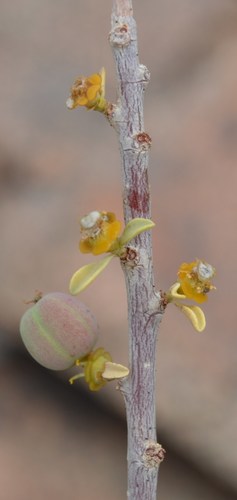
Woody Euphorbias
sectionEspinosae
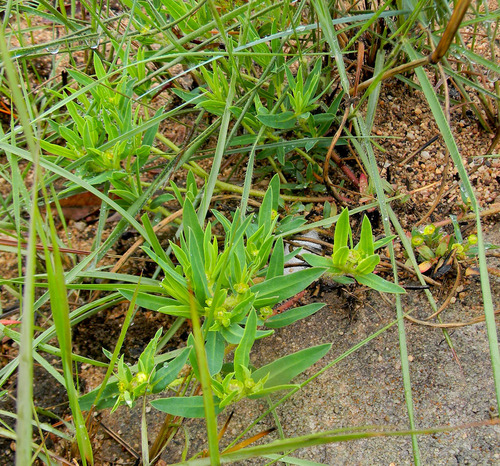
Gueinziae
sectionGueinziae
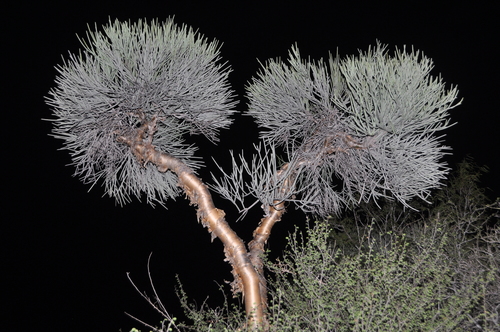
Plagianthae
sectionPlagianthae

Frondosae
sectionFrondosae
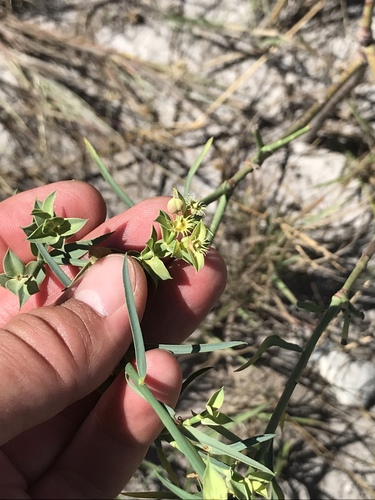
Crossadenia
sectionCrossadenia

Cheirolepidium
sectionCheirolepidium
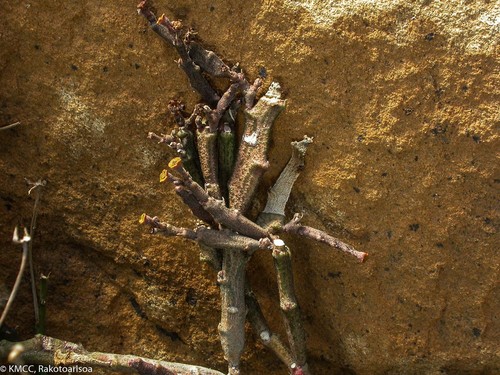
Bosseriae
sectionBosseriae
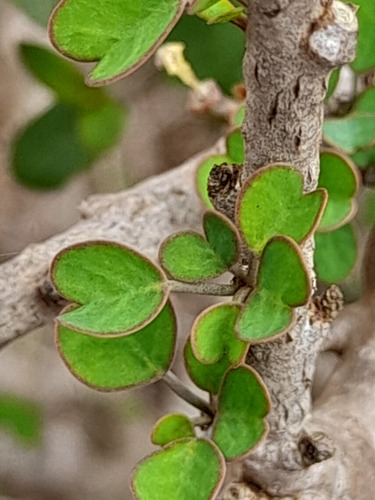
Denisiae
sectionDenisiae
Scatorhizae
sectionScatorhizae
Where it lives
Recorded sightings
—
geo-referenced records in GBIF, from museums, herbaria and field observers.
Drag the globe to turn it. Dots are where records exist, not a range map; darker means more records.
In the old herbals & bestiaries


In the stacks
Searching the stacks…
Every page naming Chamaesyce in the Biodiversity Heritage Library →
This page is assembled live from iNaturalist, GBIF, Wikipedia, the Source Library and the Internet Archive. It is not yet part of the hand-edited codex. iNaturalist taxon 792275.