- Plants
- ›Vascular Plants
- ›flowering plants
- ›Dicots
- ›Sunflowers, Bellflowers, Fanflowers, and Allies
- ›Sunflowers, Daisies, Asters, and Allies
- ›Asteroideae
- ›Bahieae
- ›Palafoxia
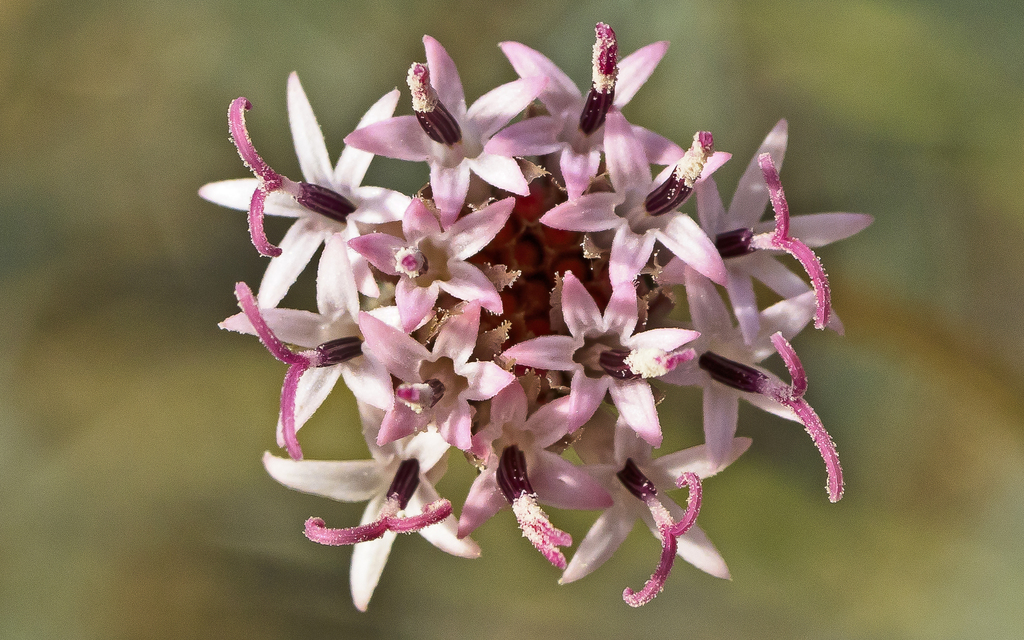
Spanish needle
Palafoxia arida
Palafoxia arida is a species of flowering plant in the aster family, known by the common names desert palafox and Spanish needle.
From the article Palafoxia arida on Wikipedia (CC BY-SA), quoted section by section
Description
Palafoxia arida is an annual herb producing an erect, branching, glandular stem. The rough-haired leaves are linear or lance-shaped and may exceed 10 centimeters long. The inflorescence is an array of up to 40 flower heads. The cylindrical heads are about 2 to 3 centimeters long, lined with long, pointed phyllaries, and bearing up to 40 pink or white tubular disc florets. The fruit is an achene over a centimeter long including the pappus.
Varieties. There are two varieties that are no longer accepted:
Palafoxia arida var. arida — desert needle, desert palafox Palafoxia arida var. gigantea — giant Spanish needle; larger, reaching 2 m (6 ft 7 in) in height
Range & habitat
It is native to the Mojave Desert and Sonoran Desert ecoregions of California, the Southwestern United States, and northwestern Mexico.
Wikipedia: “Distribution”
Where it lives
Recorded sightings
—
geo-referenced records in GBIF, from museums, herbaria and field observers.
Drag the globe to turn it. Dots are where records exist, not a range map; darker means more records.
In the stacks
Searching the stacks…
Every page naming Palafoxia arida in the Biodiversity Heritage Library →
This page is assembled live from iNaturalist, GBIF, Wikipedia, the Source Library and the Internet Archive. It is not yet part of the hand-edited codex. iNaturalist taxon 78333.