- Plants
- ›Vascular Plants
- ›flowering plants
- ›Dicots
- ›Legumes, Milkworts, and Allies
- ›Legumes
- ›Faboideae
- ›milkvetches, locoweeds, and allies
- ›Glycyrrhiza
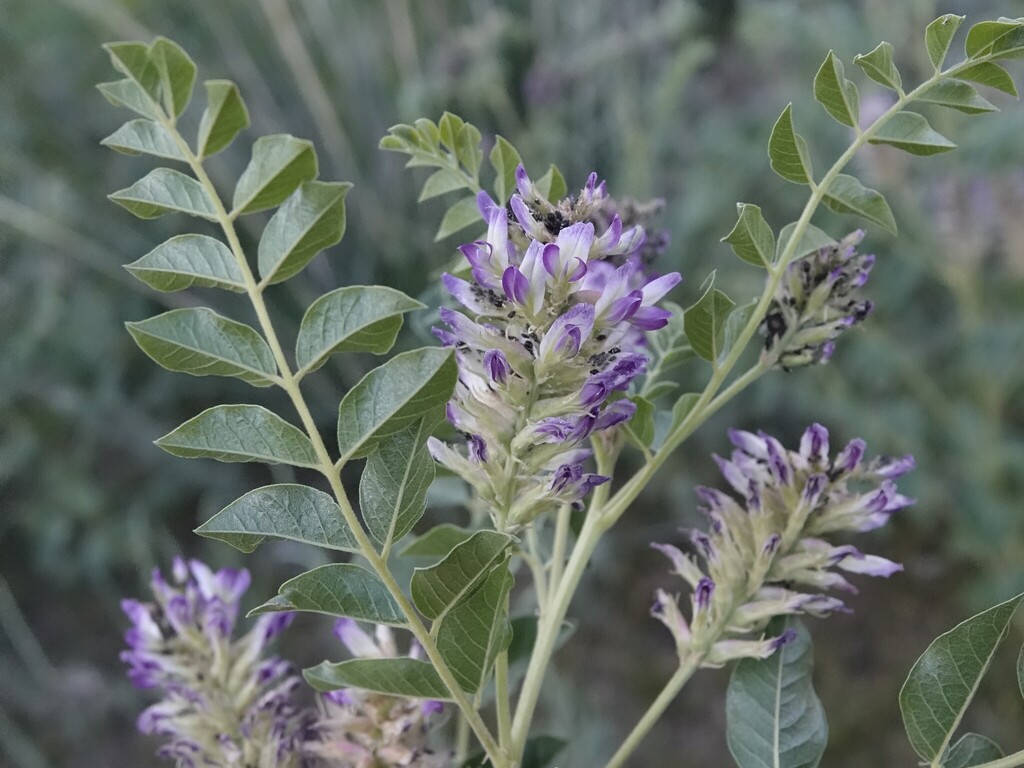
Chinese Liquorice
Glycyrrhiza uralensis
Glycyrrhiza uralensis, also known as Chinese liquorice, is a flowering plant native to Asia. It is used as a sweetener and in traditional Chinese medicine.
From the article Glycyrrhiza uralensis on Wikipedia (CC BY-SA), quoted section by section
At the table
Liquorice root, or 'radix glycyrrhizae', is one of the 50 fundamental herbs used in traditional Chinese medicine, where it has the name gancao (kan-tsao; Chinese: 甘草, pinyin: gāncǎo). It is used in Chinese medicine to harmonize other herbs and to reduce the harsh effects of other herbs. It is usually collected in spring and autumn, when it is sliced and sun-dried, then either used unprepared or stir-baked with honey. Liquorice root is most commonly produced in the Shanxi, Gansu and Xinjiang regions of China.
Side effects. Liquorice root contains glycyrrhizin, which may affect blood pressure, blood potassium levels or have untoward effects during pregnancy. Overuse of licorice may induce weakness, headache, blurred vision, nosebleed, anxiety, or shortness of breath. Other common side effects may include missed menstrual periods, fluid retention or sexual problems in men. More serious instances of overuse can lead to hypertension and hyperaldosteronism, which may require hospitalization.
Wikipedia: “Traditional uses”
Where it lives
Recorded sightings
—
geo-referenced records in GBIF, from museums, herbaria and field observers.
Drag the globe to turn it. Dots are where records exist, not a range map; darker means more records.
In the stacks
Searching the stacks…
Every page naming Glycyrrhiza uralensis in the Biodiversity Heritage Library →
This page is assembled live from iNaturalist, GBIF, Wikipedia, the Source Library and the Internet Archive. It is not yet part of the hand-edited codex. iNaturalist taxon 775858.