- Plants
- ›Vascular Plants
- ›flowering plants
- ›Dicots
- ›Mints, Plantains, Olives, and Allies
- ›Mint Family
- ›Nepetoideae
- ›Mentheae
- ›balms, mints, and thymes
- ›Hedeoma
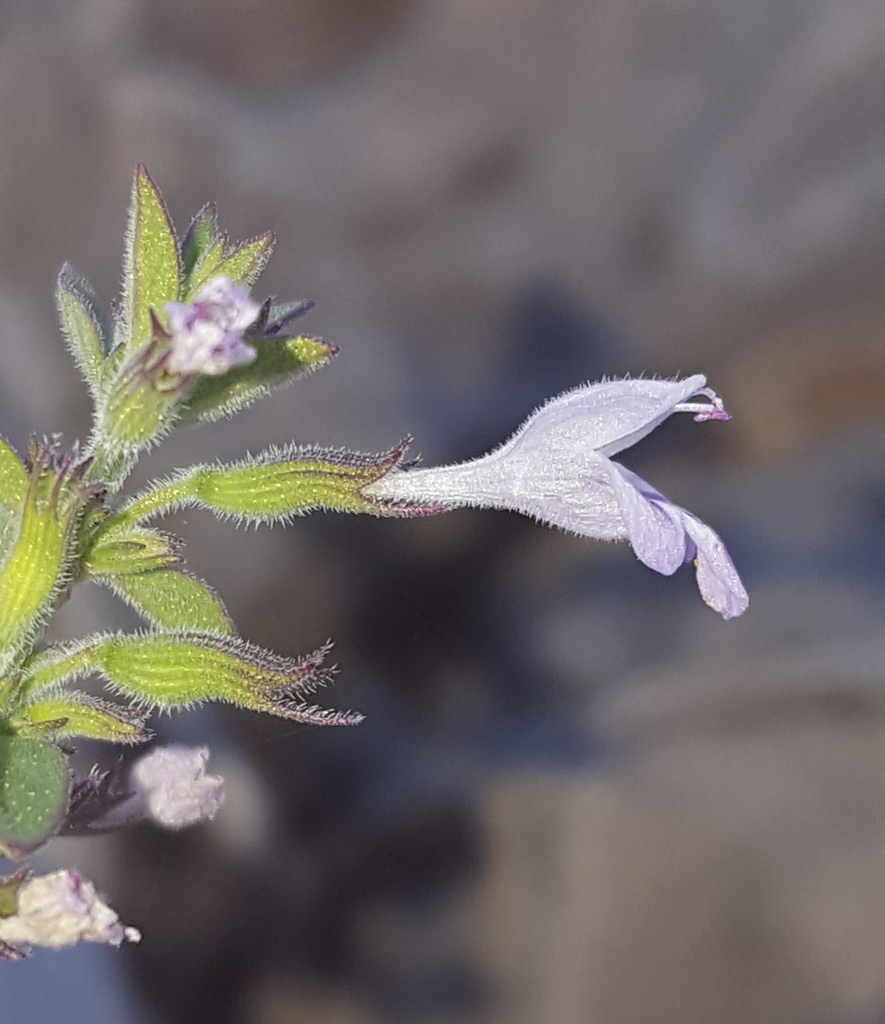
dwarf false pennyroyal
Hedeoma nana
Hedeoma nana, the dwarf false pennyroyal, is a species of flowering plant in the mint family (Lamiaceae). It is native to parts of the southwestern and central United States and extends into northeastern Mexico. This occasionally aromatic herb occurs in a variety of open and semi-arid habitats and is known for its small, gland-dotted leaves and axillary clusters of flowers with inflated/flared corollas.
From the article Hedeoma nana on Wikipedia (CC BY-SA), quoted section by section
Description
Hedeoma nana is a perennial herb (occasionally woody at the base) typically 10–25 cm tall, often branching from the base with wiry stems. The leaves are small, opposite, and finely glandular, sometimes releasing a mild minty fragrance when crushed. The flowers are arranged in small clusters at the leaf axils, with tubular corollas usually in shades of blue-purple or pinkish hues, and bloom from spring through fall in much of its range.
Range & habitat
This species is native to the southwestern and south-central United States — including Arizona, California (especially the Mojave and other desert regions), Nevada, New Mexico, Texas, and Utah — and extends into northeastern Mexico. It typically grows in rocky calcareous slopes, desert scrub, pinyon-juniper woodland, and other open, dry habitats at elevations ranging from low valleys to mountainous regions.
Wikipedia: “Distribution and habitat”
What it does
As a member of the mint family, Hedeoma nana produces nectar-rich flowers that attract a variety of insects. It is adapted to dry conditions and often contributes to the floral diversity of desert and semi-arid plant communities.
Wikipedia: “Ecology”
Where it lives
Recorded sightings
—
geo-referenced records in GBIF, from museums, herbaria and field observers.
Drag the globe to turn it. Dots are where records exist, not a range map; darker means more records.
In the stacks
Searching the stacks…
Every page naming Hedeoma nana in the Biodiversity Heritage Library →
This page is assembled live from iNaturalist, GBIF, Wikipedia, the Source Library and the Internet Archive. It is not yet part of the hand-edited codex. iNaturalist taxon 77346.