 NL·0064
Herbarium of the Nature Library
- Name
- Glycyrrhiza glabra
- Family
- Fabaceae
- Native to
- Mediterranean and North Africa through Western & Central Asia to Xinjiang and northern India
- Habitat
- Riverbanks, Steppe, Semi-desert
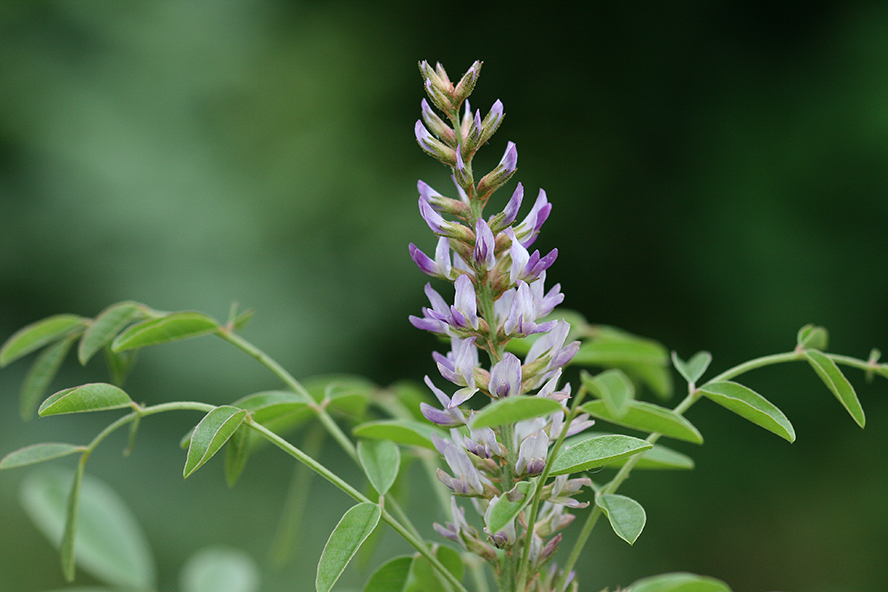
Liquorice
Glycyrrhiza glabra
Also calledMulethi (Hindi) · Yashtimadhu (Sanskrit, 'honey-stick') · Aṣl al-sūs (Arabic/Unani, 'root of sus') · Gāncǎo 甘草 (Chinese, applied to G. uralensis and G. glabra) · Regaliz (Spanish) · Süßholz (German)
A legume whose long yellow roots contain glycyrrhizin, a compound 30–50 times sweeter than sugar. It is so widely used in medicine that Chinese tradition calls it 'the great harmoniser' of formulas, but too much raises blood pressure dangerously.
Liquorice or licorice is the common name of Glycyrrhiza glabra, a flowering plant of the bean family Fabaceae, from the root of which a sweet, aromatic flavouring is extracted. Wikipedia
What it can do
- iGlycyrrhizin is about 30–50 times sweeter than sucrose
- iiBlocks the enzyme 11β-HSD2, causing the body to hold on to salt and lose potassium
- iiiFixes nitrogen through root-nodule bacteria
- ivDeep runners let it survive saline, arid floodplains
At the table
Eatenroot (chewed, tea, extract)
Root and extract flavour sweets, beer, tobacco and drinks. Regular large amounts of true liquorice can cause high blood pressure, low potassium, heart rhythm problems and, rarely, death.
In the medicine cabinet
| Tradition | Use |
|---|---|
| Ayurveda | Yashtimadhu as a soothing demulcent for cough, sore throat, ulcers and as a rasayana for voice and skin |
| Traditional Chinese Medicine | Gancao tonifies spleen qi, moistens the lungs, eases spasms and harmonises other herbs; it appears in a large share of classical formulas |
| Unani | Asl-us-sus for cough, chest complaints, ulcers and as a flavouring corrective in compounds |
| Modern medicine | Deglycyrrhizinated liquorice (DGL) for dyspepsia; carbenoxolone, a glycyrrhetinic-acid derivative, was formerly prescribed for ulcers |
Weight of evidence
Moderate. Some clinical trials with promising but limited or mixed results.
Active compounds
glycyrrhizin (glycyrrhizic acid), glycyrrhetinic acid, liquiritigenin, isoliquiritigenin, glabridin
Fruit & seed

Fruit
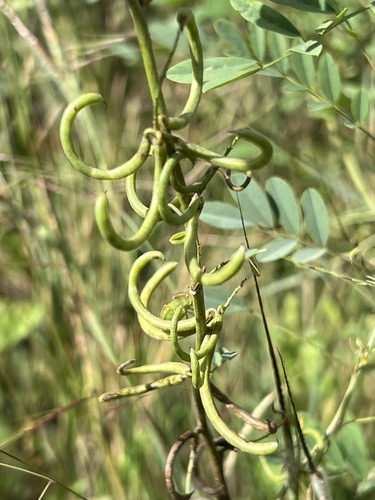
Legume (pod)
Ripens: Late summer
Flat, reddish-brown pod, 1.5–3 cm, with 2–6 seeds.
Seed
~3 mm
Kidney-shaped, hard-coated seeds
- Dispersal
- Gravity, water; spreads mainly by runners
- Germination
- Scarify or soak in hot water; 1–3 weeks at 20–25 °C
Photographs from Wikimedia Commons under open licences; hover for the photographer, click for the file.
How to grow it
Hardiness (USDA zones)
USDA 7–10. Survives winters down to about -18 °C.
- Light
- Full sun
- Water
- Moderate
- Soil
- Deep, sandy, fertile and moist
- Propagation
- Root/stolon cuttings or scarified seed
- To harvest
- Roots at 3–4 years
- Climates
- Mediterranean, Continental, Semi-arid
- 1Plant 15 cm runner sections with buds in spring, 45 cm apart
- 2Give deep, loose soil so the roots can run
- 3Leave undisturbed for three years
- 4Dig in autumn, keeping runners to replant
Can it grow where you are?
Where it lives
Recorded sightings
—
geo-referenced records in GBIF, from museums, herbaria and field observers.
Native range
Mediterranean and North Africa through Western & Central Asia to Xinjiang and northern India
Drag the globe to turn it. Dots are where records exist, not a range map; darker means more records.
In the old herbals & bestiaries
Woodcuts and engravings matched from the Source Library’s scanned books by name. Plates marked “relative” show a close kin rather than this exact species. Click a plate to read the page it came from, with translation.

The Great Herbary with all the figures of the herbs
1532 · p.186

On Medical Materials in Six Books
Dioscorides · 1550 · p.357

Ortus sanitatis
1491 · p.239

Garden of Health
1507 · p.193

Notable Commentaries on the History of Plants
Leonhart Fuchs · 1542 · p.226

Notable Commentaries on the History of Plants
Leonhart Fuchs · 1549 · p.224

De medicinali materia libri sex
Dioscorides · 1552 · p.365

On the Names of Plants
Hieronymus Bock (Tragus) · 1552 · p.1007

Commentaries on the Six Books of Dioscorides
Pietro Andrea Mattioli · 1560 · p.469

Commentaries on the Six Books of Dioscorides on Medical Matter
Pietro Andrea Mattioli · 1563 · p.454
In the stacks
Searching the stacks…
Every page naming Glycyrrhiza glabra in the Biodiversity Heritage Library →
Marginalia
Theophrastus wrote of a sweet 'Scythian root' that let warriors go days without water. Liquorice was grown around Pontefract in Yorkshire from the medieval period, home of the Pontefract cake sweets.
Curiosity
Glycyrrhiza comes from the Greek for 'sweet root', and the word 'liquorice' is a corruption of it.
Kinship

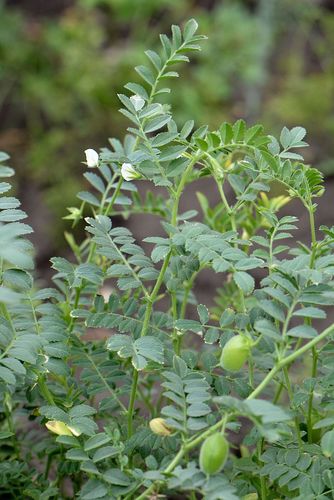
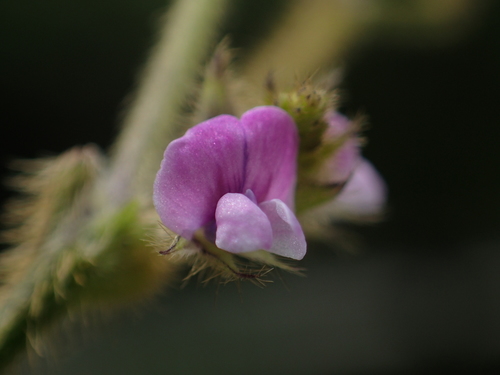

Fact-checked: 2 corrections made to this sheet. Photographs: iNaturalist contributors under the licences shown. Records: GBIF.org. Historical plates: Source Library (CC BY-SA 4.0; originals public domain). Summary text: Nature Library editors and Wikipedia (CC BY-SA). Medicinal and edibility notes are historical and educational, not advice. iNaturalist taxon 77295.