- Plants
- ›Vascular Plants
- ›flowering plants
- ›Dicots
- ›Nances, Willows, and Allies
- ›Spurge Family
- ›Euphorbioideae
- ›Euphorbieae
- ›Euphorbiinae
- ›Euphorbia
- ›Esula
- ›Pachycladae
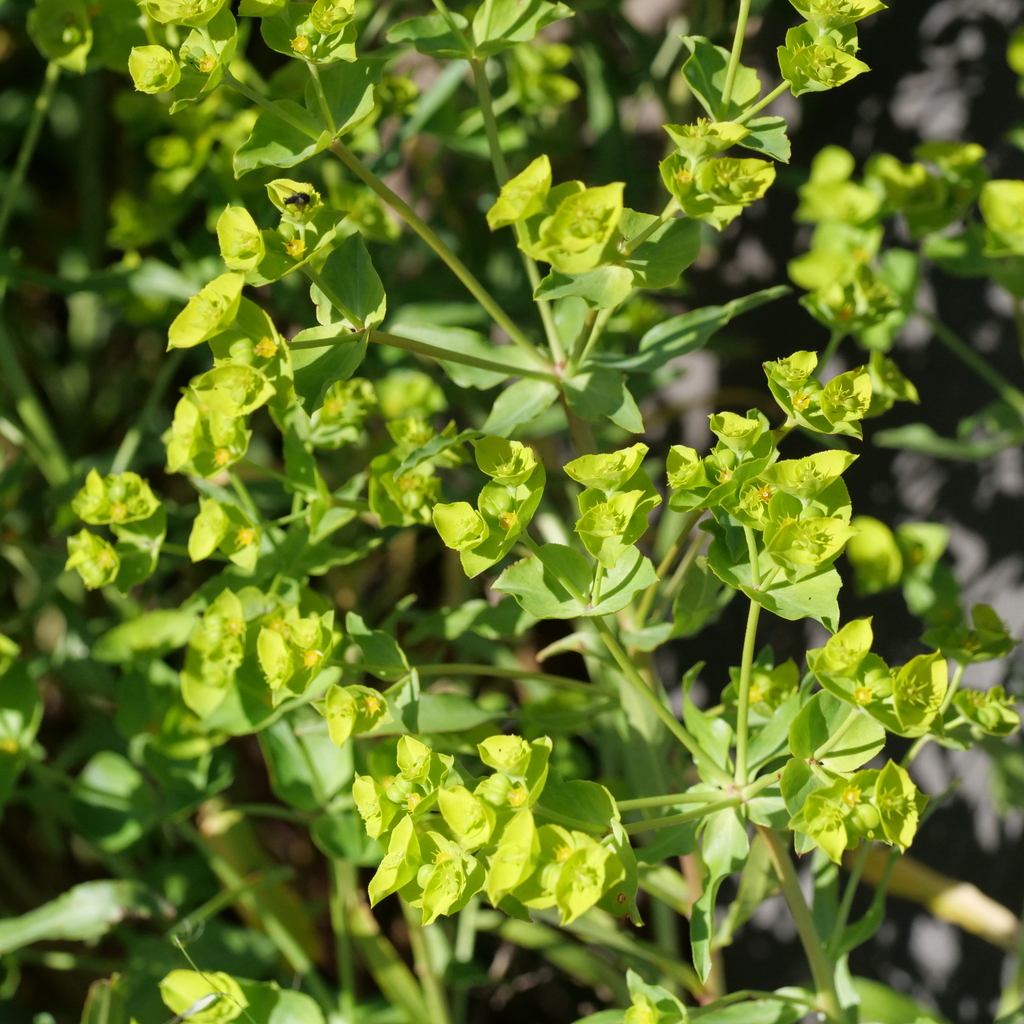
carnation spurge
Euphorbia terracina
Euphorbia terracina, commonly known as the Geraldton carnation weed and False caper, is a species of perennial herb in the family Euphorbiaceae. It has a self-supporting growth form and simple, broad leaves. Flowers are visited by Lipotriches brachysoma, Lipotriches natalensis, Lipotriches crassula, and Nomia bouyssoui. It produces small, three lobed fruits, with each lobe containing one seed.
From the article Euphorbia terracina on Wikipedia (CC BY-SA), quoted section by section
Range & habitat
Euphorbia terracina is natively distributed in Mediterranean climate regions of Northern Africa, temperate Asia, and some areas of Europe. It is an invasive weed in other similar climate regions mainly in Australia and the U.S. state of California. It allelopathically inhibits growth of surrounding plants.
Wikipedia: “Distribution”
At the table
In some regions of Algeria, the sap of Euphorbia terracina is used to treat warts. The sap has been found to demonstrate antioxidative properties
Wikipedia: “Uses”
Toxicity
Euphorbia terracina is toxic to both humans and livestock. As with many other Euphorbia species, exposure to its milky sap may cause irritation to skin, eyes, and digestive tracts.
Where it lives
Recorded sightings
—
geo-referenced records in GBIF, from museums, herbaria and field observers.
Drag the globe to turn it. Dots are where records exist, not a range map; darker means more records.
In the stacks
Searching the stacks…
Every page naming Euphorbia terracina in the Biodiversity Heritage Library →
This page is assembled live from iNaturalist, GBIF, Wikipedia, the Source Library and the Internet Archive. It is not yet part of the hand-edited codex. iNaturalist taxon 77119.