 NL·0171
Herbarium of the Nature Library
- Name
- Sambucus nigra
- Family
- Viburnaceae
- Native to
- Europe, North Africa and Western Asia; naturalised elsewhere
- Habitat
- Temperate woodland edge, Hedgerow, Disturbed ground
Elder
Sambucus nigra
Also calledHolunder (German) · Saúco (Spanish) · Sureau noir (French) · Khamān خمان (Arabic) · Xīyáng jiēgǔmù 西洋接骨木 (Chinese) · Bourtree (Scots)
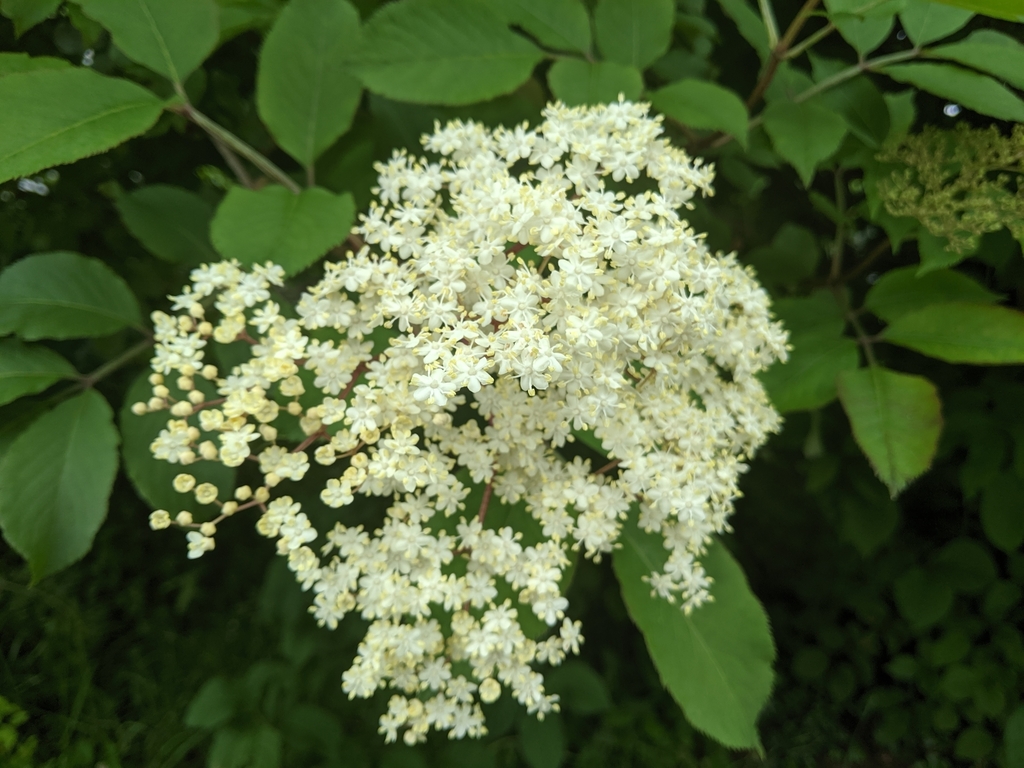
A fast-growing hedgerow shrub with plates of creamy, muscat-scented flowers in early summer and drooping clusters of purple-black berries in autumn. It has been called the medicine chest of the countryside.
Sambucus nigra is a temperate species of tree or shrub in the family Viburnaceae native to the Azores, Europe, and the Middle East. Common names include elder, common elder, black elder, European elder, and also elderberry for the fruit, and elderflower for the flowers. It grows in a variety of conditions including both wet and dry fertile soils, primarily in sunny locations. The plant is widely grown as an ornamental shrub or small tree. Wikipedia
What it can do
- iBerries are rich in anthocyanins, which inhibit influenza viruses in laboratory studies
- iiThrives on nitrogen-rich ground around rabbit warrens, farmyards and middens
- iiiSoft white pith is easily pushed out of stems, leaving hollow tubes
- ivFruit is a major autumn food for thrushes, blackcaps and warblers fattening up for migration
At the table
Eatenflowers (cordial, fritters) · ripe berries (cooked)
Flowers and fully ripe, cooked berries are used in cordials, wine, syrups and jams. Raw or unripe berries, seeds, leaves, stems, bark and roots contain cyanogenic glycosides and can cause nausea, vomiting and diarrhoea. Remove all stalks.
In the medicine cabinet
| Tradition | Use |
|---|---|
| European folk medicine | Hot elderflower tea to bring on sweating in colds and fevers; berry syrup for coughs and flu; bark as a purgative |
| Unani / Arabic medicine | Khaman flowers and leaves used as a diaphoretic and diuretic and in poultices for swellings |
| Modern phytotherapy | Standardised berry extracts studied for shortening influenza and colds; EMA traditional-use monograph for elderflower in colds |
Weight of evidence
Moderate. Some clinical trials with promising but limited or mixed results.
Active compounds
cyanidin-3-sambubioside, cyanidin-3-glucoside, rutin, quercetin, sambunigrin (cyanogenic), lectins
Fruit & seed


Fruit
Drupe (berry-like)
Ripens: Late summer–autumn
Small purple-black drupes, 5–6 mm, in drooping flat clusters; each with 3–5 seeds.
Seed
~3 mm
Small, wrinkled, light-brown pyrenes
- Dispersal
- Birds
- Germination
- Slow; needs warm then cold stratification, often 2 seasons
Photographs from Wikimedia Commons under open licences; hover for the photographer, click for the file.
How to grow it
Hardiness (USDA zones)
USDA 4–8. Survives winters down to about -34 °C.
- Light
- Full sun to part shade
- Water
- Moderate
- Soil
- Fertile, moist; tolerates chalk and clay
- Propagation
- Hardwood cuttings in winter (easiest) or seed
- To harvest
- Flowers and fruit from year 2–3
- Climates
- Temperate, Oceanic
- 1Push 25 cm hardwood cuttings into the ground in winter
- 2Water through the first summer
- 3Pick flower heads on a dry sunny morning, leaving some for berries
- 4Prune out old stems each winter to keep it productive
Can it grow where you are?
Where it lives
Recorded sightings
—
geo-referenced records in GBIF, from museums, herbaria and field observers.
Native range
Europe, North Africa and Western Asia; naturalised elsewhere
Drag the globe to turn it. Dots are where records exist, not a range map; darker means more records.
In the old herbals & bestiaries
Woodcuts and engravings matched from the Source Library’s scanned books by name. Plates marked “relative” show a close kin rather than this exact species. Click a plate to read the page it came from, with translation.

Notable Commentaries on the History of Plants
Leonhart Fuchs · 1549 · p.96

Herbarius
1485 · p.282

Latin Herbal
1484 · p.127

Herbarius
1485 · p.128

Herbal of Virtues
1499 · p.281

Latin Herbal with German Synonyms
1484 · p.155

Latin Herbal
1484 · p.281

Latin Herbal with German Synonyms
1484 · p.309

Herbarius latinus (with Dutch synonyms)
1486 · p.279

Latin Herbal with German Synonyms
1486 · p.282
In the stacks
Searching the stacks…
Every page naming Sambucus nigra in the Biodiversity Heritage Library →
Marginalia
John Evelyn wrote in Sylva (1664) that if the virtues of elder were fully known, no Englishman would ail anything. Scandinavian and English folklore held that an Elder Mother lived in the tree and that wood should not be cut without asking her leave.
Curiosity
The name Sambucus is thought to come from the sambuca, an ancient instrument, because elder's hollow stems were made into pipes and whistles.
Kinship



Photographs: iNaturalist contributors under the licences shown. Records: GBIF.org. Historical plates: Source Library (CC BY-SA 4.0; originals public domain). Summary text: Nature Library editors and Wikipedia (CC BY-SA). Medicinal and edibility notes are historical and educational, not advice. iNaturalist taxon 765394.