- Animals
- ›Chordates
- ›Vertebrates
- ›Mammals
- ›Therians
- ›Placental Mammals
- ›Ungulates, Carnivorans, and Allies
- ›Bats
- ›Yinpterochiroptera
- ›Rhinolophoid Bats
- ›Horseshoe Bats
- ›Rhinolophus
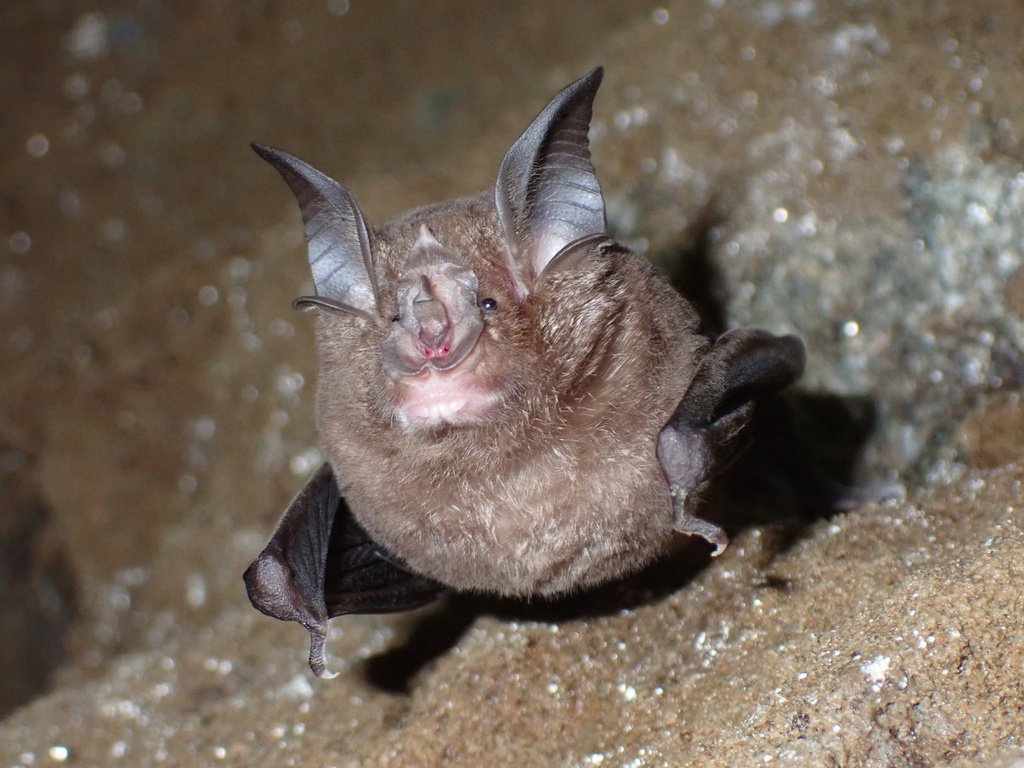
Chinese Rufous Horseshoe Bat
Rhinolophus sinicus
The Chinese rufous horseshoe bat (Rhinolophus sinicus) is a species of bat in the family Rhinolophidae. It is found in Bhutan, China, India, Nepal, and Vietnam.
The species is most easily confused with R. affinis, from which it is best distinguished by its straight-sided lancet and the relatively short second phalanx of the third digit (< 66% of the length of the metacarpal; Csorba et al. 2003).
From the article Chinese rufous horseshoe bat on Wikipedia (CC BY-SA), quoted section by section
Description
The Chinese rufous horseshoe bat has a forearm length of 43–56 mm (1.7–2.2 in). It has an ear length of 15–20 mm (0.59–0.79 in) and a tail length of 21–30 mm (0.83–1.18 in). Overall, it is considered a medium-sized horseshoe bat. It is similar in appearance to the rufous horseshoe bat, though with longer wings. While also similar to Thomas's horseshoe bat, it is slightly larger. The fur on its back is bicolored: the basal two-thirds of individual hairs are brownish-white, while the tips of the hairs are reddish brown. Its belly fur is paler in color and is brownish-white.
What it does
The Chinese rufous horseshoe bat is a social animal, forming colonies of a few individuals up to several hundred. During the reproductive season, the sexes segregate, with females forming maternity colonies. Additionally this species is a food source of the parasite Sinospelaeobdella, a jawed land leech. They roost in caves, often with other bat species.
Wikipedia: “Biology and ecology”
Listen
Looking for field recordings…
Where it lives
Recorded sightings
—
geo-referenced records in GBIF, from museums, herbaria and field observers.
Drag the globe to turn it. Dots are where records exist, not a range map; darker means more records.
In the stacks
Searching the stacks…
Every page naming Rhinolophus sinicus in the Biodiversity Heritage Library →
This page is assembled live from iNaturalist, GBIF, Wikipedia, the Source Library and the Internet Archive. It is not yet part of the hand-edited codex. iNaturalist taxon 75023.