 NL·0287
Herbarium of the Nature Library
- Name
- Bombycilla cedrorum
- Family
- Bombycillidae
- Native to
- Breeds across southern Canada and the northern US; winters throughout most of the US south to Central America and the Caribbean
- Habitat
- Woodland edge, Orchards, Riparian woodland, Gardens
On eBird ↗
Cedar Waxwing
Live sightings near you, the range map, bar charts of when it is seen, and Macaulay Library photos and recordings.
Cedar waxwing
Bombycilla cedrorum
Also calledAmpelis americano (Spanish) · Chinito (Spanish, Mexico) · Jaseur d'Amérique (French)
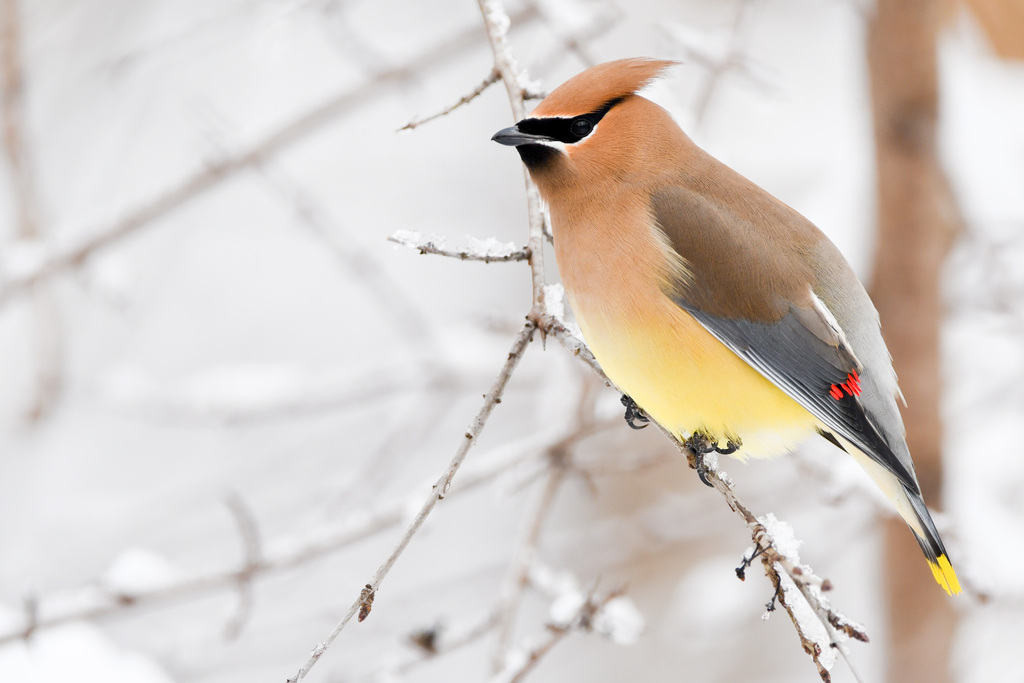
A sleek, crested fruit-eater with a black mask and red wax-like droplets on its wing tips. It roams in tight, whistling flocks wherever berries ripen, and can live on fruit alone for months.
The cedar waxwing is a member of the family Bombycillidae or waxwing family of passerine birds. It is a medium-sized bird that is mainly brown, gray, and yellow. Some of the wing feathers have red tips, which resemble sealing wax, giving the bird its common name. It is a native of North and Central America, breeding in open wooded areas in southern Canada and wintering in the southern half of the United States, Central America, and the far northwest of South America. Its diet includes cedar cones, fruit, holly berries, and insects. The cedar waxwing is listed as least concern on the IUCN Red List. Wikipedia
What it can do
- iCan survive on fruit alone for months, digesting it rapidly
- iiDisperses seeds of cedar, juniper, serviceberry and many other fruiting plants
- iiiFlocks pass berries from bird to bird along a branch
- ivSallies out over rivers in summer to catch flying insects
In the field
Field marks
- aSilky, warm brown-grey plumage with a pointed crest
- bNarrow black mask edged with white
- cYellow belly and yellow-tipped tail
- dRed waxy tips on the secondary feathers
- Voice
- No true song; very high, thin, buzzy whistles 'sreee' given constantly by flocks.
- Not to be confused with
- Bohemian Waxwing is larger and greyer, with rufous undertail coverts and yellow and white marks on the wings. Northern Cardinal females share the crest but have a thick red bill.
- Where to see it
- Fruiting trees anywhere in North America, especially junipers, crabapples and mountain-ash in winter; along rivers catching insects in summer.
- When
- Present year-round in much of the north-central US; nomadic, with numbers changing with fruit crops
Listen
Looking for field recordings…
Life & habits
- Diet
- Berries and small fruits; flying insects in summer
- Habitat
- Open woodland, forest edges, orchards and suburbs with fruiting trees
- Size
- 14–17 cm; about 32 g
- Lifespan
- Banding record about 8 years
It nests late in summer, timed to fruit ripening, and can become intoxicated or die from eating fermented berries.
Where it lives
Recorded sightings
—
geo-referenced records in GBIF, from museums, herbaria and field observers.
Native range
Breeds across southern Canada and the northern US; winters throughout most of the US south to Central America and the Caribbean
Drag the globe to turn it. Dots are where records exist, not a range map; darker means more records.
In the old herbals & bestiaries
Woodcuts and engravings matched from the Source Library’s scanned books by name. Plates marked “relative” show a close kin rather than this exact species. Click a plate to read the page it came from, with translation.

In the stacks
Searching the stacks…
Every page naming Bombycilla cedrorum in the Biodiversity Heritage Library →
Marginalia
Mark Catesby painted it in the 1730s as 'The Chatterer', and its sociable habits earned it the old American names 'cedar-bird' and 'cherry-bird'.
Curiosity
Since the 1960s, some cedar waxwings have orange instead of yellow tail tips — the result of eating berries of introduced Morrow's honeysuckle while their feathers grow.
Kinship
Photographs: iNaturalist contributors under the licences shown. Records: GBIF.org. Historical plates: Source Library (CC BY-SA 4.0; originals public domain). Summary text: Nature Library editors and Wikipedia (CC BY-SA). Medicinal and edibility notes are historical and educational, not advice. iNaturalist taxon 7428.