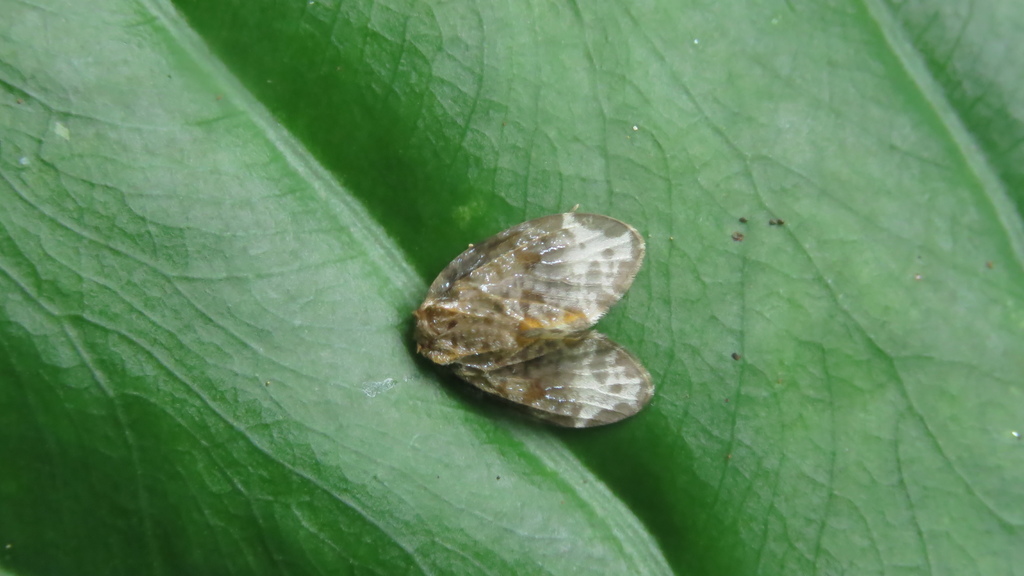
Neopseustoidea
Neopseustidae is a small family of day and night-flying "archaic bell moths" in the order Lepidoptera. They are classified into their own superfamily Neopseustoidea and infraorder Neopseustina. Four genera are known. These primitive moths are restricted to South America and Southeast Asia. Their biology is unknown (Davis 1975; Davis and Nielsen 1980, 1984; Kristensen, 1999).
Nematocentropus appears to be the most primitive genus occurring in Assam, Myanmar and Sichuan, China. Three species of Neopseustis are distributed from Assam to Taiwan, whilst Synempora andesae and three species of Apoplania occur in southern South America (Kristensen, 1999: 53–54). The morphology of the antennae (Faucheux 2005ab; Faucheux et al., 2006) and the proboscis (Kristensen and Nielsen 1981) has been studied in detail.
1 branches of this superfamily, most-observed first
See this branch on the Wheel of Life →
Where it lives
Recorded sightings
—
geo-referenced records in GBIF, from museums, herbaria and field observers.
Drag the globe to turn it. Dots are where records exist, not a range map; darker means more records.
In the stacks
Searching the stacks…
Every page naming Neopseustoidea in the Biodiversity Heritage Library →
This page is assembled live from iNaturalist, GBIF, Wikipedia, the Source Library and the Internet Archive. It is not yet part of the hand-edited codex. iNaturalist taxon 736085.