- Animals
- ›Chordates
- ›Vertebrates
- ›Birds
- ›Cuckoos
- ›Cuckoos
- ›Typical Cuckoos, Malkohas, and allies
- ›Phaenicophaeus
On eBird ↗
Green-billed Malkoha
Live sightings near you, the range map, bar charts of when it is seen, and Macaulay Library photos and recordings.
Green-billed Malkoha
Phaenicophaeus tristis
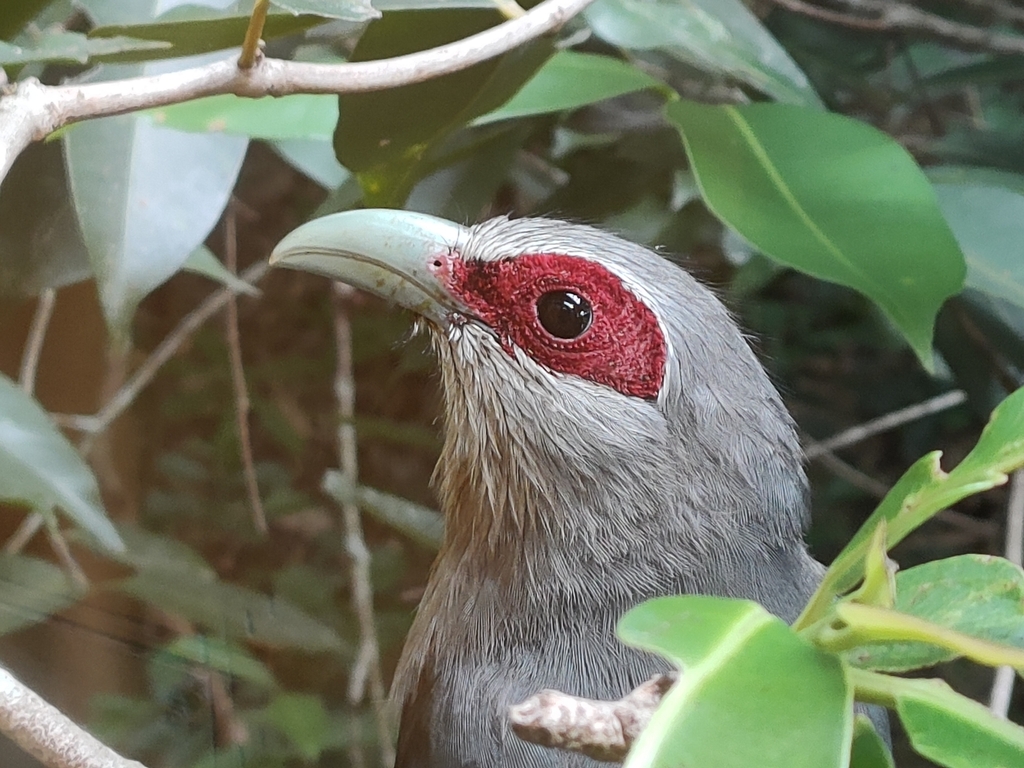
The green-billed malkoha (Phaenicophaeus tristis) is a species of non-parasitic cuckoo found throughout the Indian subcontinent and Southeast Asia. The birds are waxy bluish black with a long graduated tail with white tips to the tail feathers. The bill is prominent and curved. These birds are found in dry scrub and thin forests.
From the article Green-billed malkoha on Wikipedia (CC BY-SA), quoted section by section
Description
Green-billed malkoha is about 50–60 cm long and weighs 100–128 g. It often has a clear white boarder to the red face patch salty grey on the face and neck. Adult green-billed malkoha has dark grey with green gloss above, oily green wings.
Range & habitat
Its breeding habitat is primary forest, second growth, dense thickets, scrub, cultivated areas, rubber plantations across south Asia east from Nepal, India, and Sri Lanka to the Southeast Asia. It mainly lives on insects, but also is known to catch small lizards and small mammals, occasionally catches insects in flight.
Wikipedia: “Distribution and habitat”
Listen
Looking for field recordings…
Where it lives
Recorded sightings
—
geo-referenced records in GBIF, from museums, herbaria and field observers.
Drag the globe to turn it. Dots are where records exist, not a range map; darker means more records.
In the stacks
Searching the stacks…
Every page naming Phaenicophaeus tristis in the Biodiversity Heritage Library →
This page is assembled live from iNaturalist, GBIF, Wikipedia, the Source Library and the Internet Archive. It is not yet part of the hand-edited codex. iNaturalist taxon 73192.