- Animals
- ›Arthropods
- ›Hexapods
- ›Insects
- ›Winged and Once-winged Insects
- ›Beetles
- ›Water, Rove, Scarab, Long-horned, Leaf, and Snout Beetles
- ›Staphyliniform Beetles
- ›Rove, Ant-like stone, and Carrion Beetles
- ›Rove Beetles
- ›Burying and Carrion Beetles
- ›Nicrophorini
- ›Nicrophorus
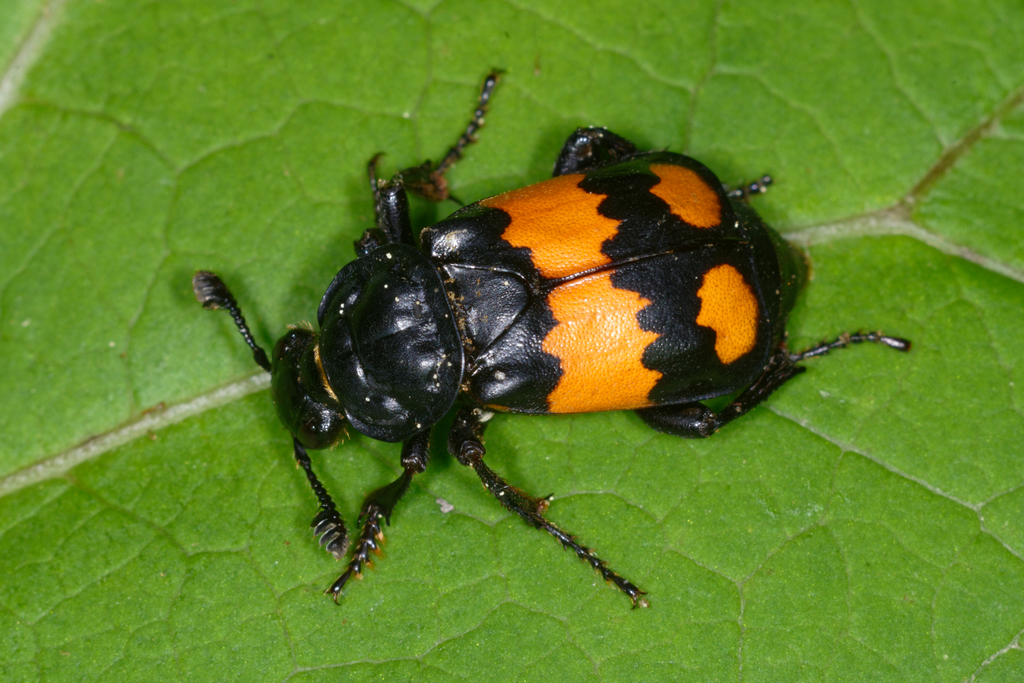
Lesser Vespillo Burying Beetle
Nicrophorus vespilloides
Nicrophorus vespilloides is a burying beetle described by Johann Friedrich Wilhelm Herbst in 1783. The beetles vary widely in size and can present with a range of anywhere from 12 mm to 20 mm in size. They have two conspicuous orange-yellow bands on the elytra. The color of the antennae are an important distinguishing feature, being totally black. The color of their orange and black markings is multifunctional, as they are conspicuous to avian predators. In general, they present a unique ecological niche, which is their evolution of aposematism, or the strategy they use to warn predators through their conspicuous signals. The wing cases of these beetles possess a squarish shape and are notably shorter in length than their abdomens, indicating a distinct physical characteristic of the species.
Overall, there are reported differences in coloration and chemical defenses among the sexes. This is hypothesized to stem from conflicting selection pressures for the different sexes. They also produce anal fluid or exudate from their abdomen when they feel threatened. These anal fluids further contribute to the antimicrobial defense of these beetles.
From the article Nicrophorus vespilloides on Wikipedia (CC BY-SA), quoted section by section
Description
The beetles of N. vespilloides have highly variable body size that ranges from 12–20 mm. They have two conspicuous orange-yellow bands on the elytra. The color of their antennae are completely black. Their orange and black markings serve as a warning sign to avian predators that defends them from attack. Their distinct wing cases are squarish in shape and are shorter than their abdomens. They can fly, especially to locate carcasses.
What it does
Nicrophorus vespilloides shares its reproductive behavior with a sister species Nicrophorus nepalensis. Both species locate vertebrate carcasses and bury them underground to use them as a food source for their offspring. While their respective habitats and ecological niches certainly change the exact mechanism of burying tendencies, both species engage in the general framework of this form of bi-parental care.
Wikipedia: “Burying behavior”
Listen
Looking for field recordings…
Where it lives
Recorded sightings
—
geo-referenced records in GBIF, from museums, herbaria and field observers.
Drag the globe to turn it. Dots are where records exist, not a range map; darker means more records.
In the stacks
Searching the stacks…
Every page naming Nicrophorus vespilloides in the Biodiversity Heritage Library →
This page is assembled live from iNaturalist, GBIF, Wikipedia, the Source Library and the Internet Archive. It is not yet part of the hand-edited codex. iNaturalist taxon 70118.