- Animals
- ›Arthropods
- ›Hexapods
- ›Insects
- ›Winged and Once-winged Insects
- ›Ants, Bees, Wasps, and Sawflies
- ›Narrow-waisted Wasps, Ants, and Bees
- ›Ants, Bees, and Stinging Wasps
- ›Formicoidea
- ›Ants
- ›Formicine Ants
- ›Formicini
- ›Polyergus
- ›Polyergus rufescens
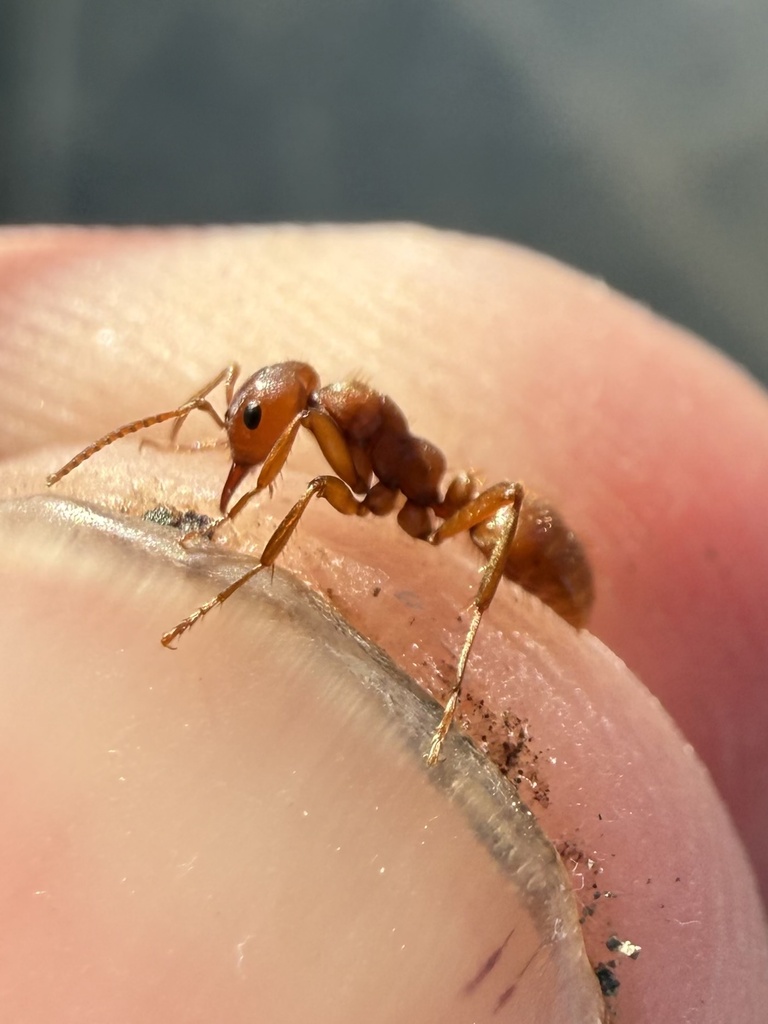
Broad-headed Amazon Ant
Polyergus breviceps
Polyergus breviceps is a species of ant endemic to the United States. It is a social parasite of other ants, namely of Formica gnava but also of Formica occulta and Formica argentea. Polyergus is an inquiline parasite, having lost its ability to take care of its young and themselves. "The workers do not forage for food, feed the young or the queen, or even clean up their own nest". To survive, Polyergus workers raid Formica nests to steal the pupae—which, once hatched, become workers of the mixed nest. This sort of relationship is not unique, of the approximately 8,800 species of ants, at least 200 have evolved some form of symbiotic relationship with one another. What makes Polyergus special is the way a newly mated queen can, all by herself, take over a Formica nest and start a new colony.
Listen
Looking for field recordings…
Where it lives
Recorded sightings
—
geo-referenced records in GBIF, from museums, herbaria and field observers.
Drag the globe to turn it. Dots are where records exist, not a range map; darker means more records.
In the stacks
Searching the stacks…
Every page naming Polyergus breviceps in the Biodiversity Heritage Library →
This page is assembled live from iNaturalist, GBIF, Wikipedia, the Source Library and the Internet Archive. It is not yet part of the hand-edited codex. iNaturalist taxon 69526.