- Animals
- ›Arthropods
- ›Hexapods
- ›Insects
- ›Winged and Once-winged Insects
- ›Ants, Bees, Wasps, and Sawflies
- ›Narrow-waisted Wasps, Ants, and Bees
- ›Ants, Bees, and Stinging Wasps
- ›Formicoidea
- ›Ants
- ›Formicine Ants
- ›Formicini
- ›Formica
- ›Formica fusca
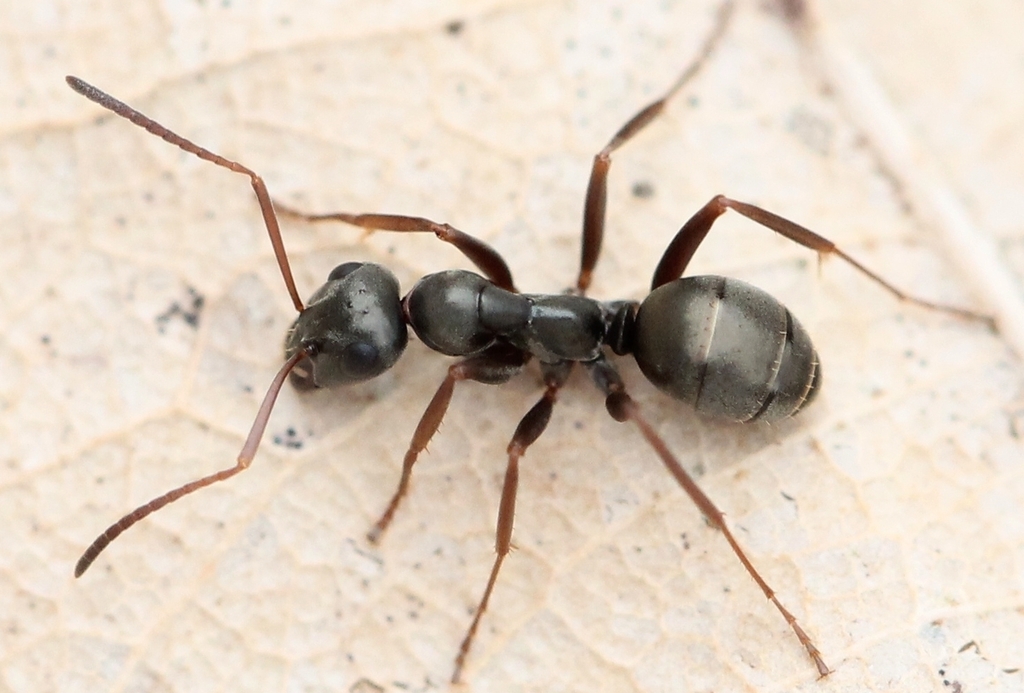
Formica fusca
Formica fusca is a black-colored ant commonly found throughout Europe as well as parts of southern Asia and Africa. It has the common names silky ant or dusky ant. The range within the palaearctic region extends from Portugal in the west to Japan in the east and from Italy in the south to Fennoscandia in the north. Populations from North America have been split off as a separate species, Formica subaenescens. F. fusca nests are usually found in rotten tree stumps or under stones in clearcut areas and along woodland borders and hedgerows. The species also often occurs in urban areas, feeding on honeydew secreted by the aphids found on weeds.
From the article Formica fusca on Wikipedia (CC BY-SA), quoted section by section
What it does
F. fusca feeds on small insects such as codling moth larvae, aphid honeydew and extrafloral nectaries. Workers have been found to have a very high resistance to some pathogens and it is thought this may be due to F. fusca utilising the antibiotic properties of their formic acid, additional to the use of their metapleural gland. The larvae of Microdon megalogaster, a member of the ant fly genus, have been observed in the nests of these ants. The inquiline relationship of these fly larvae is not well understood.
Wikipedia: “Ecology”
Listen
Looking for field recordings…
Where it lives
Recorded sightings
—
geo-referenced records in GBIF, from museums, herbaria and field observers.
Drag the globe to turn it. Dots are where records exist, not a range map; darker means more records.
In the stacks
Searching the stacks…
Every page naming Formica fusca in the Biodiversity Heritage Library →
This page is assembled live from iNaturalist, GBIF, Wikipedia, the Source Library and the Internet Archive. It is not yet part of the hand-edited codex. iNaturalist taxon 69257.