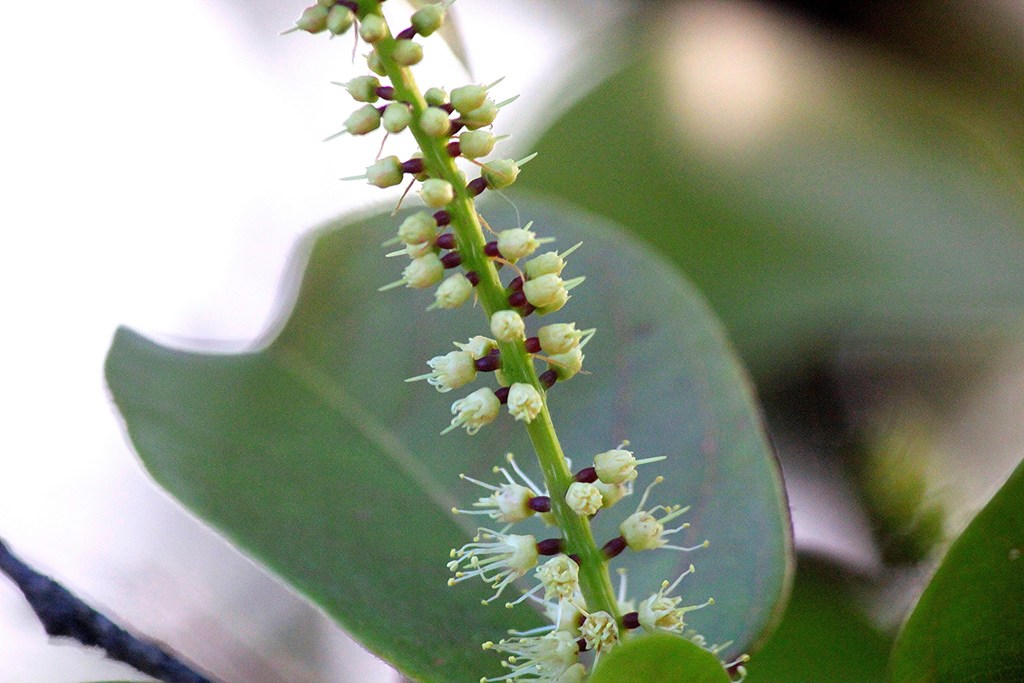
 NL·0047
Herbarium of the Nature Library
- Name
- Terminalia chebula
- Family
- Combretaceae
- Native to
- Indian subcontinent to Myanmar, Thailand, Indochina and south-western China
- Habitat
- Dry deciduous forest, Moist deciduous forest, Hill forest
Haritaki (Chebulic myrobalan)
Terminalia chebula
Also calledHaritaki / Abhaya (Sanskrit) · Harad / Harar (Hindi) · Halīlaj هليلج (Arabic/Unani) · Kadukkai (Tamil) · Hēzǐ 诃子 (Chinese) · A-ru-ra (Tibetan)
A deciduous tree of Asian forests whose wrinkled, tannin-rich fruit is the 'king of medicines' in Tibetan tradition. The Medicine Buddha is shown holding a sprig of it, and it is one of the three fruits of Ayurveda's Triphala.
Terminalia chebula, commonly known as black- or chebulic myrobalan, is a species of Terminalia, native to South Asia from India, Pakistan and Nepal east to southwest China (Yunnan), and south to Sri Lanka, Malaysia, and Vietnam. It is also known as "Haritaki". Wikipedia
What it can do
- iFruit is rich in hydrolysable tannins such as chebulagic and chebulinic acid
- iiTannins have long been used to tan leather and, with iron, to make black dyes and inks
- iiiLaxative when ripe, astringent when unripe, an unusual dual action that Ayurveda exploits
At the table
Eatenfruit (as medicine: powdered, chewed or preserved)
Eaten mostly as medicine. Very astringent, and laxative in larger amounts.
In the medicine cabinet
| Tradition | Use |
|---|---|
| Ayurveda | Haritaki as a rasayana and gentle laxative; one of the three fruits of Triphala; for constipation, cough and wounds |
| Tibetan medicine (Sowa Rigpa) | A-ru-ra, the 'king of medicines', said to treat all three humours and found in a great many formulas |
| Unani | Halela siyah/zard in Itrifal compounds for constipation, piles, brain and digestion |
| Traditional Chinese Medicine | Hezi as an astringent for chronic diarrhoea, dysentery and chronic cough with hoarse voice |
Weight of evidence
Traditional. Long historical use; little or no modern clinical evidence.
Active compounds
chebulagic acid, chebulinic acid, gallic acid, ellagic acid, corilagin, punicalagin
Fruit & seed


Fruit
Drupe
Ripens: Winter (November–March)
Ovoid, ridged drupe 2–4 cm, yellow-green ripening brown-black and wrinkled when dried; very astringent.

Seed
~1.5–2 cm
Single seed in a hard, thick, ridged stone
- Dispersal
- Mammals such as deer and monkeys
- Germination
- Slow; crack or soak the stone; 1–3 months
Photographs from Wikimedia Commons under open licences; hover for the photographer, click for the file.
How to grow it
Hardiness (USDA zones)
USDA 10–12. Survives winters down to about -1 °C.
- Light
- Full sun
- Water
- Low–moderate
- Soil
- Well-drained, including poor and stony soil
- Propagation
- Seed
- To harvest
- Fruit from year 7–10
- Climates
- Tropical, Subtropical monsoon
- 1Soak stones for 2–3 days, then sow in deep pots
- 2Plant out in the rains in full sun
- 3Protect saplings from frost and browsing
- 4Gather fallen fruit and sun-dry
Can it grow where you are?
Where it lives
Recorded sightings
—
geo-referenced records in GBIF, from museums, herbaria and field observers.
Native range
Indian subcontinent to Myanmar, Thailand, Indochina and south-western China
Drag the globe to turn it. Dots are where records exist, not a range map; darker means more records.
In the old herbals & bestiaries
Woodcuts and engravings matched from the Source Library’s scanned books by name. Plates marked “relative” show a close kin rather than this exact species. Click a plate to read the page it came from, with translation.


In the stacks
Searching the stacks…
Every page naming Terminalia chebula in the Biodiversity Heritage Library →
Marginalia
The Medicine Buddha (Bhaiṣajyaguru) is traditionally painted holding a myrobalan sprig in his right hand. Medieval Arab and European pharmacies imported 'chebulic myrobalans' from India, and they were a costly drug in Renaissance Europe.
Curiosity
Black myrobalan (dried unripe fruit) and chebulic myrobalan (mature fruit) were sold in old apothecaries as separate drugs, though they come from the same tree.
Kinship

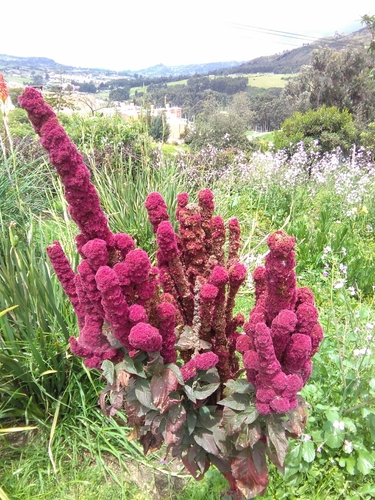
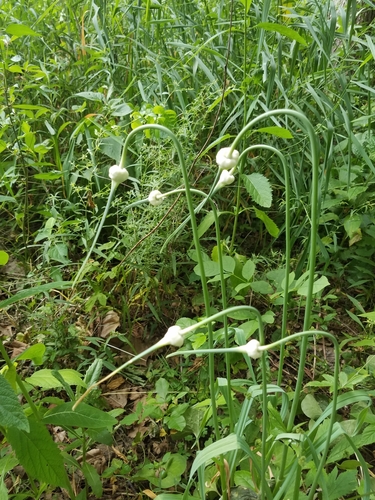


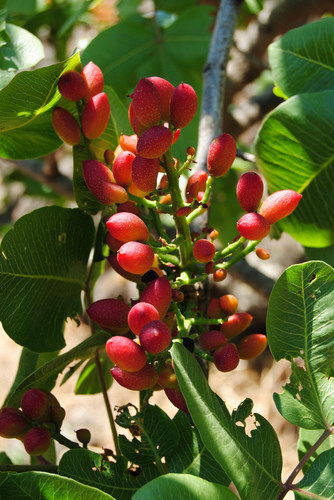
Photographs: iNaturalist contributors under the licences shown. Records: GBIF.org. Historical plates: Source Library (CC BY-SA 4.0; originals public domain). Summary text: Nature Library editors and Wikipedia (CC BY-SA). Medicinal and edibility notes are historical and educational, not advice. iNaturalist taxon 68671.