On eBird ↗
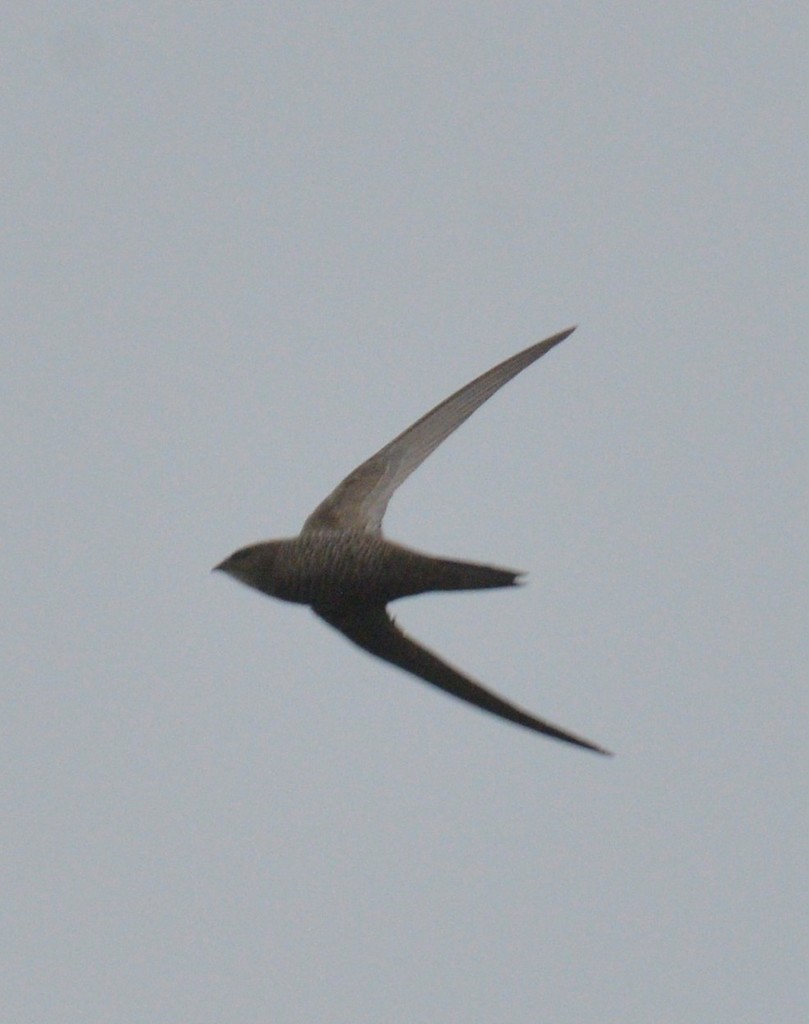
Nyanza Swift
Live sightings near you, the range map, bar charts of when it is seen, and Macaulay Library photos and recordings.
Nyanza Swift
Apus niansae
The Nyanza swift (Apus niansae) is a species of swift in the family Apodidae.
It is found in Eritrea, Ethiopia, Kenya, Somalia, South Sudan, Tanzania, and Uganda.
From the article Nyanza swift on Wikipedia (CC BY-SA), quoted section by section
Range & habitat
The Nyanza swift can be found in areas of high elevation, gorges, cliff faces, and human settlements like cities and towns. It has been spotted in places such as Eritrea, Western Ethiopia, Eastern Uganda, Western Kenya, and Northern Tanzania. The Nyanza swift uses wet areas to search for sources of food and can rarely be found in lowland areas.
Wikipedia: “Habitat”
What it does
The Nyanza swift is a scavenger bird, which feeds on other dead animals. It also consumes bugs and insects such as flies, beetles, and bees. The Nyanza swift is most active in the early mornings near dawn, and seen one to two hours before sunset, feeding throughout the day. When nesting activity presents itself among the Nyanza swift, it stays after throughout the day, rather than strictly at dawn or dusk.
Wikipedia: “Diet and activity”
Listen
Looking for field recordings…
Where it lives
Recorded sightings
—
geo-referenced records in GBIF, from museums, herbaria and field observers.
Drag the globe to turn it. Dots are where records exist, not a range map; darker means more records.
In the stacks
Searching the stacks…
Every page naming Apus niansae in the Biodiversity Heritage Library →
This page is assembled live from iNaturalist, GBIF, Wikipedia, the Source Library and the Internet Archive. It is not yet part of the hand-edited codex. iNaturalist taxon 6630.