- Animals
- ›Arthropods
- ›Hexapods
- ›Insects
- ›Winged and Once-winged Insects
- ›Butterflies and Moths
- ›Butterflies
- ›Metalmark Butterflies
- ›Old World Metalmarks
- ›Nemeobiini
- ›Nemeobiina
- ›Styx
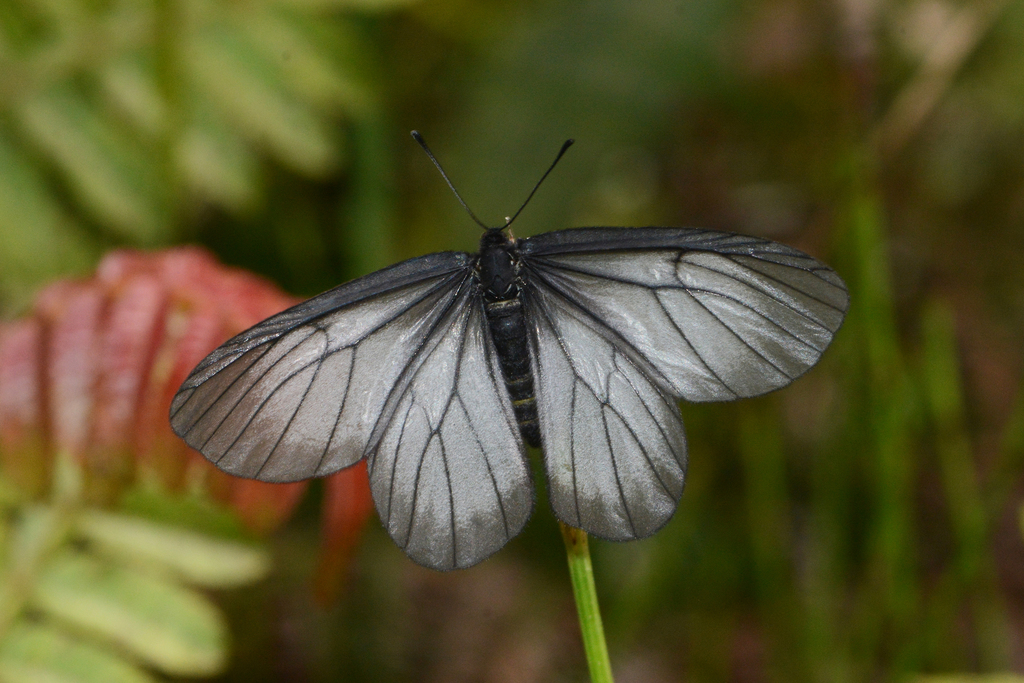
Styx infernalis
Styx is a monotypic genus of butterflies in the metalmark family Riodinidae. It consists of one species, Styx infernalis, described by Otto Staudinger in 1875. It is endemic to Peru, where it inhabits tropical montane cloud forests between the elevations of 1000-1600 meters.
The genus Styx has had a complicated taxonomic history. Initially identified as a moth, it has been reclassified numerous times into several different butterfly families, and once occupying its own distinct family as "Stygidae" before ultimately being classified into the subfamily Nemeobiinae in the family Riodinidae, a classification that has been supported by both morphological and genetic evidence. This makes Styx one of only a few New World representatives of a nearly entirely Old World subfamily. Styx has been referred to as both a "missing link" and a "living fossil" due to its indeterminate taxonomic nature and unique morphological characteristics.
From the article Styx infernalis on Wikipedia (CC BY-SA), quoted section by section
Description
Styx infernalis is a medium sized, translucent winged, brown veined, and gray-colored butterfly. The cloudy grayish white color of the wings darkens towards the outer edge. Its wing coloration has been described as resembling isinglass. Its wings are narrow, with short antennae, and it has a stout black-colored body which resembles to a Geometrid or Lymantriid moth. The butterflies have been noted to resemble smaller versions of Parnassius butterflies. Patterning akin to Styx have been observed in the butterfly genera Parnassius, Aporia, and Davidina. Staudinger's original description of specimens he had obtained in Chanchamayo states that the butterfly had a wingspan of 46-49 millimeters. The male's forelegs lacked pretarsal claws and exhibits less than five tarsomeres. In the males, the foretarsus is severely reduced, being half the size of the pterothoracic legs. The females have centrally clustered trichoid sensillae on the foretarsus, a feature shared with the Old World butterfly genus Laxita. Additionally, they lacked the apophyses posteriores on the female genitalia. These morphological differences served as justification for the reclassification of S. infernalis into the Riodinidae.
Range & habitat
Styx infernalis is native to central and southern Peru. It is distributed over a small area in a region with high species diversity.
Habitat. Styx infernalis inhabits elevations between 1000 and 1600 meters. S. infernalis inhabits the tropical montane cloud forests or the Peruvian Yungas of central and southern Peru.
Wikipedia: “Distribution”
What it does
Adults are active during the midday near sunny patches, they often engage in mud-puddling near streams. The adult's flight is weak, and appear like they are gliding in the air. There have been reports by Purser (2007) that it is possibly nocturnal. Due to their severely reduced forelimbs, it is unlikely that adult males use them for movement, akin to Nymphalid butterflies.
Wikipedia: “Behavior”
In human culture
Styx infernalis has a fairly little known life history. In an unpublished paper by Hall et al., the larvae lack spathulate setae, a feature that is present on larvae of the subfamily Euselasiinae. Akin to other Nemeobiines, the larvae feed on members of the family Primulaceae, in this case the plant genus Myrsine.
Behavior. Adults are active during the midday near sunny patches, they often engage in mud-puddling near streams. The adult's flight is weak, and appear like they are gliding in the air. There have been reports by Purser (2007) that it is possibly nocturnal. Due to their severely reduced forelimbs, it is unlikely that adult males use them for movement, akin to Nymphalid butterflies.
Wikipedia: “Life history”
Listen
Looking for field recordings…
Where it lives
Recorded sightings
—
geo-referenced records in GBIF, from museums, herbaria and field observers.
Drag the globe to turn it. Dots are where records exist, not a range map; darker means more records.
In the stacks
Searching the stacks…
Every page naming Styx infernalis in the Biodiversity Heritage Library →
This page is assembled live from iNaturalist, GBIF, Wikipedia, the Source Library and the Internet Archive. It is not yet part of the hand-edited codex. iNaturalist taxon 625182.